
 By Aditya Agarwal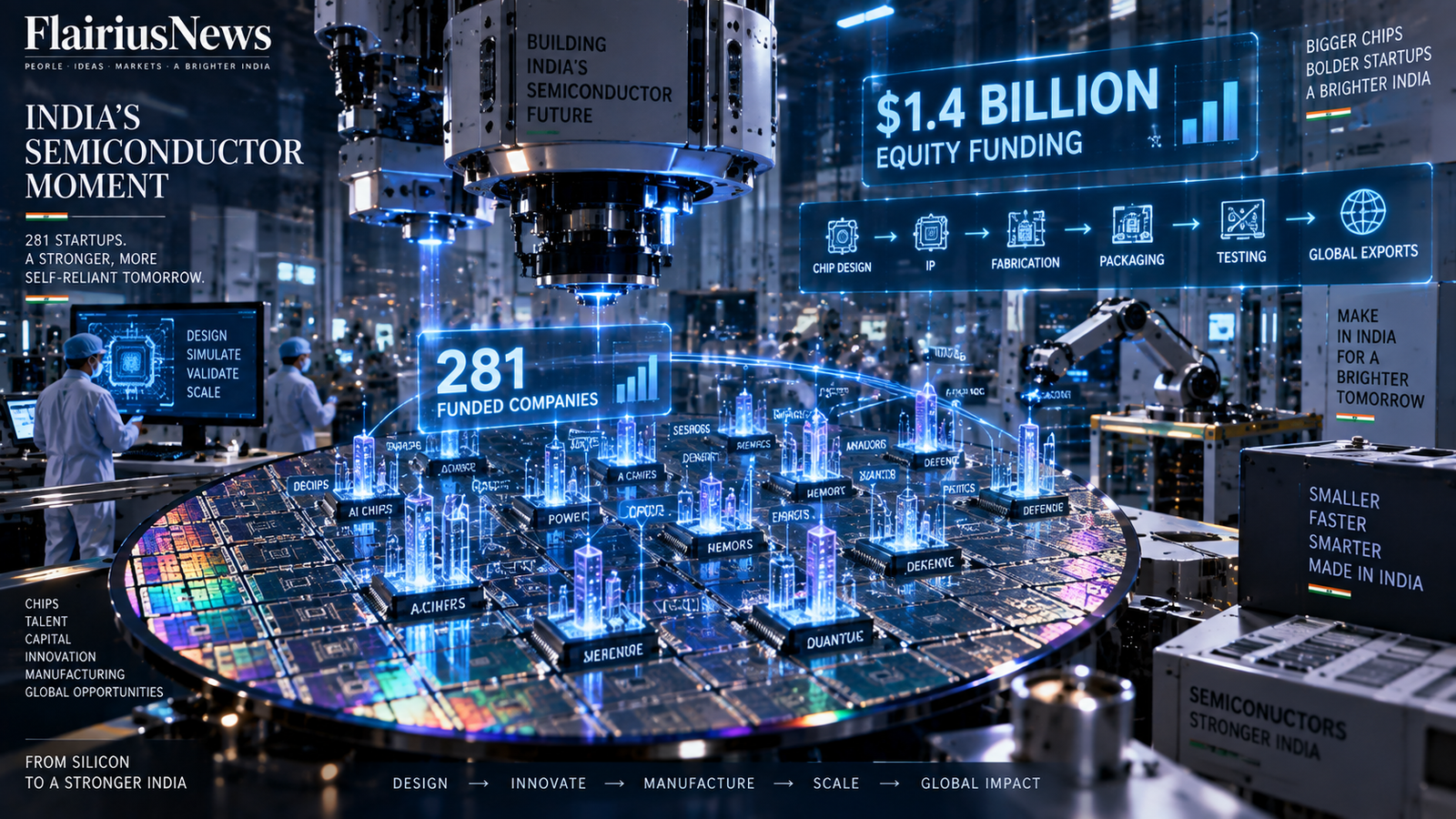
India’s semiconductor startup ecosystem is becoming significantly larger.
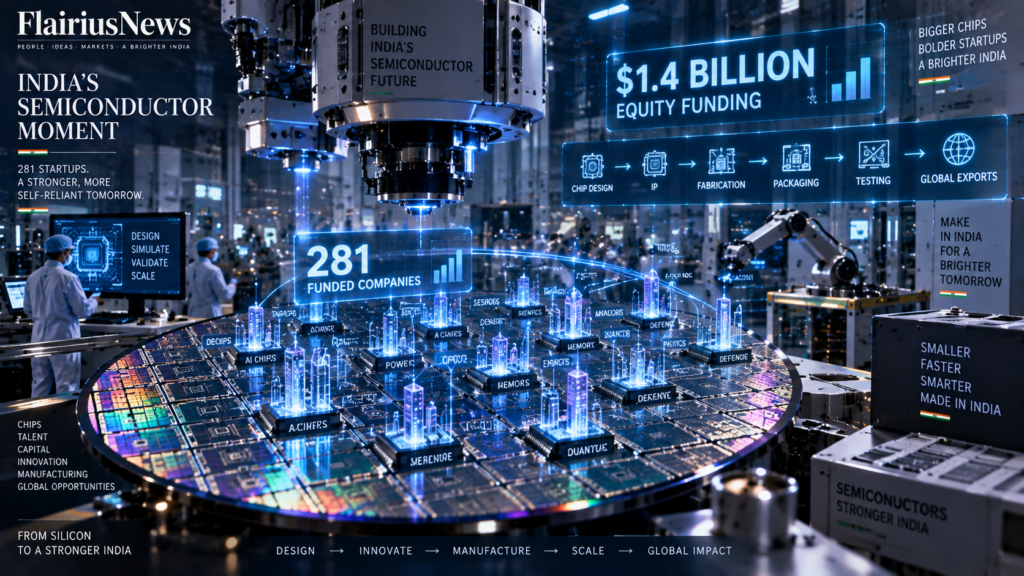
Companies working across chip design and related technologies have attracted $1.4 billion in cumulative equity funding, according to a report cited by YourStory.
The funding spans 281 funded semiconductor companies. (YourStory.com)
That number marks a meaningful change in India’s startup landscape.
The country’s technology economy has historically been dominated by software.
Now, semiconductor startups are creating a new category.
From Software to Silicon
Software can be developed with relatively limited physical infrastructure.
Semiconductors are different.
They require specialised design tools.
They need advanced engineering talent.
Manufacturing requires enormous capital.
Testing and packaging add additional complexity.
Therefore, building a chip company is fundamentally different from building a conventional SaaS startup.
The Funding Is Only the Beginning
$1.4 billion sounds substantial.
However, semiconductor businesses require capital across multiple stages.
Research needs funding.
Chip design needs funding.
Prototyping needs funding.
Manufacturing and testing require even more.
Consequently, startup capital alone cannot create a complete semiconductor ecosystem.
Companies need customers and industrial partners as well.
Why 281 Companies Matter
The number of funded companies is important because semiconductor ecosystems depend on specialisation.
One startup may design processors.
Another may build power-management chips.
A third may develop verification tools.
Others can focus on packaging, testing or semiconductor IP.
As a result, a large startup base can create connections across the value chain.
That is how an ecosystem begins to develop.
Talent Is Becoming a Bottleneck
Capital is only one requirement.
India also needs semiconductor engineers.
At Semicon India 2026, the government highlighted a goal of building a much larger semiconductor workforce. Reports have pointed to a target of around 100,000 chip engineers. (YourStory.com)
That creates an important opportunity for universities and technical institutes.
Students entering electronics, electrical engineering and semiconductor design could find more career paths.
Global Partnerships Matter
Semiconductors are global businesses.
No country builds every part of the supply chain independently.
Recent discussions at Semicon India have emphasised international partnerships across the chip ecosystem. (YourStory.com)
That matters because advanced semiconductor production depends on equipment, materials, intellectual property and manufacturing expertise from multiple countries.
Therefore, India’s strategy is not simply about replacing every imported component.
It is also about becoming a meaningful part of global supply chains.
The Startup Opportunity
The ecosystem creates opportunities beyond chip fabrication.
Startups can build semiconductor design software.
They can develop specialised intellectual property.
They can create testing systems.
They can also develop equipment and industrial automation.
Furthermore, AI is creating additional demand for specialised computing.
That could create another market for Indian chip startups.
The Commercial Test
Funding creates potential.
Revenue creates proof.
Therefore, the next stage for India’s semiconductor startups will involve customer adoption.
Can these companies secure design wins?
Can they manufacture reliably?
Can they compete on cost?
Can they export?
Those questions will determine which startups develop into durable businesses.
A Different Startup Cycle
India’s semiconductor story is therefore different from the consumer-internet boom.
The development cycle is longer.
Capital requirements are higher.
Technical barriers are stronger.
Yet successful companies can potentially build much deeper competitive advantages.
India now has a growing semiconductor startup base and $1.4 billion in cumulative equity funding.
The next challenge is turning that capital into chips, customers, exports and companies that can compete globally.
Tags: India Semiconductor Startups, Semiconductor Funding, Chip Startups India, Semicon India 2026, Deeptech Startups, Indian Startup Ecosystem
Author CTA: Follow Flairius News — sharp takes on AI, business, and India’s startup economy.
 Nayra Roy