
 By Aditya Agarwal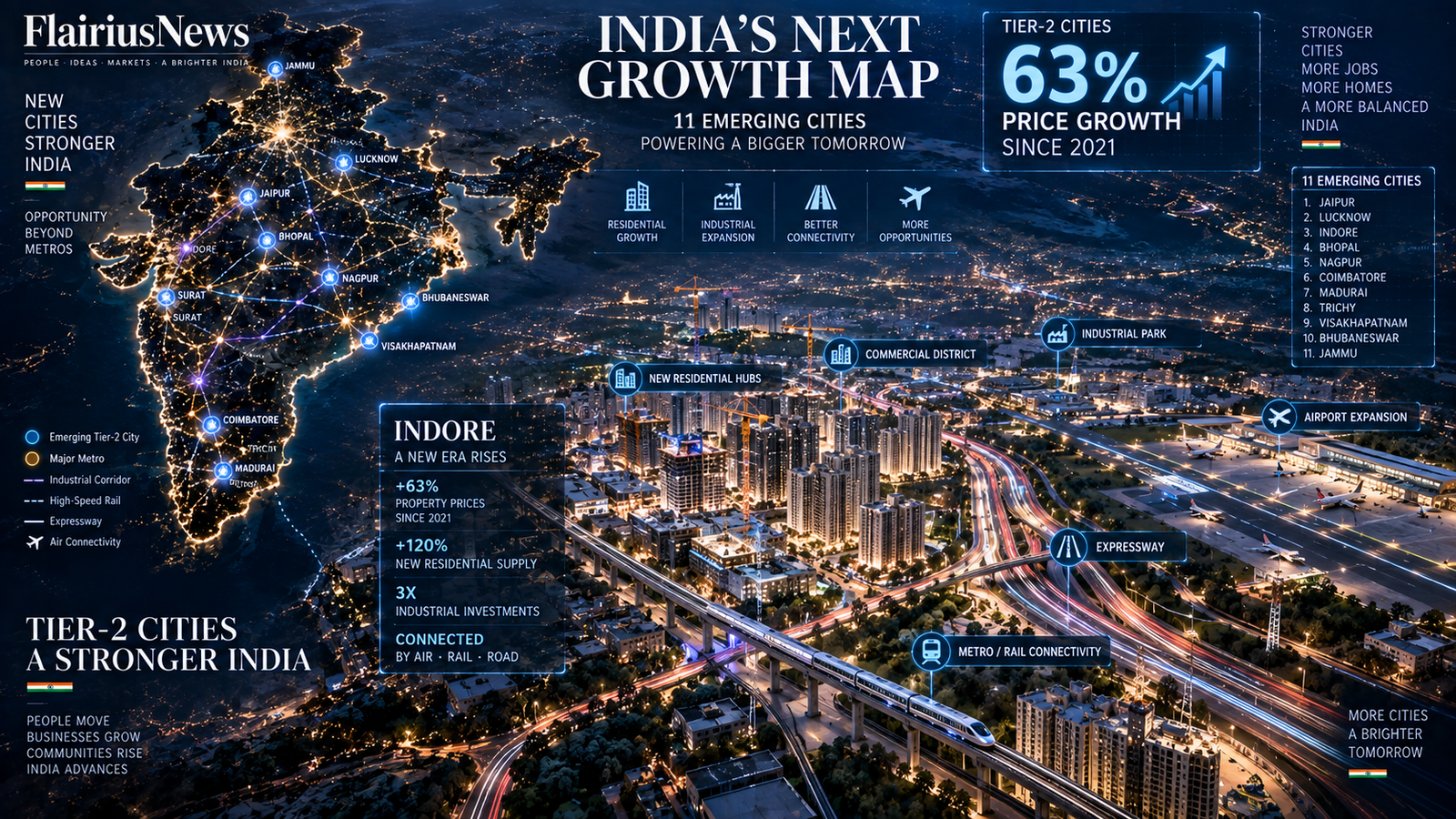
ndia’s real-estate story is expanding beyond its largest cities.
Housing prices across 11 smaller Indian cities have risen by an average of 63% since 2021, according to a CII-Knight Frank India report reported today.
The increase has outpaced value growth recorded in India’s eight major metropolitan markets. (The Economic Times)
That changes the way India’s residential market should be viewed.
The next real-estate growth story may not be concentrated entirely in Mumbai, Delhi-NCR, Bengaluru or Hyderabad.
Tier-2 Cities Are Gaining Momentum
Smaller cities are attracting more attention from buyers and developers.
Infrastructure is one reason.
Commercial activity is another.
As businesses expand beyond the largest metropolitan centres, residential demand can follow.
Consequently, housing markets in emerging cities can develop rapidly.
Infrastructure Changes Property Economics
A new highway can reduce travel time.
A new railway connection can improve accessibility.
Industrial corridors can create employment.
Meanwhile, airports and logistics infrastructure can change the economic geography of an entire city.
Therefore, infrastructure can influence real-estate prices long before a market becomes nationally famous.
Why Developers Are Watching
Developers need new growth markets.
Major cities already have intense competition.
Land can also become expensive.
Consequently, emerging cities can provide opportunities for expansion.
Developers may find larger parcels.
They may also face different cost structures.
However, demand must develop alongside supply.
Building homes without sufficient employment or infrastructure can create inventory pressure.
The New Urban Buyer
Tier-2 city buyers are also changing.
Many households now have access to digital property platforms.
They can compare projects.
They can research developers.
They can examine prices across neighbourhoods.
As a result, information is becoming less concentrated among local brokers.
That creates a major opportunity for PropTech.
Technology Can Connect Smaller Markets
Real-estate technology can help emerging cities become easier to understand.
Platforms can provide verified listings.
They can show historical pricing.
They can map connectivity.
They can provide construction updates.
Furthermore, AI could help buyers compare neighbourhoods based on income, commute, schools and infrastructure.
That would make smaller markets more transparent.
The Price Question
Rapid price appreciation also creates a challenge.
A 63% increase since 2021 indicates strong value growth.
However, rising prices can eventually affect affordability.
Therefore, developers and policymakers will need to watch the relationship between household incomes and property values.
A healthy housing market needs demand.
It also needs sustainable purchasing power.
The Investment Map Is Changing
India’s real-estate map is becoming more distributed.
Mumbai and Bengaluru remain major markets.
Delhi-NCR remains critical.
Yet emerging cities are increasingly contributing to overall housing growth.
Consequently, investors may need to look beyond traditional metropolitan centres.
The next generation of residential markets could develop around manufacturing, technology, logistics and infrastructure corridors.
What Comes Next
The growth of Tier-2 cities reflects a larger economic transition.
India’s urbanisation is spreading.
Employment is becoming more distributed.
Infrastructure is connecting new regions.
Housing development is following those changes.
The 63% rise across 11 smaller cities is therefore more than a property statistic.
It suggests that India’s next real-estate cycle could be shaped by cities that were once considered secondary markets.
Tags: Tier-2 Real Estate India, India Housing Market, Property Prices India, Emerging Cities, Indian Real Estate 2026, Housing Demand
Author CTA: Follow Flairius News — sharp takes on AI, business, and India’s startup economy.