
 By Aditya Agarwal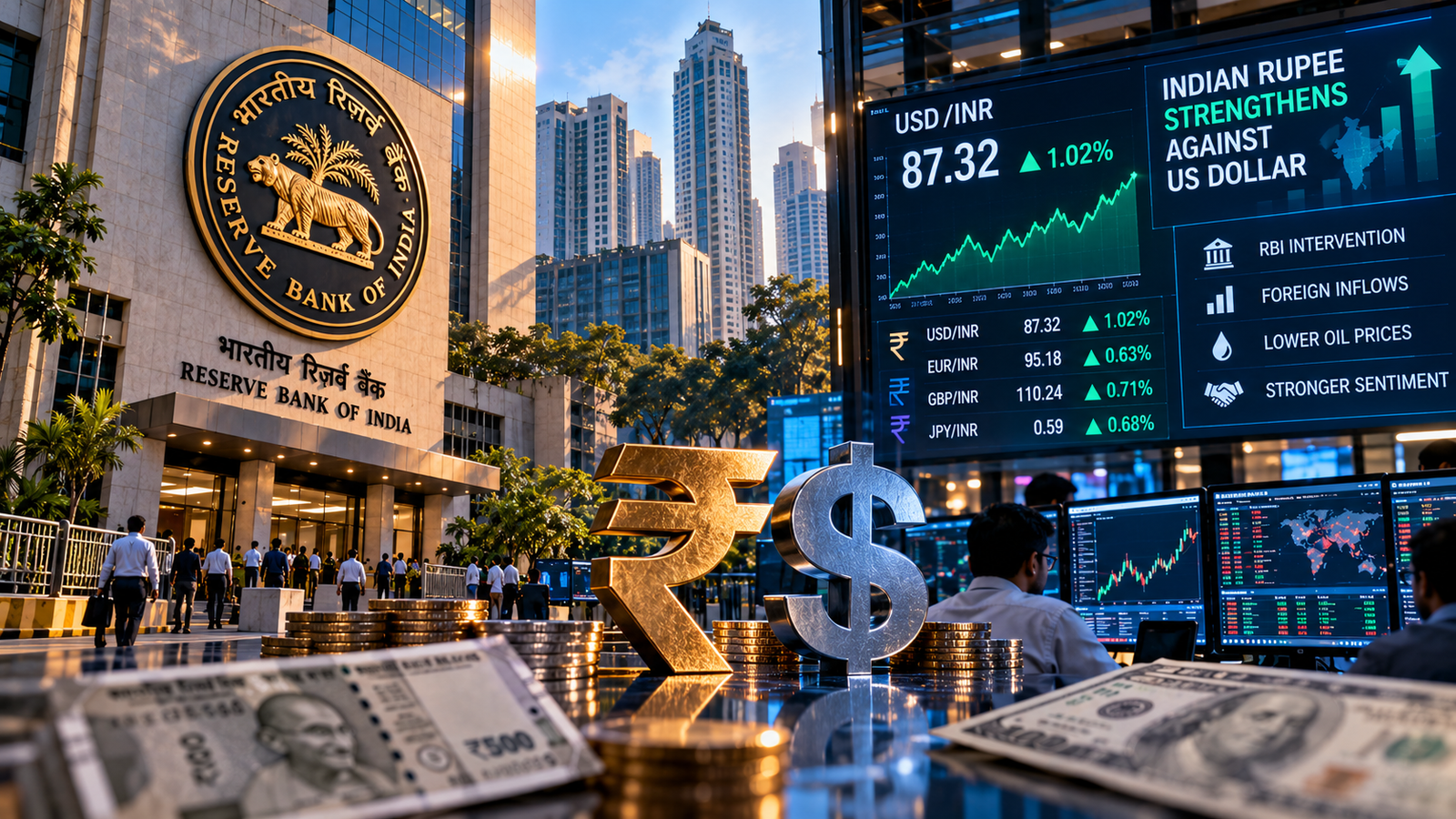
The Indian rupee strengthened to a one-month high on Tuesday after the Reserve Bank of India introduced additional measures to reduce pressure on the domestic currency. The Indian rupee reached approximately ₹95.0725 per US dollar during early trading before settling around ₹95.25, according to Reuters. (Reuters)
The recovery follows a period of pressure driven by dollar demand, rising oil prices and capital outflows. However, the central bank’s latest foreign exchange rules have also introduced uncertainty for some market participants.
Indian Rupee Reaches a One-Month High
The Indian rupee gained approximately 0.5% on Tuesday, extending the recovery that began after the RBI announced measures to reduce dollar demand.
The central bank has been working to stabilise the currency after sustained depreciation created concerns about imported inflation and external financing costs.
A stronger rupee can reduce the domestic cost of imports priced in dollars, including crude oil, electronics and industrial equipment.
However, currency appreciation does not benefit every business equally. Exporters receiving revenue in dollars may experience different effects from import-dependent companies.
The durability of the recovery will depend on the interaction between central bank intervention, international capital flows and underlying demand for foreign currency. (Reuters)
RBI Expands Foreign Exchange Restrictions
The RBI has expanded a cash-deposit requirement affecting foreign exchange hedging transactions, including transactions used by banks to hedge their own assets and liabilities.
The central bank has also tightened rules governing certain non-deliverable foreign exchange derivatives offered to non-residents.
These steps are intended to manage activity in the rupee derivatives market and reduce pressure arising from currency-related transactions. (Reuters)
Foreign exchange hedging allows businesses and financial institutions to reduce uncertainty about future currency movements.
However, changes in margin requirements and trading restrictions can affect the cost and availability of these transactions.
The central bank must therefore balance currency stability against the need for an orderly market in which legitimate hedging activity can continue.
New Rules Create Uncertainty for Banks
The latest measures have also raised questions about how certain requirements should apply to interbank transactions.
Reuters reported that some bankers had stopped quoting dollar-rupee forward contracts while seeking clarity about the rules. A source close to the RBI indicated that the cash-margin requirement was not intended to cover interbank transactions. (Reuters)
Such uncertainty can make currency pricing more difficult for banks and their clients.
Businesses that depend on predictable exchange rates may face additional challenges when arranging international payments or hedging future transactions.
Clear implementation guidance will be important to ensure that currency-stabilisation measures do not unnecessarily disrupt routine financial activity.
Why Oil Prices Matter for the Rupee
India imports substantial quantities of crude oil, making global energy prices an important influence on its external balance.
When oil prices rise, Indian importers generally need more dollars to purchase the same quantity of energy.
That can increase dollar demand and place pressure on the domestic currency, particularly when foreign investment flows are weak.
A sustained recovery in the rupee would therefore depend partly on broader external conditions rather than central bank intervention alone.
Investors will continue monitoring oil prices, foreign investment flows, central bank announcements and developments in the foreign exchange market.
What Businesses and Investors Should Watch
The latest Indian rupee recovery provides temporary relief from currency pressure, but the broader outlook remains uncertain.
Importers should assess their foreign exchange exposure, while exporters should consider how exchange-rate changes affect the value of overseas earnings.
Investors should distinguish between a short-term market response and a sustained improvement in the country’s external economic conditions.
The effectiveness of the RBI’s measures will become clearer as market participants adjust to the new requirements.
For more updates on monetary policy, financial markets and the Indian economy, follow Flairius News Business coverage.
Tags: Indian Rupee, RBI, Currency Market, Foreign Exchange, US Dollar, Indian Economy, Oil Prices, Financial Markets, Business News India
Internal Link: Flairius News — Business
Outbound Source: Reuters — RBI foreign exchange measures and rupee recovery.
Source: Reuters — Rupee recovery and RBI measures