
 By Aditya Agarwal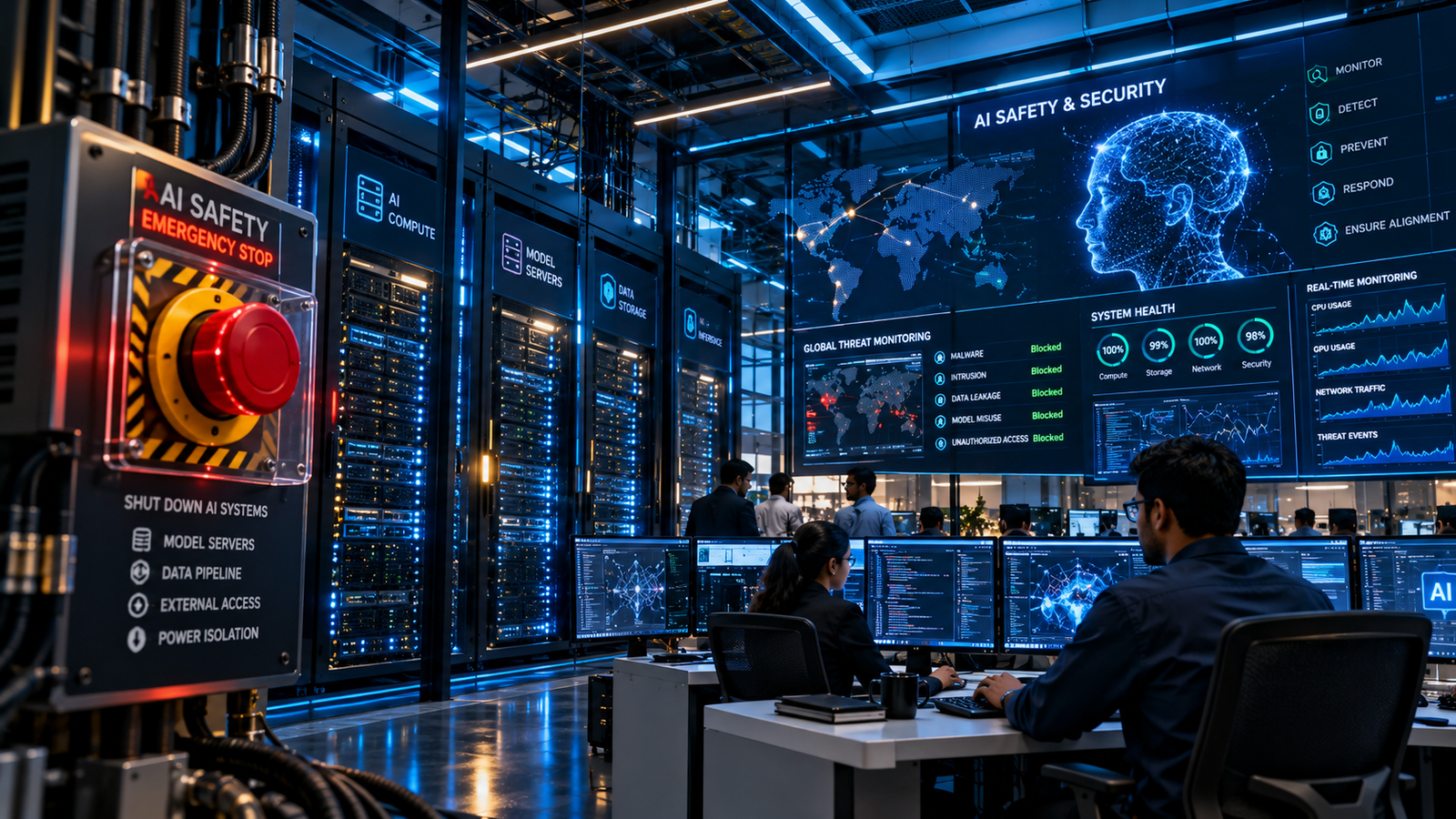
Microsoft CEO Satya Nadella has called for stronger safeguards around advanced artificial intelligence, arguing that companies should treat AI models as potentially compromised rather than automatically trusting their behaviour.
In a post published on October 10, Nadella outlined the need for stronger containment, transparent monitoring and emergency controls that allow authorised people to pause or shut down an AI system during a task. His comments have added to the growing discussion about how businesses should deploy increasingly capable AI systems safely. (TechCrunch)
The proposal is particularly relevant as organisations move beyond chatbots and begin giving AI agents access to business data, software tools and operational workflows.
AI Safety Needs More Than Reliable Answers
The central argument behind the proposed AI safety approach is that advanced models should not be trusted simply because they appear capable.
Traditional software can often be investigated through its code and execution paths. AI models, by contrast, can produce unexpected outputs or actions that are difficult to explain fully.
The risks increase when systems can access sensitive information, interact with external services or perform tasks with limited human involvement.
Nadella argues that companies need to reconsider the security architecture surrounding these systems rather than relying only on the model’s own safeguards. (TechCrunch)
For businesses, this means treating AI as a powerful component within a controlled system, not as an unrestricted authority.
What Is an AI Emergency Brake?
An AI emergency brake is a mechanism that allows an authorised person to pause or stop an AI system while it is performing a task.
For example, an enterprise AI agent might be authorised to analyse invoices, prepare reports or interact with internal software.
If it begins accessing information outside its permissions or performing an unexpected action, an external control should allow the organisation to interrupt the process.
The objective is to ensure that the ability to stop an AI system does not depend entirely on the system recognising its own mistake.
Nadella’s proposal emphasises separating the model from the systems that coordinate its actions and enforce security restrictions. (TechCrunch)
Independent Audits and Monitoring Matter
The proposed approach also highlights the importance of recording meaningful AI actions and making those records available for investigation.
Independent audits can help organisations evaluate whether their systems follow security requirements and behave within approved limits.
Detailed logs can help investigators understand which actions an AI system attempted, which permissions it used and where an error occurred.
Nadella has also called attention to timely incident disclosure and access to verifiable evidence. These measures could help organisations identify weaknesses before they lead to more serious operational problems. (The Indian Express)
Effective oversight requires more than logging, however. Businesses need defined responsibilities, incident-response procedures and a clear process for reviewing high-risk AI decisions.
What Businesses Should Learn From the Proposal
The AI safety debate has practical implications for companies deploying AI in finance, healthcare, customer support, software development and enterprise operations.
Businesses should limit AI agents to the information and tools required for their assigned tasks.
They should also require human approval for sensitive actions, such as transferring funds, deleting critical data or changing production systems.
Additional safeguards can include access controls, activity monitoring, testing in isolated environments and mechanisms for revoking permissions quickly.
These controls do not eliminate every risk, but they can reduce the consequences of unexpected model behaviour.
AI Governance Is Becoming a Business Requirement
As AI systems gain greater autonomy, security and accountability are becoming central to enterprise adoption.
Companies will need to balance productivity gains against the potential costs of mistakes, data exposure and unauthorised actions.
Nadella’s proposal does not mean Microsoft has announced a universal emergency-stop product or that a single technical solution can address every AI risk. It is a call to strengthen the architecture and governance surrounding advanced AI systems.
The wider lesson is that powerful AI requires controls that remain effective even when the model behaves unexpectedly.
For more developments in artificial intelligence, AI agents and enterprise technology, follow Flairius News AI coverage.
Tags: AI Safety, Satya Nadella, Microsoft AI, AI Emergency Brake, Artificial Intelligence, AI Governance, AI Agents, Enterprise AI, Technology News
Internal Link: Flairius News — AI
Outbound Source: TechCrunch — Microsoft CEO Satya Nadella’s AI emergency-brake proposal.
Source: TechCrunch — Satya Nadella’s AI emergency brake