
 By Aditya Agarwal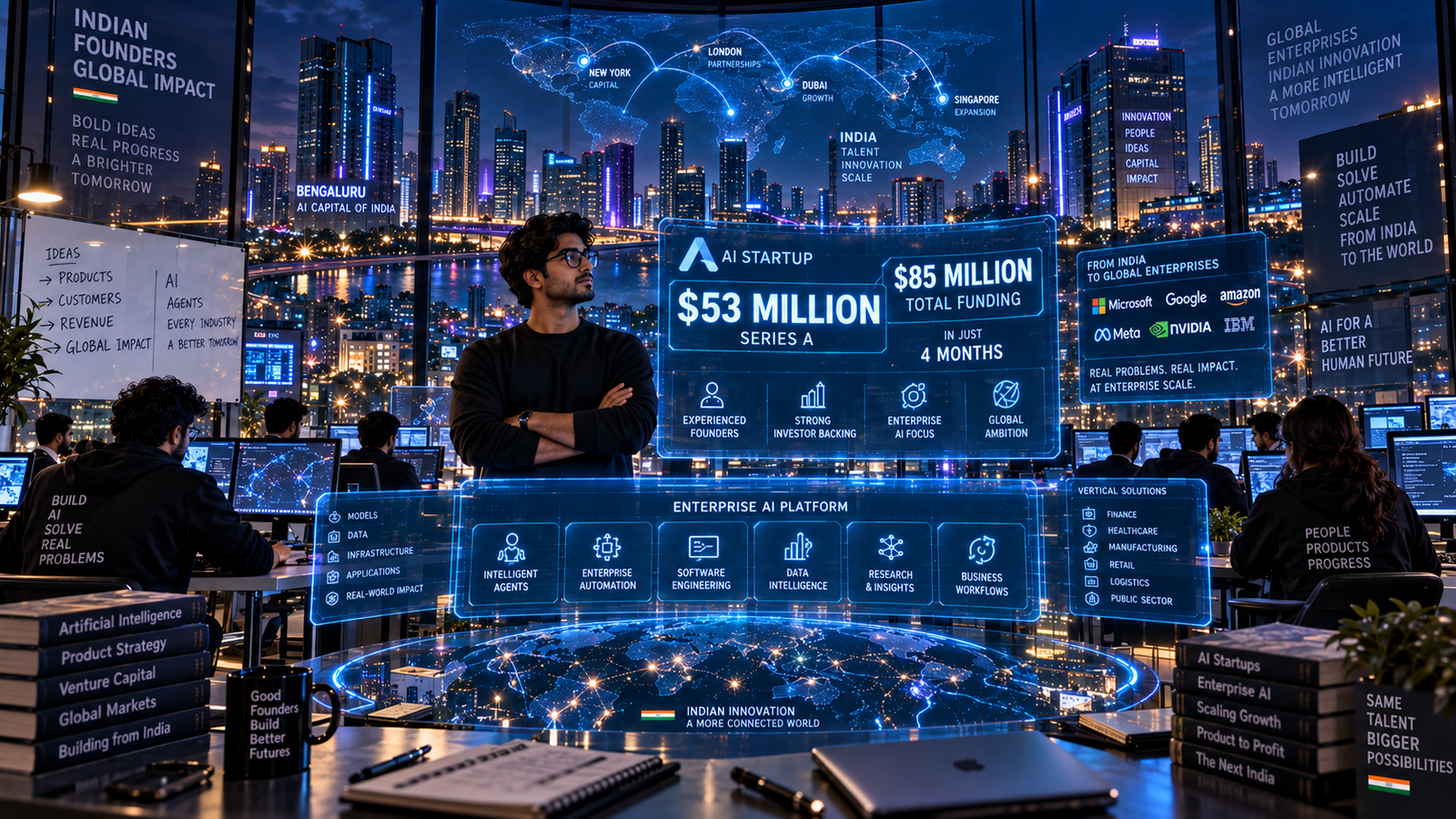
India’s AI startup ecosystem has produced another major funding signal.
Hang Ten Systems, the AI startup founded by former Infosys CEO Vishal Sikka, has raised another $53 million in seed funding.
The latest round takes the company’s total funding to $85 million.
More strikingly, the startup reached that figure only about four months after its founding. (India Today)
That timeline highlights how quickly investor interest can build around experienced founders working in artificial intelligence.
However, the bigger story is not simply the size of the funding round.
It is about what investors may be looking for in the next generation of AI companies.
A Startup Built Around AI
Hang Ten Systems is operating in one of the most competitive technology markets in the world.
AI startups are attracting capital across infrastructure, enterprise software, agents and specialised applications.
Consequently, founders need more than an AI product.
They need technical expertise, industry knowledge and a clear understanding of where businesses can use the technology.
Sikka brings a long history in enterprise technology.
That experience can matter when building products for large organisations.
Why the $53 Million Round Matters
Raising $53 million at such an early stage is unusual.
Most startups need time to demonstrate their product, acquire customers and establish revenue.
Hang Ten’s rapid funding journey shows how investors can back teams before a company reaches traditional maturity milestones.
At the same time, early capital creates pressure.
A large funding base gives founders resources to hire talent, develop technology and expand operations.
However, it also raises expectations.
Investors will eventually want evidence that the technology can become a large and sustainable business.
Experienced Founders Are Returning to AI
The Hang Ten story also reflects a wider founder trend.
AI is attracting experienced technology executives who have already spent years inside large companies.
These founders understand enterprise problems.
They also understand how technology is purchased, deployed and scaled.
Therefore, they can approach AI entrepreneurship differently from first-time founders.
Instead of starting with a blank slate, they can begin with years of accumulated industry knowledge.
That combination of experience and new technology could create a powerful startup formula.
AI Is Changing the Meaning of Startup Speed
Traditional startups often spend years building technology.
AI can compress parts of that process.
Development tools are improving.
Research can move faster.
Prototyping can happen with smaller teams.
Moreover, AI allows companies to automate several internal processes.
As a result, founders can potentially reach important milestones faster.
Funding can then accelerate that process further.
Still, speed alone does not create a successful startup.
Customer demand remains critical.
The New AI Startup Competition
The AI market is becoming increasingly crowded.
Large technology companies are building foundation models.
Cloud companies are providing AI infrastructure.
Meanwhile, startups are developing specialised applications.
Therefore, new companies need a clear reason to exist.
Some will compete through technology.
Others will focus on specific industries.
A third group may build around proprietary data.
Enterprise distribution could become another major advantage.
Consequently, the strongest startups may combine several of these elements.
India’s Opportunity
India has a growing pool of engineers, researchers and technology executives.
That creates an opportunity to build globally relevant AI companies from the country.
The market also offers something else: enormous enterprise complexity.
Banks, insurers, manufacturers, retailers and technology companies all operate complicated workflows.
AI can potentially automate parts of those systems.
Therefore, Indian founders can build products around problems that exist at massive scale.
The opportunity is not limited to serving Indian customers.
Successful AI companies can eventually target global enterprises as well.
What Investors Will Watch Next
The next stage will be important for Hang Ten.
Funding provides resources.
However, execution determines whether those resources create a durable company.
Investors will eventually look at product development, customer adoption and commercial traction.
They will also examine how efficiently the company converts capital into growth.
As the AI market matures, those metrics will matter increasingly.
The Bigger Startup Signal
Hang Ten’s funding round reflects a broader change in startup economics.
Capital is increasingly available for founders with strong technical or enterprise backgrounds.
AI can then act as the technology multiplier.
That creates a new startup formula:
Experienced founder + AI technology + large enterprise problem + significant early capital.
Whether every company using that formula succeeds remains uncertain.
Nevertheless, the model is becoming increasingly visible.
India’s next generation of AI companies may therefore be built by founders who combine decades of enterprise experience with technologies that barely existed when their careers began.
The AI startup race is no longer only about who can build the best model.
It is increasingly about who can turn AI into a company that enterprises cannot ignore.
Tags: Hang Ten Systems, Vishal Sikka, AI Startup, AI Funding 2026, Indian Startups, AI Entrepreneurs, Enterprise AI, Startup Funding India
Author CTA: Follow Flairius News — sharp takes on AI, business, and India’s startup economy.
 Nayra Roy