
 By Aditya Agarwal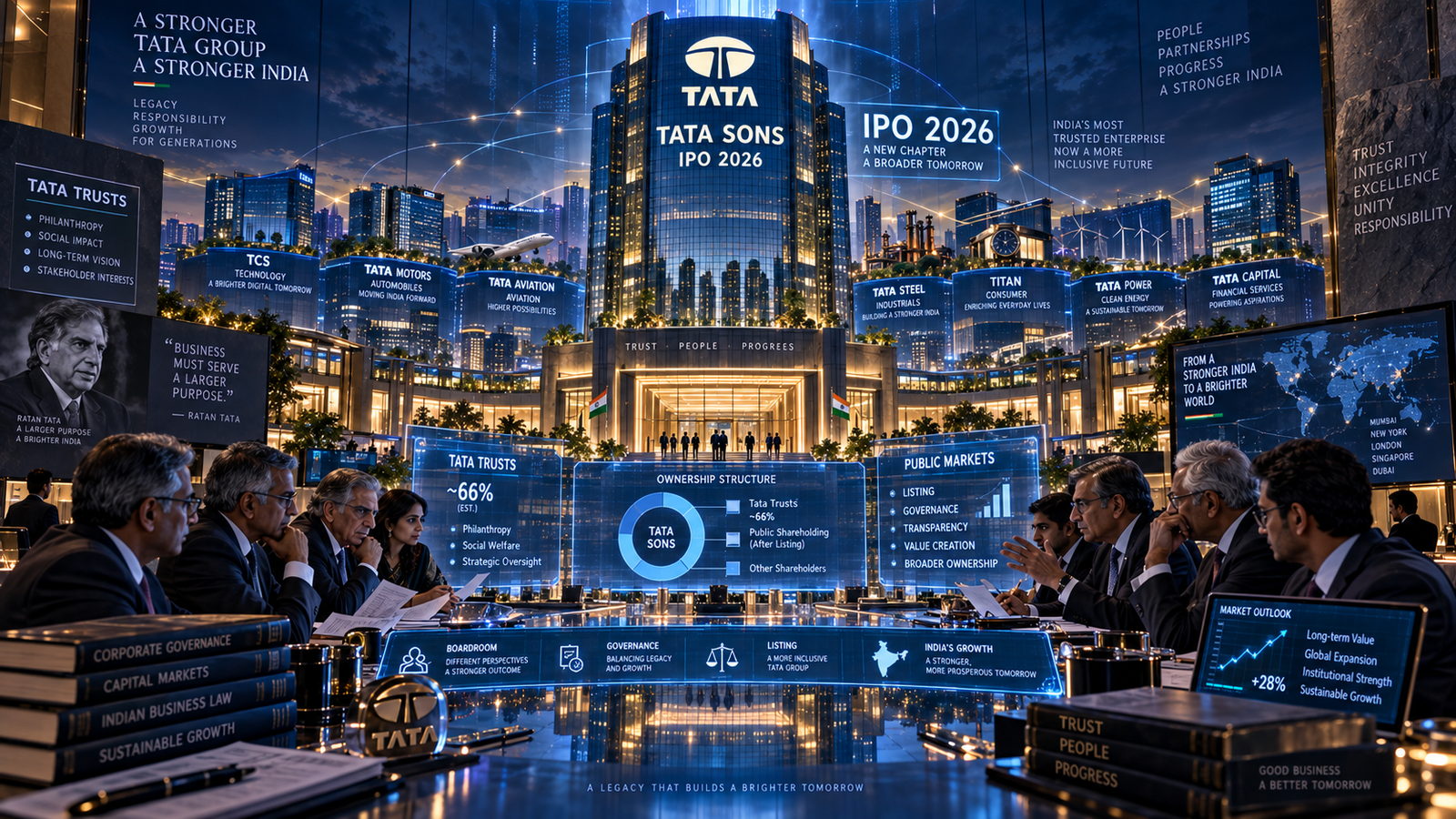
The Tata Group is facing an important corporate governance moment.
Tata Sons directors have voted to extend N Chandrasekaran’s term as executive chairman for another five years. The decision came despite opposition from Tata Trusts chairman Noel Tata. (Financial Times)
At the same time, the board has moved ahead with preparations connected to a potential public listing.
That combination makes the latest development particularly significant.
Tata Sons sits at the centre of one of India’s largest business groups. Therefore, decisions at the holding-company level can affect the wider corporate structure.
A Boardroom Dispute at the Centre
The disagreement involves two important parts of the Tata structure.
On one side is the Tata Sons board.
On the other is Tata Trusts, which holds a significant stake and has historically played an important role in the group’s governance.
According to reporting by the Financial Times, Noel Tata was the only director to oppose both the chairman extension and the move toward a public listing. He has also challenged the validity of the extension vote. (Financial Times)
Consequently, the dispute could have implications beyond a leadership appointment.
Why the IPO Matters
Tata Sons has been moving toward a potential public-market listing after regulatory developments involving its classification as an upper-layer NBFC.
The Reserve Bank of India rejected Tata Sons’ appeal against the listing requirement. (Financial Times)
As a result, preparations for a possible IPO have become increasingly important.
A public listing would change how investors see Tata Sons.
The company would face greater disclosure requirements.
Moreover, public investors would scrutinise its ownership structure, investments and capital allocation.
A Potentially Massive Listing
Market estimates have placed a potential Tata Sons valuation above $120 billion.
However, that figure should be treated as an estimate rather than a confirmed IPO valuation.
The eventual market value would depend on the final structure, pricing, investor demand and market conditions.
Therefore, the headline valuation is only one part of the story.
Why Corporate Governance Matters
The latest dispute highlights an unusual feature of large holding companies.
Ownership and management do not always move in exactly the same direction.
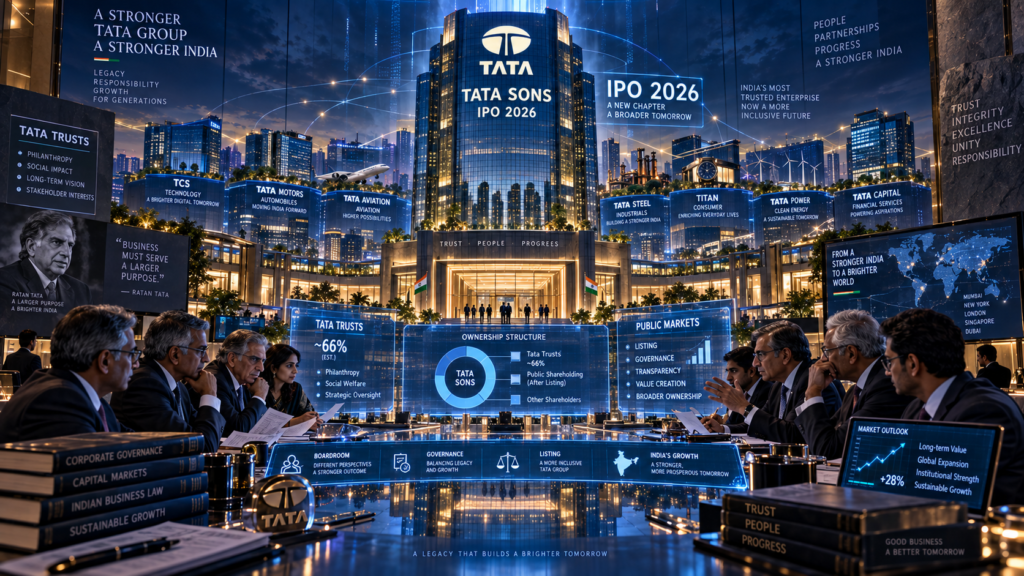
Tata Sons sits above a broad network of companies.
Those businesses operate across technology, automobiles, aviation, consumer products, finance and industrial sectors.
Consequently, governance decisions at Tata Sons can influence how investors understand the wider group.
What Investors Will Watch
Several questions now become important.
First, how will the governance dispute develop?
Next, what happens to the listing process?
Then, how will Tata Sons structure a potential public offering?
Finally, what valuation will public investors assign to the holding company?
Each question could affect the eventual IPO narrative.
The Bigger Business Story
The Tata Sons dispute is therefore about more than one board meeting.
It brings together corporate governance, ownership, regulation and public-market access.
At the same time, it shows how India’s largest private business groups are increasingly interacting with public-market institutions.
The next phase will depend on regulatory, legal and board-level developments.
Tata Sons may be preparing for the public markets.
But before that happens, the company must navigate a significant question about who ultimately controls the direction of its corporate future.
Tags: Tata Sons, Tata Sons IPO, Tata Group, Tata Trusts, N Chandrasekaran, Corporate Governance India, IPO India 2026
Author CTA: Follow Flairius News — sharp takes on AI, business, and India’s startup economy.