
 By Nayra Roy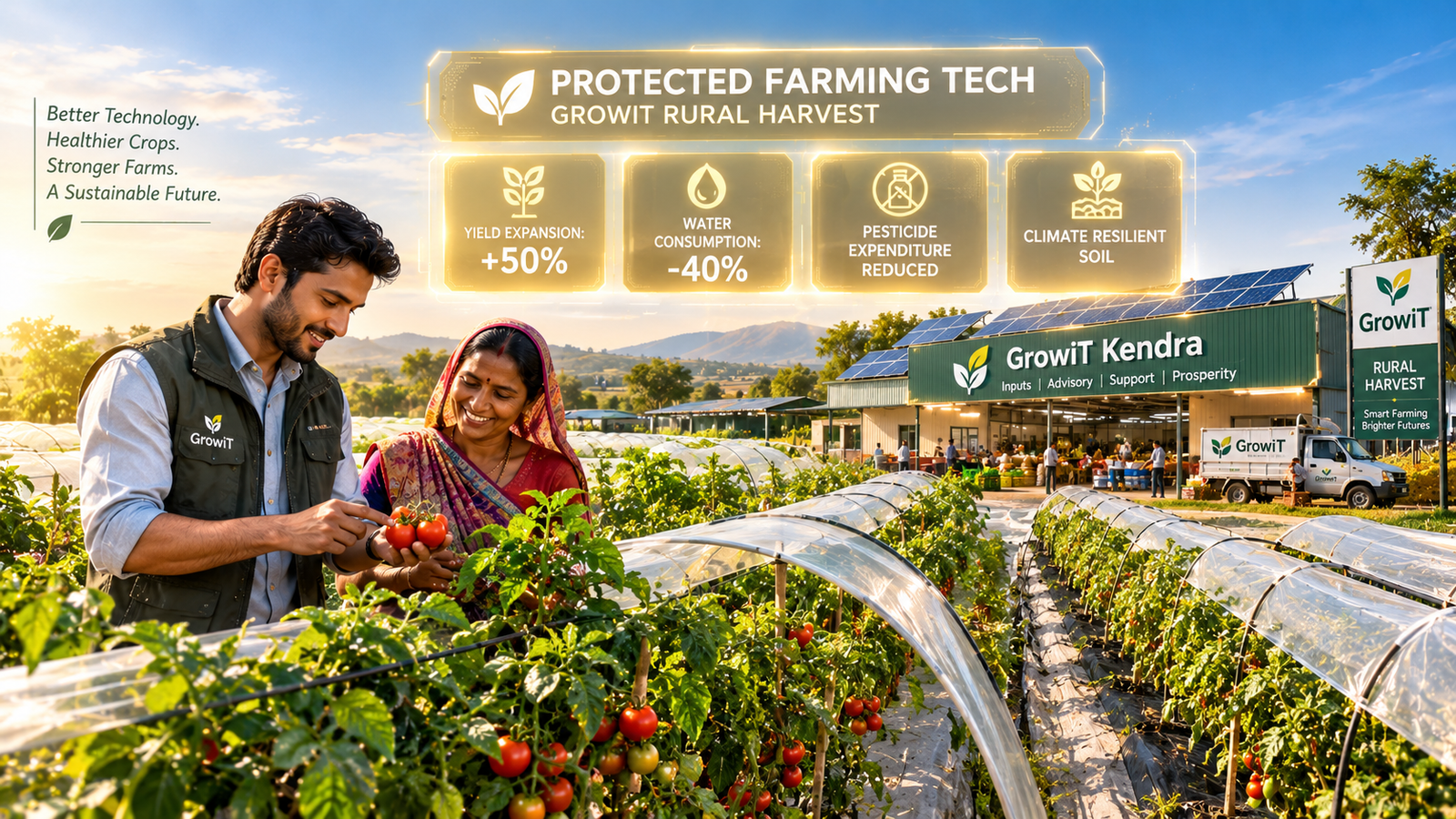
Extreme climate volatility and unseasonal rains pose persistent threats to agricultural production across emerging economies. For decades, marginal smallholder farmers suffered substantial crop losses during unseasonal weather fluctuations.
However, agritech entrepreneurship is proving that durable solutions do not always require multi-million-dollar software platforms. Gujarat-based manufacturer GrowiT has scaled an accessible hardware model, pioneering protected farming tech tailored for marginal farmers. Consequently, participating farmers increase harvest yields by up to 50% while reducing chemical pesticide dependency. Furthermore, by distributing frugal plastic crop covers and mulch films through rural franchise stores, the startup scales profitably without venture burn. Therefore, accessible manufacturing hardware is establishing climate resilience across the agricultural heartland.
Why High-End AgriTech Failed Indian Smallholders
Much of the venture capital invested in Indian agritech historically funded satellite imagery apps and drone spraying services. While technologically sophisticated, these software solutions required smartphones and subscription fees that smallholder farmers struggled to justify.
Furthermore, satellite notifications could not physically prevent unseasonal hailstorms, insect swarms, or rapid soil moisture evaporation. What farmers required was physical protection at accessible prices.
Deploying frugal protected farming tech directly addresses this physical vulnerability. Products like agricultural mulch films, insect nets, and protective crop covers create microclimates around growing crops.
Specifically, mulch films retain soil moisture during droughts, while protective crop covers shield delicate fruit from unseasonal hailstorms. As a result, farmers reduce irrigation water consumption by 40% while preventing pest infestations naturally.
The Rural Franchise and Farmer Training Network
The entrepreneurial genius of GrowiT lies in its decentralized rural distribution model. Rather than trying to sell products via digital e-commerce apps, the company operates physical GrowiT Kendra franchise stores across agricultural districts.
Local rural entrepreneurs manage the centers, serving as trusted community training hubs. When a farmer visits, the franchisee demonstrates how to install crop covers and manage soil aeration.
Moreover, the startup coordinates buyback programs for used agricultural plastics, recycling worn materials into secondary industrial products. This circular supply chain protects rural soil health while creating economic incentives for responsible disposal.
Doubling Farm Household Incomes Sustainably
The financial impact of physical crop protection transforms smallholder household economies. Farmers utilizing protective covers report harvest yield increases of 30% to 50%, alongside higher quality produce that commands premium prices in local mandis.
Because crops experience fewer pest attacks, chemical pesticide expenditures drop significantly. The combination of larger harvests and reduced input costs doubles net seasonal income for smallholder families.
Ultimately, the commercial success of protected farming tech demonstrates the power of frugal manufacturing entrepreneurship. By solving tangible environmental friction with accessible physical products, agritech founders are building enduring rural wealth.
Tags: Protected Farming Tech, GrowiT, AgriTech India, Sustainable Agriculture, Climate Resilient Farming, Rural Entrepreneurship, Frugal Innovation 2026
Author CTA: Follow Flairius News — sharp takes on AI, business, and India’s startup economy — flairiusnews.com
 Aditya Agarwal