
 By Aditya Agarwal
DLF Q2 Results Show Higher Quarterly Profit
DLF Q2 results for the July–September quarter of FY2026–27 indicate stronger year-on-year profitability, supported by demand in the developer’s luxury residential portfolio.
DLF Ltd reported consolidated net profit of approximately ₹1,301 crore, an increase of around 11% compared with the same quarter a year earlier. Quarterly revenue reached approximately ₹2,298 crore, while new sales bookings stood at ₹3,800 crore.
The results were reported by Moneycontrol on 16 October 2026. They offer a snapshot of the company’s performance in India’s residential property market, where premium housing demand remains an important factor for major developers. (Moneycontrol)
Luxury Housing Supports Performance
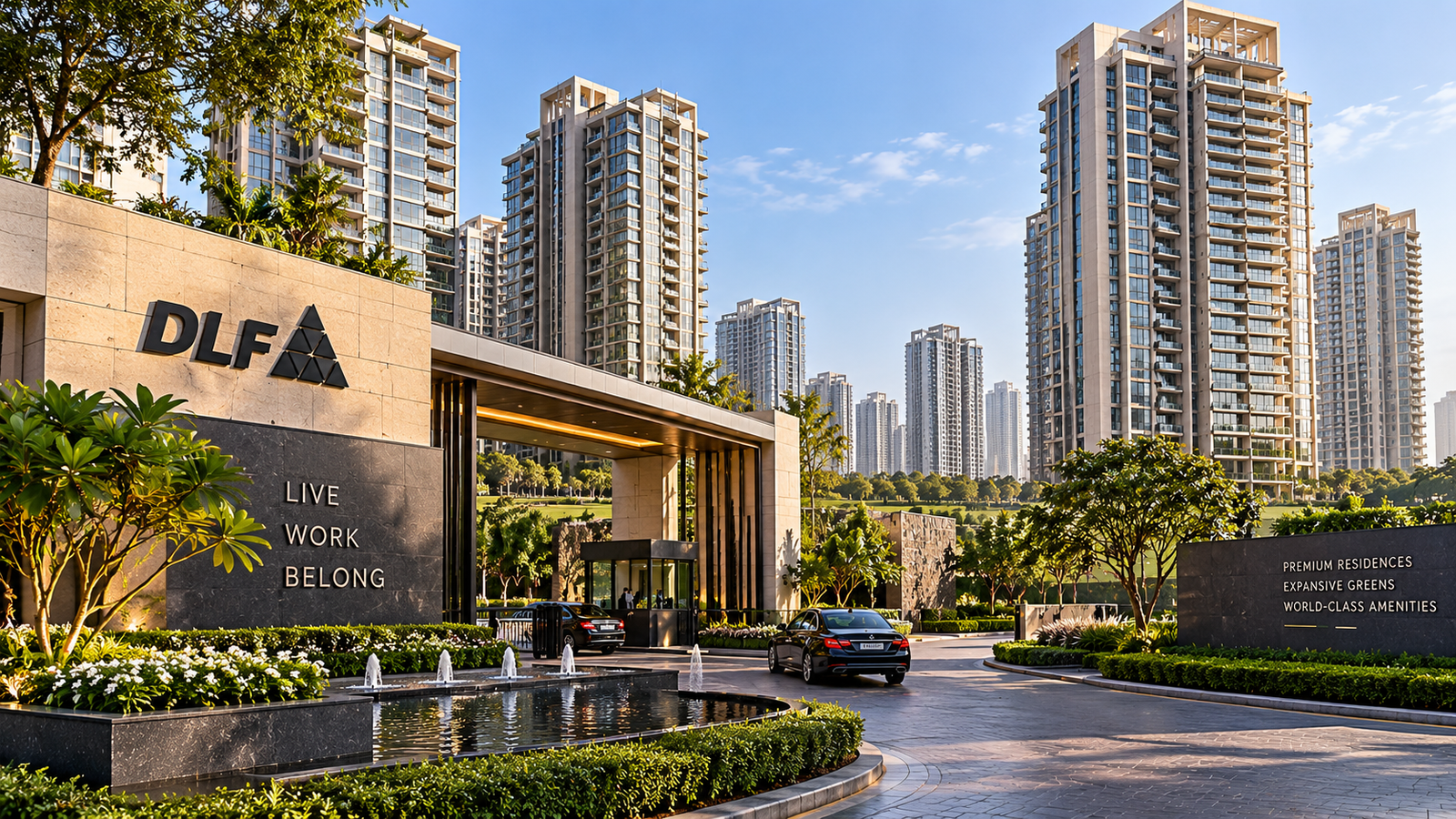
DLF said its luxury residential portfolio continued to attract buyers during the quarter. The company’s Aureva luxury retirement housing project in Gurugram sold out during the period, while its super-luxury residential development, The Dahlias, also continued to attract demand.
These developments illustrate the importance of product positioning in the premium property market. High-end buyers may evaluate location, design, amenities, privacy, construction quality and the reputation of the developer when making purchase decisions.
However, the performance of luxury projects should not be interpreted as evidence that all housing segments are experiencing similar demand. Property markets can vary considerably by city, price range, buyer profile and availability of new supply.
For developers, project-level sales and the timing of launches can influence quarterly bookings and revenue recognition.
Sales Bookings and Revenue Tell Different Stories
DLF recorded new sales bookings of ₹3,800 crore in the September quarter. Sales bookings indicate the value of sales secured during a reporting period, but they are not identical to recognised revenue or net profit.
Revenue recognition can depend on project structure, construction progress and applicable accounting requirements. Buyers may also cancel bookings or change payment schedules, meaning that bookings and cash flows should be examined separately.
The distinction matters for investors analysing property developers. A company may report strong bookings while revenue is recognised over a different period. Conversely, revenue can be supported by projects sold in earlier quarters.
DLF’s quarterly results therefore need to be considered alongside cash generation, debt, project delivery and the timing of future launches.
Rental Properties Provide Another Revenue Stream
DLF also operates a commercial real estate business through DLF Cyber City Developers Ltd, which manages office and rental assets.
According to the published results, the rental business reported quarterly revenue of approximately ₹2,014 crore. Its EBITDA rose 9% year-on-year to around ₹1,537 crore, while net profit increased 17% to ₹752 crore.
The rental portfolio provides a different source of income from residential property sales. Residential earnings can be influenced by project launches and buyer bookings, whereas commercial rental performance depends on occupancy, lease rates, tenant demand and operating expenses.
A diversified property business may benefit from both segments, although each faces its own market risks.
What Property Buyers and Investors Should Watch
Homebuyers should assess property affordability, location, construction timelines, maintenance costs and the developer’s delivery record rather than relying solely on a company’s quarterly results.
Investors should monitor sales bookings, revenue, cash flow, debt levels, inventory and the schedule of upcoming launches. Changes in interest rates, construction costs and buyer sentiment can also affect property demand.
The broader market picture remains important. Strong demand in a premium development does not necessarily indicate equivalent growth in affordable housing or mid-market residential properties.
Outlook
DLF’s latest quarterly results show higher profit and continued activity in its luxury residential and commercial rental businesses. Nevertheless, investors should distinguish quarterly earnings from longer-term performance and examine both sales momentum and cash generation.
For India’s property market, the coming quarters will reveal whether premium housing demand remains strong and how effectively developers convert bookings into delivered projects and sustainable earnings.
Tags: DLF Q2 results, Indian real estate, luxury housing, Gurugram property, real estate news, property investment