 By Aditya Agarwal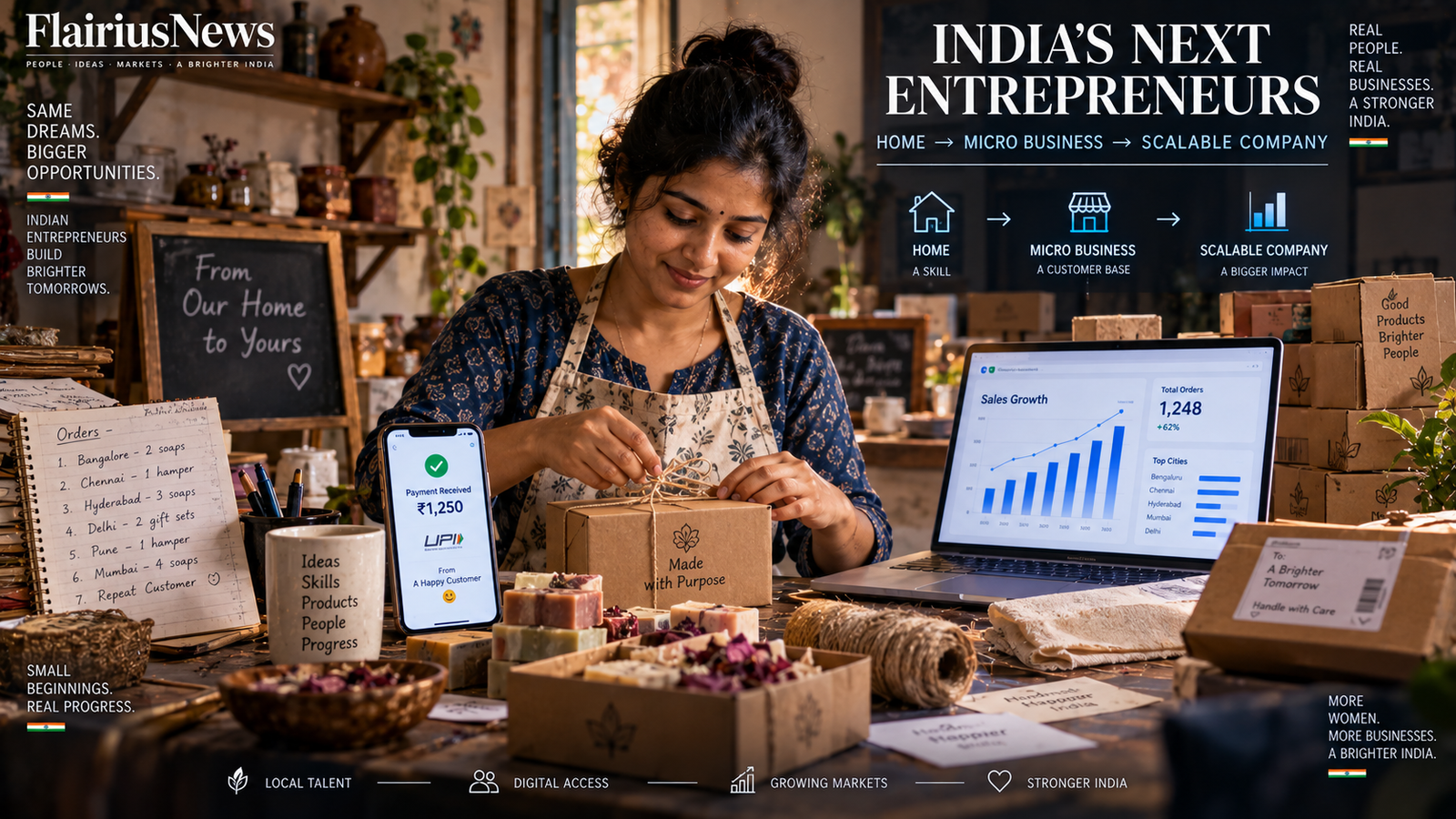
India’s entrepreneurship story is not limited to venture-backed startups.
Millions of people build businesses without raising venture capital.
Some start from their homes.
Others begin with a small shop, local service or family enterprise.
Now, new entrepreneurship programmes are focusing on this part of the economy.
In Ahmedabad, the Aatmanirbhar Gruhini Karyakram recently concluded with a focus on helping women develop entrepreneurial activity. The programme was organised by the Centre for Entrepreneurship Development and the MSME Commissionerate under the World Bank-supported RAMP programme. (MATV)
The development highlights a broader question:
What happens when India’s small businesses become more formal, digital and scalable?
Entrepreneurship Does Not Always Begin With a Startup
The startup ecosystem often receives the most attention.
Funding rounds generate headlines.
Founders appear on technology stages.
Venture capital becomes a visible measure of entrepreneurial activity.
However, most entrepreneurs do not begin that way.
A person may first sell products locally.
Another may provide a specialised service.
Someone else may operate a small manufacturing unit.
Therefore, entrepreneurship can begin long before a company becomes a recognisable startup.
The Micro-Business Opportunity
Small businesses can operate with limited resources.
Yet many face similar challenges.
They need financing.
They need customers.
They need technology.
They also need access to larger markets.
Consequently, improving these areas can have a meaningful effect on business growth.
Digital payments have already reduced some barriers.
Online marketplaces have expanded customer reach.
Meanwhile, social media has created new marketing channels.
Women Are Becoming an Important Founder Segment
Women-led businesses can emerge from very different circumstances.
Some entrepreneurs build businesses around existing household skills.
Others develop professional services.
Some create food brands.
Others enter manufacturing or digital commerce.
Therefore, entrepreneurship programmes that focus on training, mentoring and market access can help convert informal economic activity into more structured businesses.
The Formalisation Opportunity
One major challenge for small businesses is formalisation.
A business that remains informal can struggle to access institutional financing.
It may also have difficulty entering larger supply chains.
As a result, formal registration, accounting and digital operations can become important growth steps.
Technology can simplify some of this process.
Accounting software can automate financial records.
Digital payments can create transaction histories.
Online commerce can provide customer data.
Consequently, small businesses can gradually develop the infrastructure required to scale.
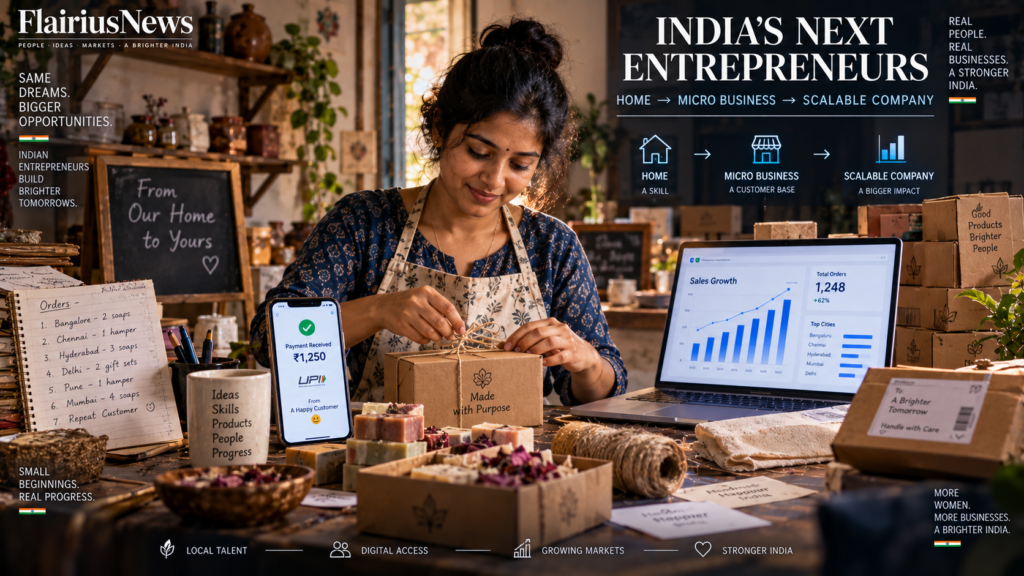
From Local Business to Scalable Company
The transition is not automatic.
A local business may have loyal customers but limited capacity.
Scaling requires repeatable processes.
The founder must be able to train employees.
Supply chains need to become reliable.
Quality must remain consistent.
Therefore, entrepreneurs need to shift from doing everything themselves toward building systems.
That is one of the biggest differences between a small business and a scalable company.
The Role of Government-Backed Programmes
Programmes such as the Ahmedabad initiative aim to support entrepreneurship through structured development.
The reported programme focused on self-reliance and entrepreneurial activity while operating under the broader RAMP framework. (MATV)
The important point is not simply the programme itself.
It is the infrastructure around entrepreneurship.
Training can improve skills.
Mentorship can reduce mistakes.
Access to finance can provide working capital.
Market connections can create customers.
Together, those elements can make it easier for businesses to grow.
The Next Founder Wave Could Look Different
India’s next generation of entrepreneurs may not all come from elite engineering colleges.
Some could emerge from local communities.
Others may come from manufacturing families.
Many could build businesses while continuing to serve regional markets.
AI can also lower the barrier further.
A small business owner can now use AI for marketing, bookkeeping, customer support and research.
As a result, a very small team can operate with capabilities that previously required multiple specialists.
What Entrepreneurs Need Next
Capital is useful.
However, capital alone does not build a durable business.
Founders need customers.
They need reliable operations.
They also need financial discipline.
Most importantly, they need a repeatable value proposition.
Therefore, the next step for India’s entrepreneurship ecosystem is not simply creating more businesses.
It is helping more businesses become durable companies.
The Bigger Story
India’s entrepreneurial economy is much larger than the venture-capital ecosystem.
It includes home businesses.
It includes local manufacturers.
It includes service providers.
It includes women-led enterprises.
It also includes technology startups.
The next major founder wave may therefore begin far away from a startup incubator.
It could begin at home, in a local market, inside a family business or through a small idea that finally gets the tools needed to scale.
Tags: Entrepreneurship India, Indian Entrepreneurs, Women Entrepreneurs, Micro Business India, MSME India, Founder Ecosystem
Author CTA: Follow Flairius News — sharp takes on AI, business, and India’s startup economy.