
 By Aditya Agarwal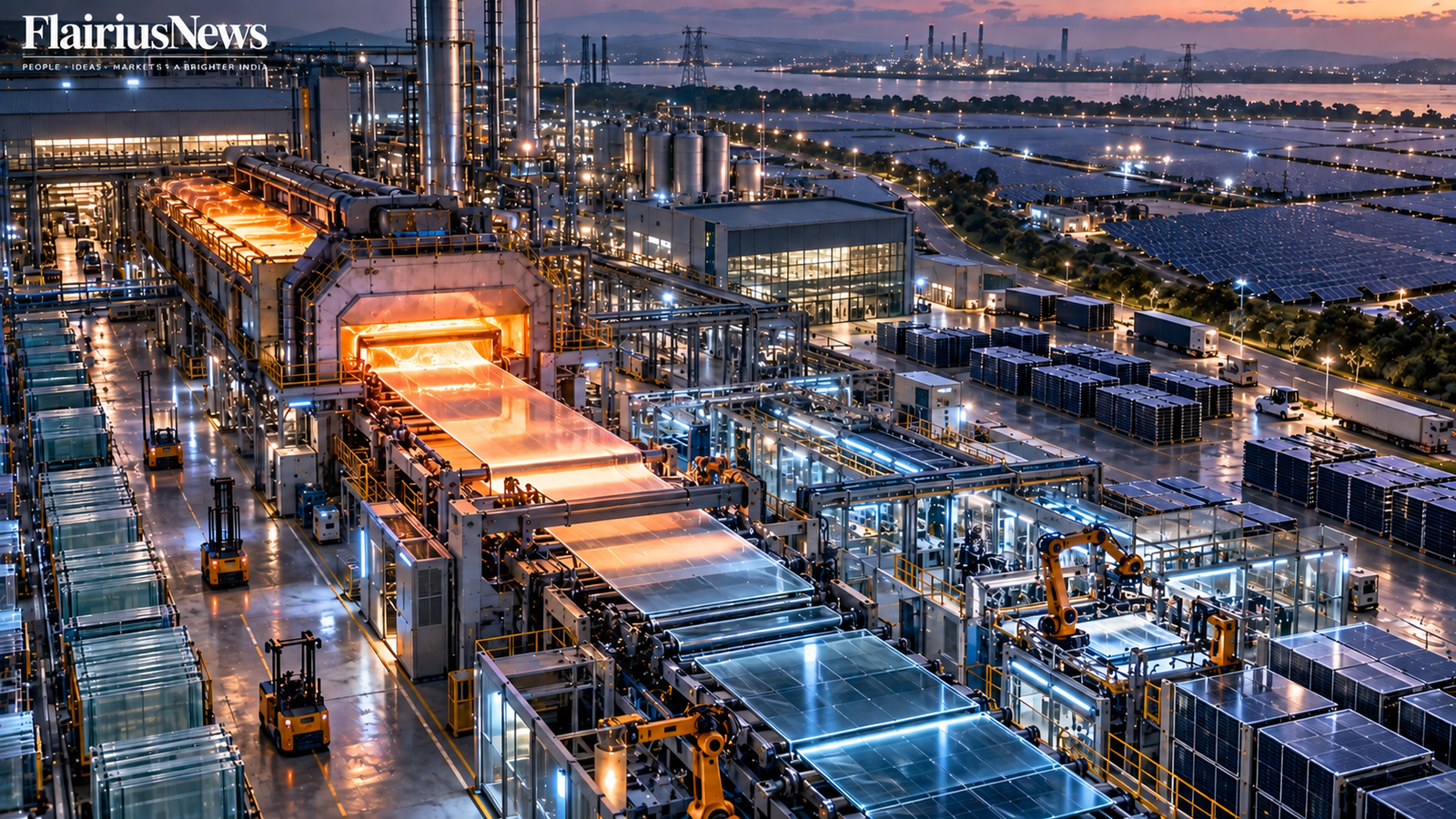
Borosil Is Expanding Its Solar-Glass Capacity
India’s solar manufacturing ecosystem is entering another expansion phase.
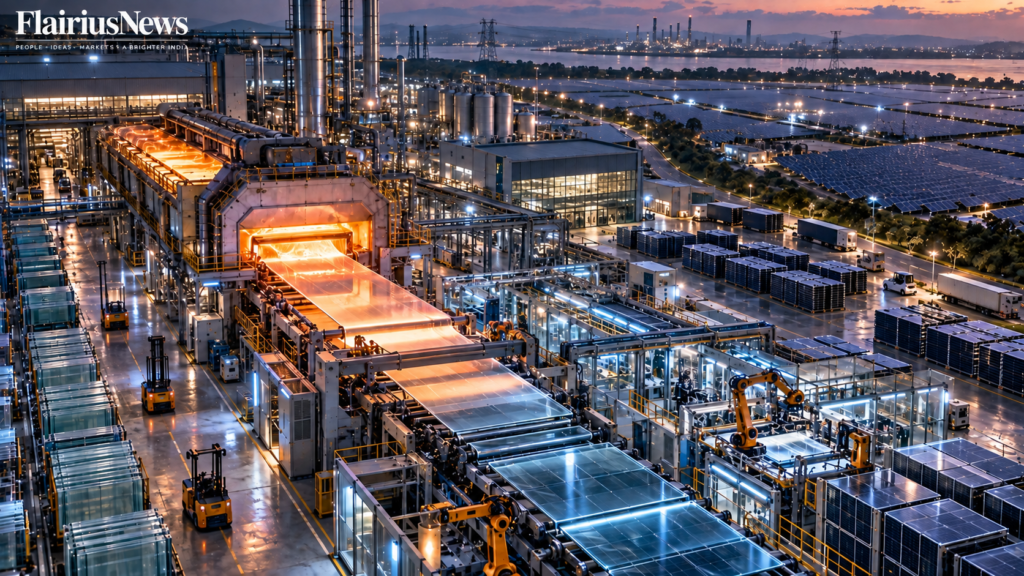
Borosil Renewables is planning to increase its solar-glass manufacturing capacity by 60%, with two new furnaces at its Bharuch facility. The expansion is expected to take the company’s total production capacity to around 1,600 tonnes per day by the first quarter of FY28. The company is targeting revenue of approximately ₹2,500 crore as capacity rises. (Business Standard)
The development is significant because solar manufacturing depends on more than photovoltaic cells and modules.
Solar glass is an important component of every panel. Therefore, increasing domestic production can strengthen another layer of India’s solar supply chain.
Two New Furnaces Will Increase Production
Borosil plans to add around 600 tonnes per day through the two additional furnaces at its Bharuch plant. (Business Standard)
That represents a substantial increase from its existing manufacturing base.
Moreover, higher capacity gives the company room to serve a larger domestic solar market as India continues adding renewable-energy generation.
Solar installations require a large volume of glass over their operating life. Consequently, the growth of solar generation creates demand not only for developers but also for component manufacturers.
Solar Manufacturing Is Becoming a Larger Business
India has been attempting to build more domestic capability across the solar value chain.
Initially, much of the attention was concentrated on photovoltaic modules. However, manufacturing infrastructure also includes wafers, cells, glass, backsheets, inverters, mounting systems and other components.
Borosil operates within this supporting ecosystem.
Therefore, the company’s expansion is not simply a capacity story. It also reflects the increasing commercial opportunity around the physical infrastructure needed to build solar projects.
Revenue Growth Will Depend on Utilisation
Adding manufacturing capacity does not automatically translate into equivalent revenue growth.
The company must keep its furnaces efficiently utilised while maintaining product quality and competitive pricing.
Furthermore, solar manufacturing remains exposed to changes in raw-material prices, international competition, domestic demand and project economics.
As a result, the ₹2,500 crore revenue target depends on both higher production and successful market absorption.
The timing of the expansion is also important.
If India’s solar deployment continues to increase, additional domestic solar-glass supply could find a growing market. However, if project additions slow, manufacturers could face pressure on utilisation and margins.
The Supply Chain Is Becoming More Strategic
Solar energy is often discussed in terms of electricity generation.
Yet the industrial ecosystem behind that electricity is equally important.
Manufacturing glass, cells and modules inside India can reduce dependence on imported components and create additional industrial capacity.
It can also generate demand for engineering, logistics, equipment maintenance and specialised manufacturing skills.
Consequently, solar manufacturing creates economic activity beyond the solar farm itself.
Why Bharuch Matters
Bharuch has become an important industrial location for Borosil’s manufacturing operations.
Expanding an existing industrial facility can provide advantages compared with building an entirely new site.
Existing infrastructure, workforce capabilities and supply-chain relationships can help reduce some development complexity.
However, large furnace projects still require substantial investment, engineering work and commissioning.
Therefore, the capacity increase will unfold over multiple stages rather than immediately changing production volumes.
India’s Solar Industry Is Building More Layers
Borosil Renewables’ expansion illustrates how India’s renewable-energy industry is becoming increasingly industrial.
The opportunity is no longer limited to building solar farms.
Companies are also developing the manufacturing infrastructure behind those projects.
If Borosil reaches its planned capacity and revenue targets, the company will become a larger participant in India’s solar-material supply chain.
For investors and businesses, the development highlights an important part of the energy transition: renewable power requires an equally large industrial ecosystem behind it.
Tags: Borosil Renewables, Solar Glass, Solar Manufacturing, Renewable Energy, India Business, Bharuch, Clean Energy
Follow Flairius News — sharp takes on AI, business, and India’s startup economy — flairiusnews.com