
 By Aditya Agarwal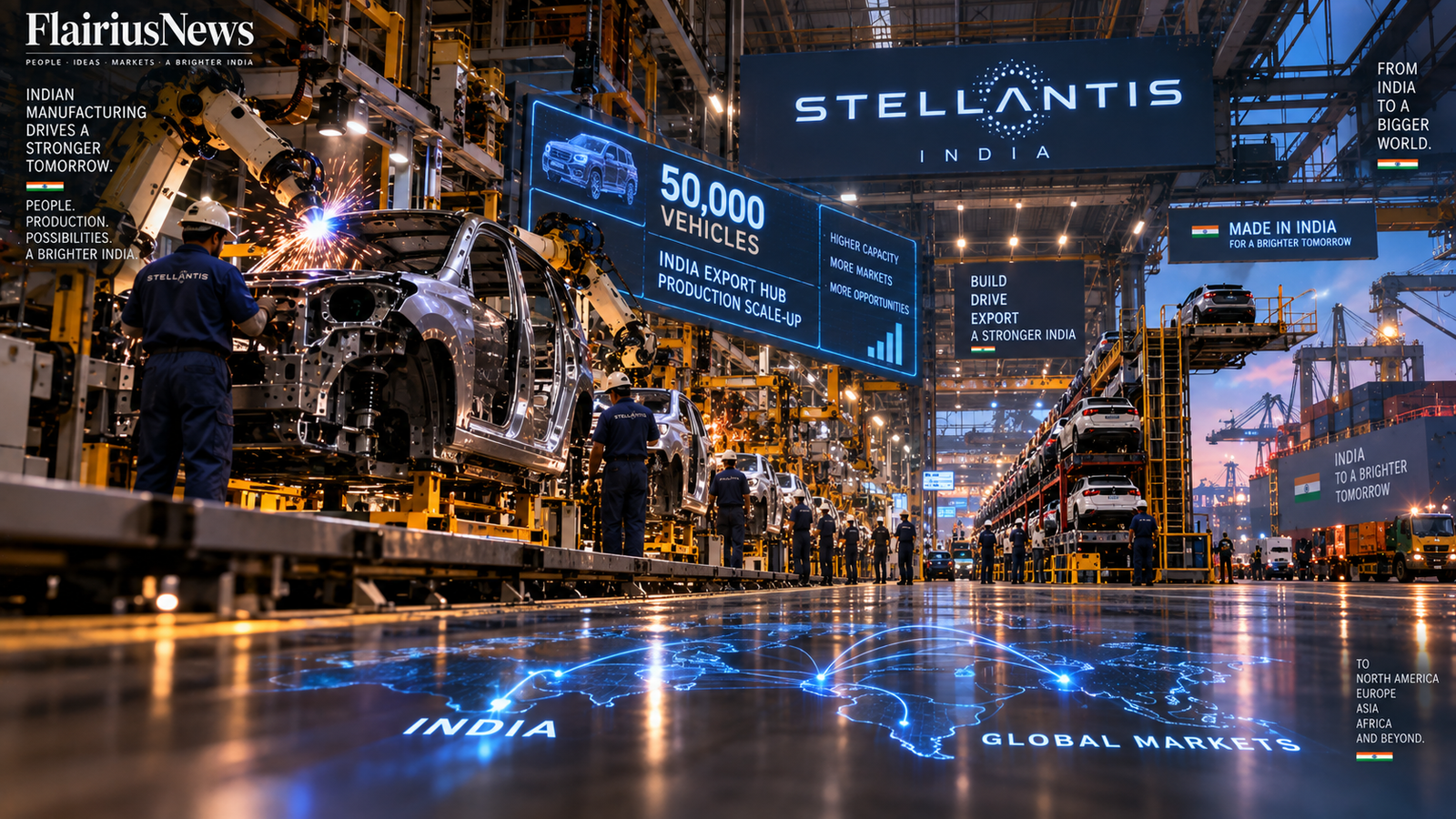
ndia’s automobile story is entering another stage.
Stellantis plans to nearly triple vehicle production in India to around 50,000 units next year, according to reporting published today. The company is positioning India increasingly as an export base rather than simply a domestic sales market. (The Times of India)
That shift matters.
India already has a large automobile industry.
However, global manufacturers are increasingly looking at the country as part of their international production strategies.
From Domestic Market to Export Hub
India has traditionally attracted automobile companies because of its large consumer market.
Millions of vehicles are sold domestically every year.
Yet exports create another opportunity.
A manufacturer can use Indian factories to serve customers in other markets.
Consequently, production volumes can grow even when domestic demand moves through different cycles.
Stellantis’ latest strategy reflects that broader opportunity.
Why Production Scale Matters
Increasing production requires more than adding vehicles to an assembly line.
Manufacturers need suppliers.
They need logistics infrastructure.
They also need trained workers and reliable component production.
Therefore, higher vehicle output can create a wider industrial effect.
More production can support component manufacturers.
It can increase demand for logistics.
Furthermore, it can create opportunities for technology companies supporting manufacturing.
India’s Manufacturing Advantage
India has developed a large automotive supplier ecosystem.
That ecosystem includes components, electronics, engineering services and manufacturing technology.
As a result, global automakers can increasingly source more parts locally.
Localisation can also improve production economics.
However, global export programmes require strict quality standards.
Factories must meet international specifications.
Supply chains must also remain reliable.
Exports Change the Business Model
An export-oriented factory operates differently from a factory focused only on domestic sales.
Vehicles must meet requirements across different markets.
Shipping costs become important.
Currency movements also matter.
Meanwhile, geopolitical changes can influence demand.
Consequently, India’s competitiveness will depend on more than low production costs.
Quality, reliability and logistics will become equally important.
What This Means for Indian Suppliers
A larger manufacturing footprint creates opportunities for Indian component companies.
Electric-vehicle components could benefit.
Software and vehicle electronics could also see demand.
Advanced manufacturing systems can become increasingly important.
Therefore, the automobile sector could become another pathway for India’s technology industry to move deeper into physical manufacturing.
The Export Opportunity
India has already become an important manufacturing base for several global industries.
Automobiles could strengthen that position.
If manufacturers increase exports, India’s role in global automotive supply chains could expand.
At the same time, stronger exports can create foreign-exchange earnings and support industrial employment.
Competition Will Remain Intense
India is not competing alone.
Other Asian countries also operate major automotive manufacturing hubs.
Therefore, Indian factories need to remain competitive.
Infrastructure must improve.
Ports need efficiency.
Supplier quality must remain high.
Furthermore, production must adapt to changing vehicle technology.
The EV Transition
The global automobile industry is also changing rapidly.
Electric vehicles are reshaping manufacturing.
Software is becoming a larger part of vehicle development.
Battery technology is creating new supply-chain requirements.
Consequently, India’s automotive opportunity is not simply about producing more traditional vehicles.
The country also needs capabilities for the next generation of mobility.
The Bigger Business Story
Stellantis’ planned production increase illustrates a wider shift.
India is increasingly being considered as a manufacturing platform for global markets.
That creates opportunities far beyond the automaker itself.
Suppliers, logistics companies, engineering firms and technology startups can all become part of the ecosystem.
India’s automobile opportunity is therefore becoming bigger than selling cars to Indians.
The next chapter could be about building vehicles in India for the world.
Tags: Stellantis India, Automobile Manufacturing, India Auto Industry, Vehicle Exports, Manufacturing India, Stellantis Production, India Business News
Author CTA: Follow Flairius News — sharp takes on AI, business, and India’s startup economy.