
 By Aditya Agarwal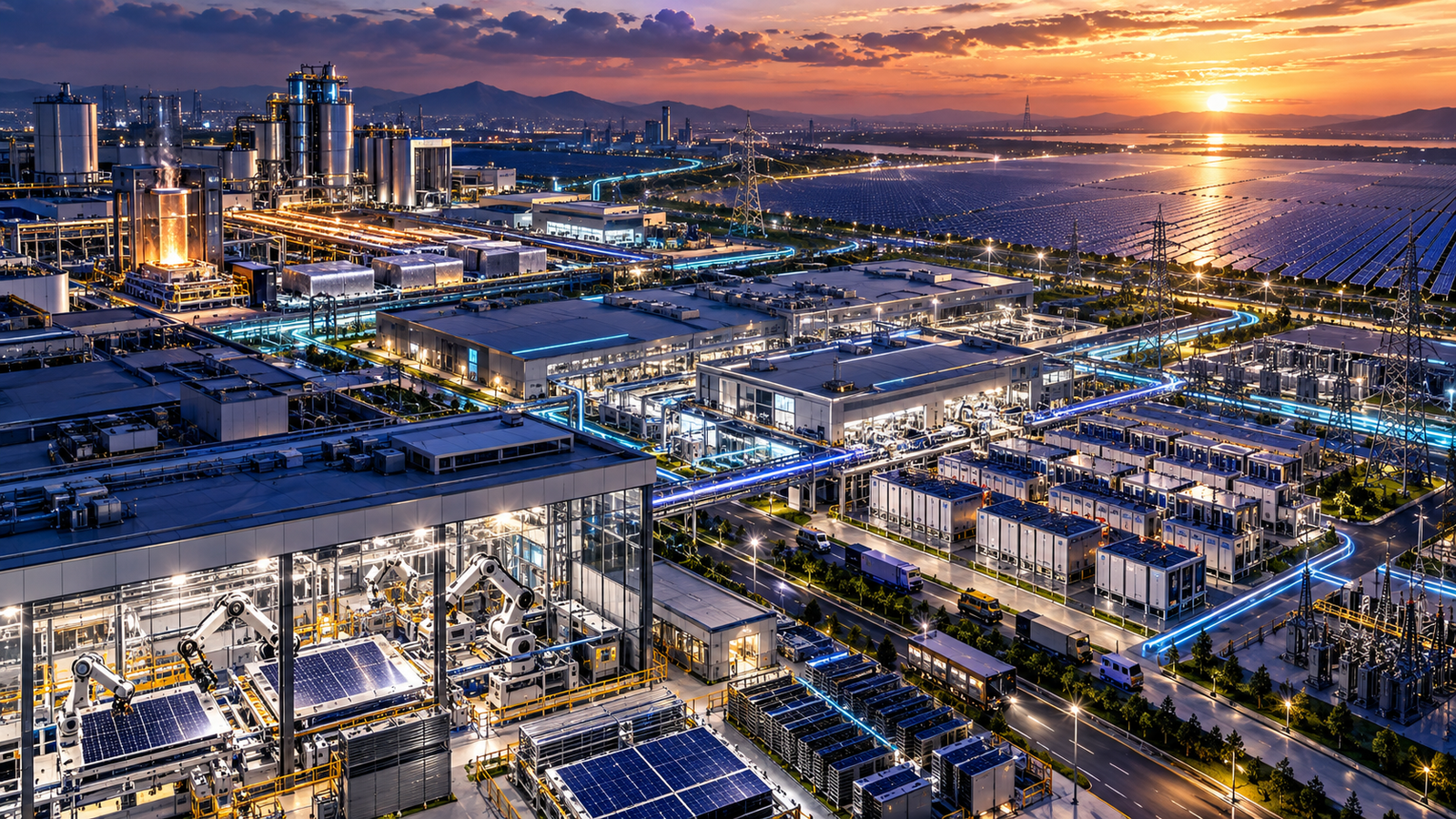
Navitas Solar Is Expanding Beyond Solar Modules
India’s renewable-energy manufacturing industry is moving toward a more integrated model.
Navitas Solar plans to invest ₹100 billion, or about $1.04 billion, over the next five years across Gujarat and Maharashtra. The company intends to expand beyond solar-module manufacturing into ingots, wafers, cells, battery storage and renewable-power generation. (MarketScreener)
The strategy is significant because solar manufacturing increasingly depends on controlling multiple stages of the supply chain.
Instead of focusing only on finished modules, Navitas wants to participate further upstream and downstream.
That could give the company greater control over production capacity and technology while reducing its dependence on external suppliers.
A 2.4 GW Cell Plant Is Already Under Construction
Navitas is already developing a 2.4 GW solar-cell manufacturing facility at Sisodara in Gujarat.
The first phase involves approximately ₹1,200 crore of investment and is targeted to begin operations by July 2027. (MarketScreener)
Solar cells are a critical stage between raw silicon-based materials and finished photovoltaic modules.
Therefore, increasing domestic cell capacity can strengthen India’s broader solar manufacturing chain.
The company currently has around 3 GW of annual solar-module manufacturing capacity, according to Reuters reporting. (MarketScreener)
Batteries Are Becoming Part of the Strategy
Navitas is also planning a 5 GWh battery-energy-storage facility in Vadodara.
That expansion reflects an important change in the renewable-energy business.
Solar generation fluctuates during the day. Battery storage can help shift electricity availability toward periods when solar production is lower.
Consequently, companies that combine generation, manufacturing and storage can potentially participate in a broader portion of the clean-energy ecosystem.
However, battery projects also require significant capital, specialised equipment and reliable supply chains.
Maharashtra Will Add Renewable Generation
Navitas also plans renewable-energy projects in Maharashtra.
The company is developing 200 MW and 25 MW solar parks in the state. (MarketScreener)
This creates a link between manufacturing and generation.
The company can manufacture solar equipment while simultaneously developing projects that use renewable-generation assets.
Such vertical integration is becoming increasingly relevant as India’s clean-energy market grows.
Why Integrated Manufacturing Matters
Solar manufacturing can become vulnerable when companies depend heavily on imported components.
Prices, international supply conditions and currency movements can affect project economics.
By expanding into ingots, wafers, cells and modules, manufacturers can potentially control more of the production process.
That does not eliminate supply-chain risks.
Nevertheless, it can create more opportunities to optimise costs and coordinate production.
India’s Solar Market Is Becoming More Industrial
The renewable-energy opportunity is no longer limited to installing solar panels.
It increasingly includes factories, machinery, battery systems, materials, logistics and power-generation assets.
Navitas’ planned investment illustrates this broader industrial transition.
Furthermore, the expansion could create demand for engineers, manufacturing technicians, equipment suppliers and specialised service providers.
The Scale of the Investment Matters
A $1 billion investment over five years represents a substantial expansion programme.
Yet the ultimate outcome will depend on execution.
Manufacturing facilities need to reach planned production levels, while renewable projects need land, grid connections and financing.
Battery storage also needs commercially viable operating models.
Therefore, the investment represents an expansion plan rather than guaranteed future capacity.
What Navitas Is Building
Navitas’ strategy effectively combines four businesses:
solar manufacturing, battery storage, renewable generation and upstream photovoltaic production.
That makes the company part of a broader shift toward integrated clean-energy platforms.
For India’s industrial economy, the development shows how renewable energy is creating opportunities far beyond solar farms.
The next stage of the sector could increasingly be defined by companies that build the factories, materials and energy-storage systems behind India’s clean-power expansion.
Tags: Navitas Solar, Solar Manufacturing, Renewable Energy, Battery Storage, Solar Cells, Gujarat, Maharashtra, India Business
Follow Flairius News — sharp takes on AI, business, and India’s startup economy — flairiusnews.com