
 By Aditya Agarwal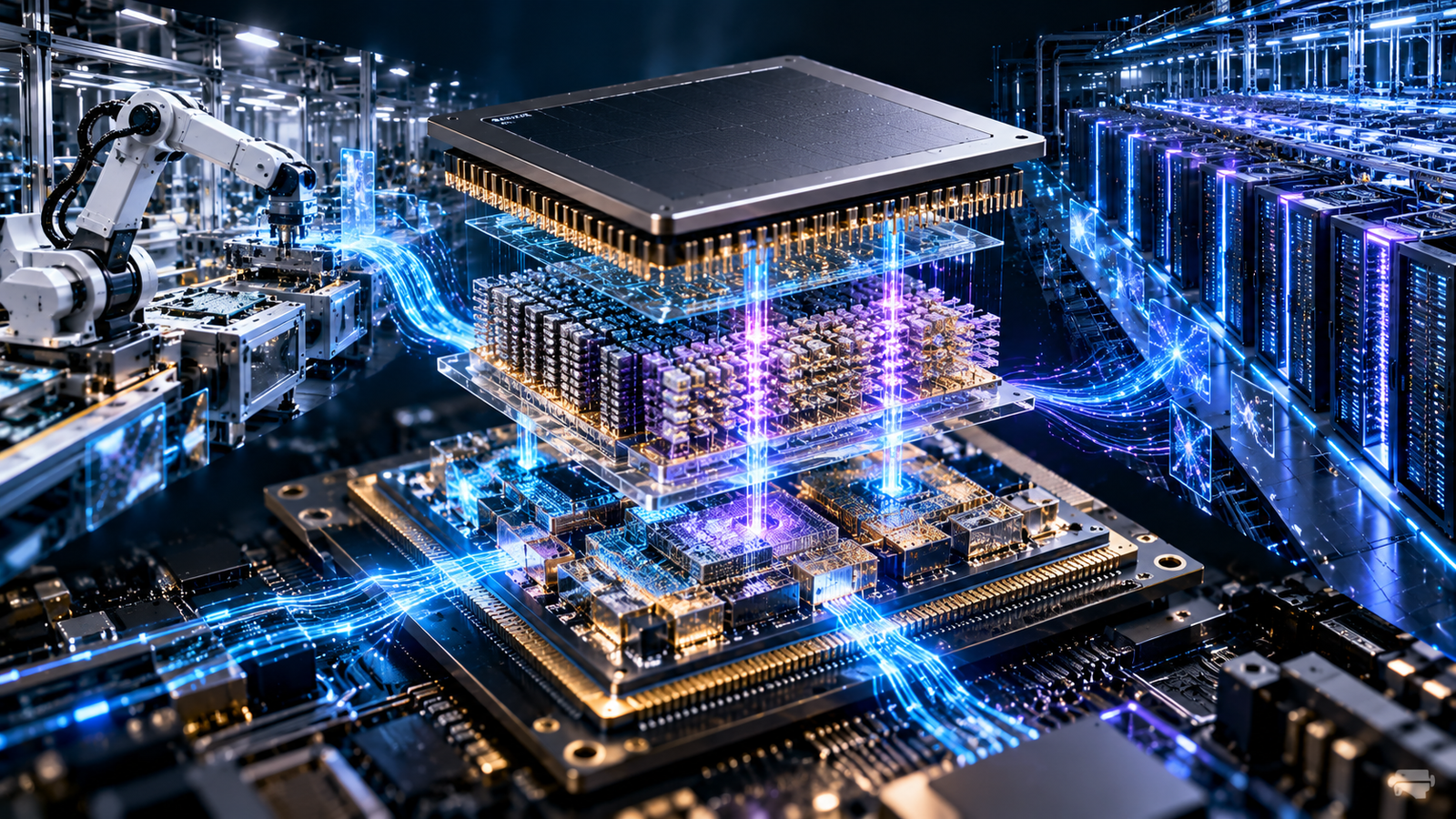
Mythic AI Is Expanding Its India Presence
The competition around AI infrastructure is increasingly moving toward specialised chips.
Mythic AI, a US semiconductor company focused on analogue compute-in-memory technology, is expanding its presence in India and targeting opportunities in data centres and robotics. The company currently has nearly 20 people in India and plans to increase that team to more than 60. (The Economic Times)
The expansion comes as AI workloads increasingly require specialised computing infrastructure.
Training large models consumes enormous computing resources.
However, inference — actually running models to produce results — also requires significant power and hardware capacity.
Mythic Takes a Different Approach
Most AI acceleration systems rely heavily on digital computing architectures.
Mythic has developed analogue compute-in-memory technology designed to perform certain AI calculations closer to where the data is stored.
The goal is to reduce the energy and data movement involved in AI inference.
That matters because moving data between memory and processing units can consume substantial energy.
Consequently, specialised architectures can potentially improve efficiency for specific AI workloads.
India Is Becoming an Important AI Hardware Market
India’s AI opportunity is no longer limited to software.
The country is developing data centres, cloud infrastructure and semiconductor manufacturing capabilities.
At the same time, robotics and industrial automation are creating demand for edge AI.
That combination gives chip companies multiple potential markets.
Mythic is looking particularly at data centres and robotics, according to Economic Times reporting. (The Economic Times)
Edge AI Changes the Hardware Equation
AI does not always need to run in a massive cloud data centre.
Robots, cameras, industrial machines and autonomous systems often need to process information locally.
That is known as edge AI.
Local inference can reduce latency and limit the amount of data that must travel to a remote server.
However, edge devices often have strict power and size constraints.
Therefore, energy-efficient AI chips can become valuable in these environments.
Why Compute Efficiency Matters
AI models are becoming more capable.
At the same time, the amount of computation required to run those models can increase.
This creates a hardware challenge.
If every additional AI workload requires proportionally more electricity and expensive computing equipment, deployment costs can rise rapidly.
Chip designers therefore compete on more than raw processing speed.
Power efficiency, memory bandwidth, latency and cost per inference can all matter.
Analogue Computing Is One Possible Route
Analogue computing is not a universal replacement for digital processors.
Instead, it can be useful for specific mathematical operations and workloads.
Mythic’s architecture is designed around this specialised approach.
The company is attempting to use the characteristics of analogue computation to reduce energy requirements for AI inference.
The commercial challenge is proving that the efficiency benefits translate into real advantages for customers.
India Could Become a Hardware Engineering Base
India already has a large semiconductor-design workforce.
Now, the country is attracting more companies working on AI accelerators, specialised chips and semiconductor systems.
This can create opportunities for hardware engineers, chip designers, embedded-systems specialists and AI researchers.
Moreover, India’s expanding semiconductor ecosystem can provide a larger domestic market for specialised hardware.
AI and Chips Are Becoming Interdependent
AI development is driving demand for more powerful and specialised chips.
At the same time, better chip architectures can make new AI applications economically practical.
That creates a feedback loop.
Better hardware enables more efficient AI.
More AI applications create demand for better hardware.
Mythic’s India expansion fits into that broader relationship.
Why Mythic’s India Move Matters
The company’s decision to expand its Indian team highlights a shift in the country’s technology ecosystem.
India is increasingly becoming relevant not only as a software-development market but also as a location for semiconductor engineering and AI-hardware development.
The next stage could involve more specialised companies building chips for inference, robotics, automotive systems and data centres.
For the AI industry, that means the competition is moving below the software layer.
The future of AI will depend not only on increasingly capable models, but also on the hardware architectures capable of running them efficiently.
Tags: Mythic AI, AI Chips, Semiconductor, AI Inference, Robotics, Data Centres, Edge AI, India Technology
Follow Flairius News — sharp takes on AI, business, and India’s startup economy — flairiusnews.com