
 By Ahana Verma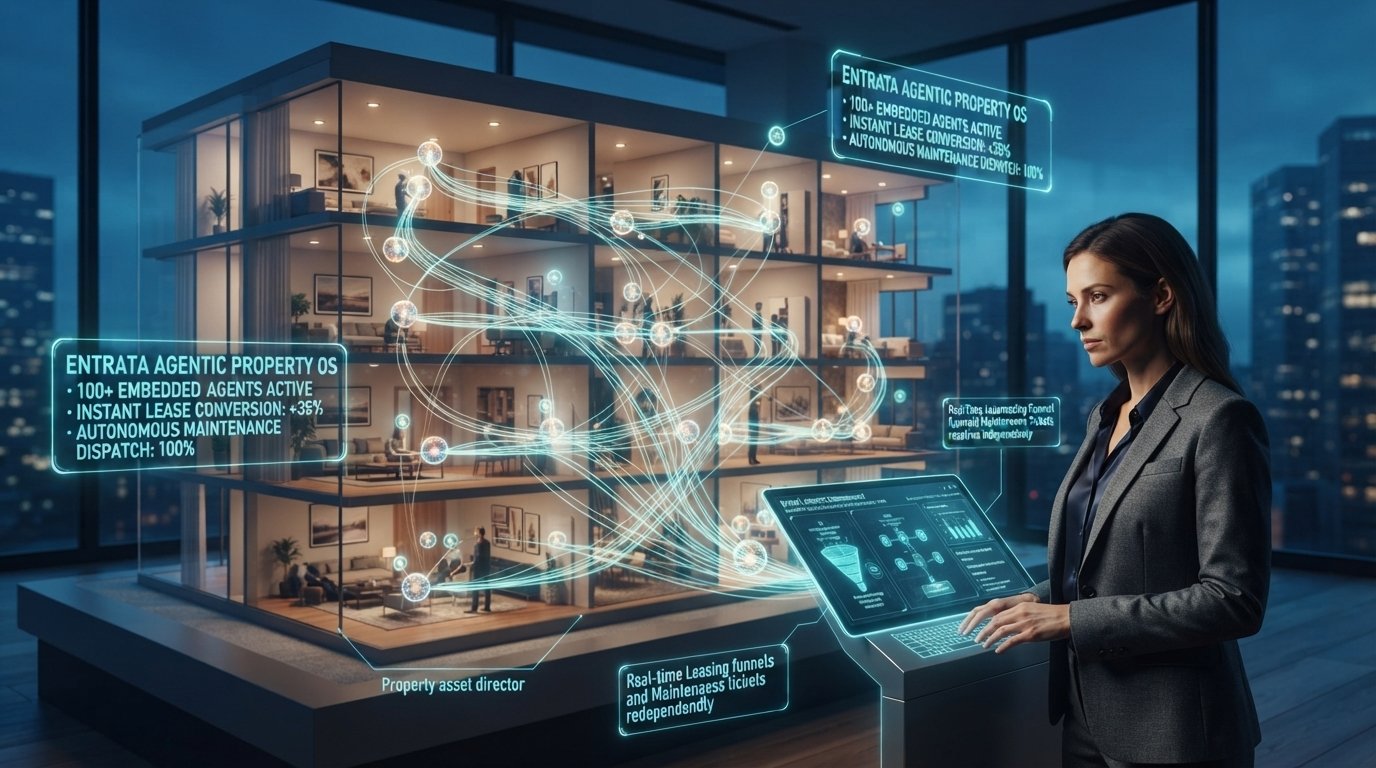
For three years, the real estate sector experimented with superficial generative marketing tools. Brokerages and landlords used large language models to draft property descriptions and power rigid website chatbots.
However, in late 2026, the technology crossed into full operational autonomy. Industry software giant Entrata introduced the multifamily housing sector’s first agentic operating system, deploying a coordinated network of over 100 embedded AI agents.
Consequently, property management has shifted from manual clerical administration to automated back-office execution. These autonomous agents manage tenant communications, schedule physical viewings, dispatch maintenance contractors, and negotiate lease renewals without requiring human clerical intervention.
The Failure of First-Generation Real Estate Bots
The early wave of property chatbots frustrated prospective tenants and leasing managers alike. Legacy bots followed scripted decision trees that broke whenever a tenant asked nuanced questions regarding lease terms or utility fees.
Furthermore, those tools were completely disconnected from property management databases. A chatbot could take a maintenance inquiry, but an assistant manager still had to log into the database, create an invoice, and contact a plumber manually.
Therefore, commercial landlords struggled with high overhead costs. Over 50% of an on-site property manager’s workweek was consumed by administrative paperwork, file checks, and routine invoice processing.
How 100+ Embedded Agents Orchestrate Operations
Entrata’s agentic architecture replaces manual back-office tasks with specialized, coordinated software operators. Rather than relying on a single broad AI, the platform divides property operations among purpose-built micro-agents.
Specifically, when a water heater leak is reported, a maintenance triage agent assesses the severity, verifies warranty status, queries local vendor schedules, and books a technician automatically. Simultaneously, an accounting agent prepares the repair invoice and updates the building reserve ledger.
Moreover, the leasing workflow is fully autonomous. When an inquiry arrives, an agent qualifies the tenant’s credit score, schedules a smart-lock viewing, and issues a compliant lease contract within minutes.
The Economic Impact on Multi-Family Asset Yields
The transition to agentic property management directly expands net operating income for asset owners. Operating expenses drop by 20% to 30% as properties reduce reliance on administrative leasing staff.
Furthermore, response latency to rental leads drops from several hours to under twenty seconds. In commercial leasing, rapid response times improve lead-to-lease conversion rates by more than 35%.
Additionally, autonomous tenant screening reduces rent default rates. By analyzing bank transaction histories and verified income trails instantly, the system identifies unreliable applications while adhering strictly to fair housing regulations.
Real estate has moved beyond generative copy into end-to-end autonomous execution. The deployment of agentic operating systems proves that the back office is the true engine of artificial intelligence value creation.
Tags: Entrata AI, Agentic PropTech, Multi-Family Real Estate, Autonomous Property Management, AI Agents 2026, Real Estate Automation, PropTech Trends Author CTA: Follow Flairius News — sharp takes on AI, business, and India’s startup economy — flairiusnews.com
 Aditya Agarwal