
 By Aditya Agarwal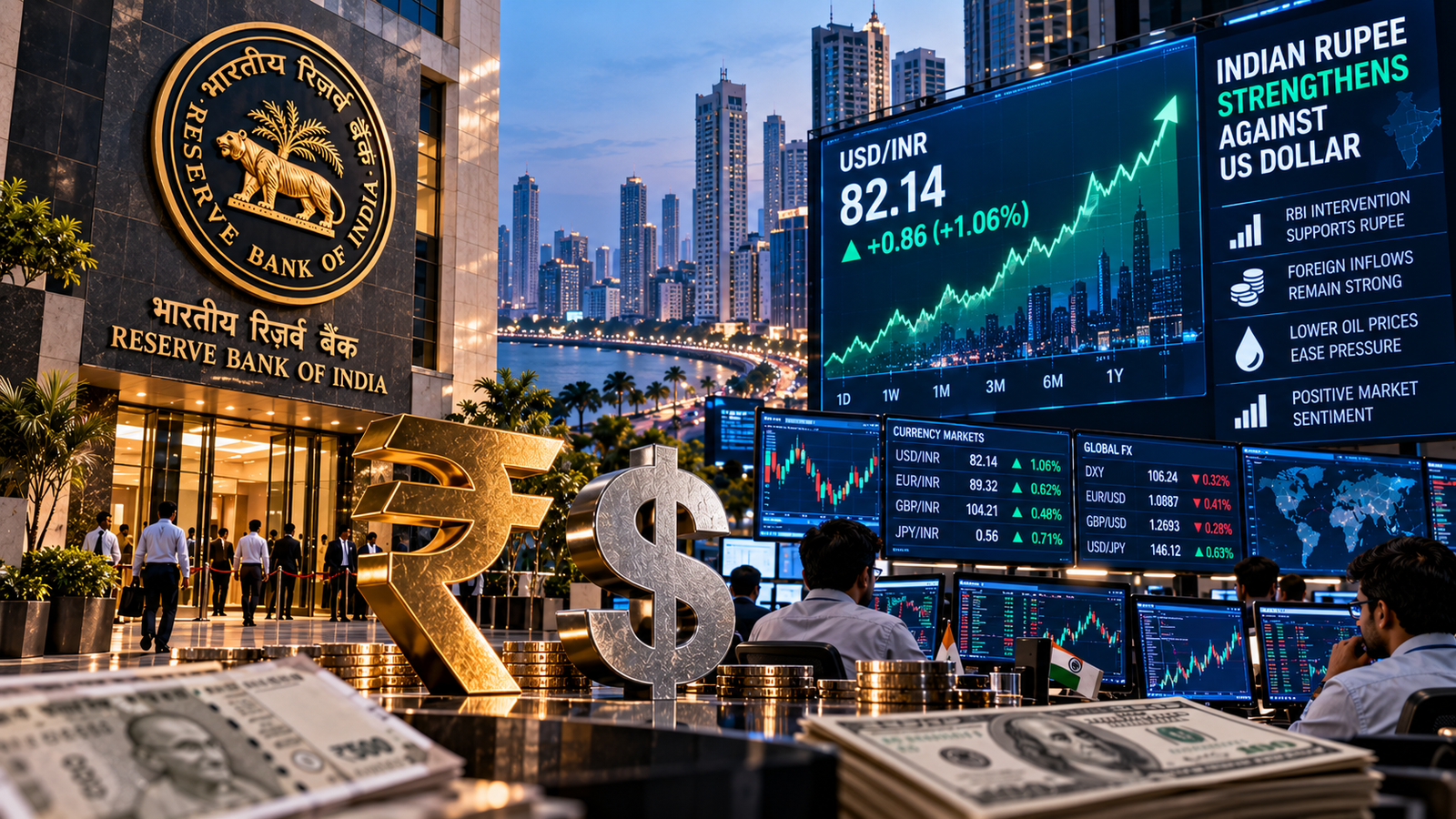
The Indian rupee strengthened to a one-month high on Wednesday after the Reserve Bank of India reinforced its commitment to stabilising the currency. The Indian rupee rose approximately 0.4% to ₹94.9125 per US dollar, making it Asia’s strongest-performing currency during the reported session. Reuters attributed the recovery to recent RBI measures and renewed confidence following comments from the central bank’s governor. (Reuters)
The improvement follows sustained pressure on the currency from dollar demand, international capital movements and higher crude oil prices.
Indian Rupee Extends Its Recovery
The Indian rupee has strengthened following a series of measures intended to ease pressure on the foreign exchange market.
The RBI has redirected some dollar demand associated with oil imports, tightened compliance requirements for certain currency-hedging transactions and introduced margin requirements affecting importers and banks.
The measures are designed to moderate activity that can intensify pressure on the domestic currency.
Reuters reported that the rupee had appreciated by approximately 2% during the week by Wednesday’s session. (Reuters)
Nevertheless, the recovery does not necessarily indicate a lasting reversal. Currency movements will continue to depend on international trade, investment flows, oil prices and market expectations.
RBI Signals Continued Support for Currency Stability
RBI Governor Sanjay Malhotra reinforced the central bank’s commitment to limiting speculation and supporting currency stability.
His comments suggested that additional measures could be considered if market conditions required them. However, he did not confirm that further interest-rate increases were imminent. (Reuters)
Central bank intervention can influence currency markets by changing the availability of dollars, the cost of certain transactions and expectations about future policy.
However, intervention also involves trade-offs. Sustained pressure on foreign exchange reserves, for example, can complicate efforts to defend a currency over an extended period.
Investors will therefore examine not only the rupee’s daily movements but also the broader economic conditions underlying those movements.
Why Oil Prices Remain a Major Risk
Crude oil is an important factor in India’s external economic position because the country depends heavily on imported energy.
When oil prices rise, Indian importers generally require more dollars to pay overseas suppliers.
This can increase demand for foreign currency and place additional pressure on the rupee.
Higher energy costs can also affect transportation, manufacturing and household spending.
For companies that import raw materials or equipment, currency movements can change operating costs even when the dollar price of the imported product remains unchanged.
Bond Yields and Interest Rates Also Matter
Currency developments can influence India’s bond market and expectations about monetary policy.
Reuters reported that India’s 10-year government bond yield climbed to approximately 7.40% during the latest market developments, reflecting pressure from oil prices and expectations about interest rates. (Reuters)
Higher yields can increase borrowing costs for governments, businesses and households.
They can also influence investment decisions by changing the relative attractiveness of different financial assets.
However, bond yields respond to several factors, including inflation expectations, government borrowing and investor demand.
The relationship between currency movements and bond markets is therefore important but not automatic.
What Businesses and Investors Should Watch
The Indian rupee recovery provides some relief after a period of substantial currency pressure.
Importers may benefit from a stronger rupee, while exporters need to assess how exchange-rate movements affect the value of overseas earnings.
Investors should monitor crude oil prices, foreign investment flows, bond yields and the RBI’s subsequent policy decisions.
The coming sessions will help establish whether the latest measures can sustain the recovery or whether underlying economic pressures return.
For more updates on India’s economy, currency markets and monetary policy, follow Flairius News Business coverage.
Tags: Indian Rupee, RBI, Currency Market, Indian Economy, US Dollar, Crude Oil, Bond Yields, Foreign Exchange, Business News India
Internal Link: Flairius News — Business
Outbound Source: Reuters — Indian rupee recovery and RBI policy.
Source: Reuters — Rupee rallies after RBI signals currency support