
 By Aditya Agarwal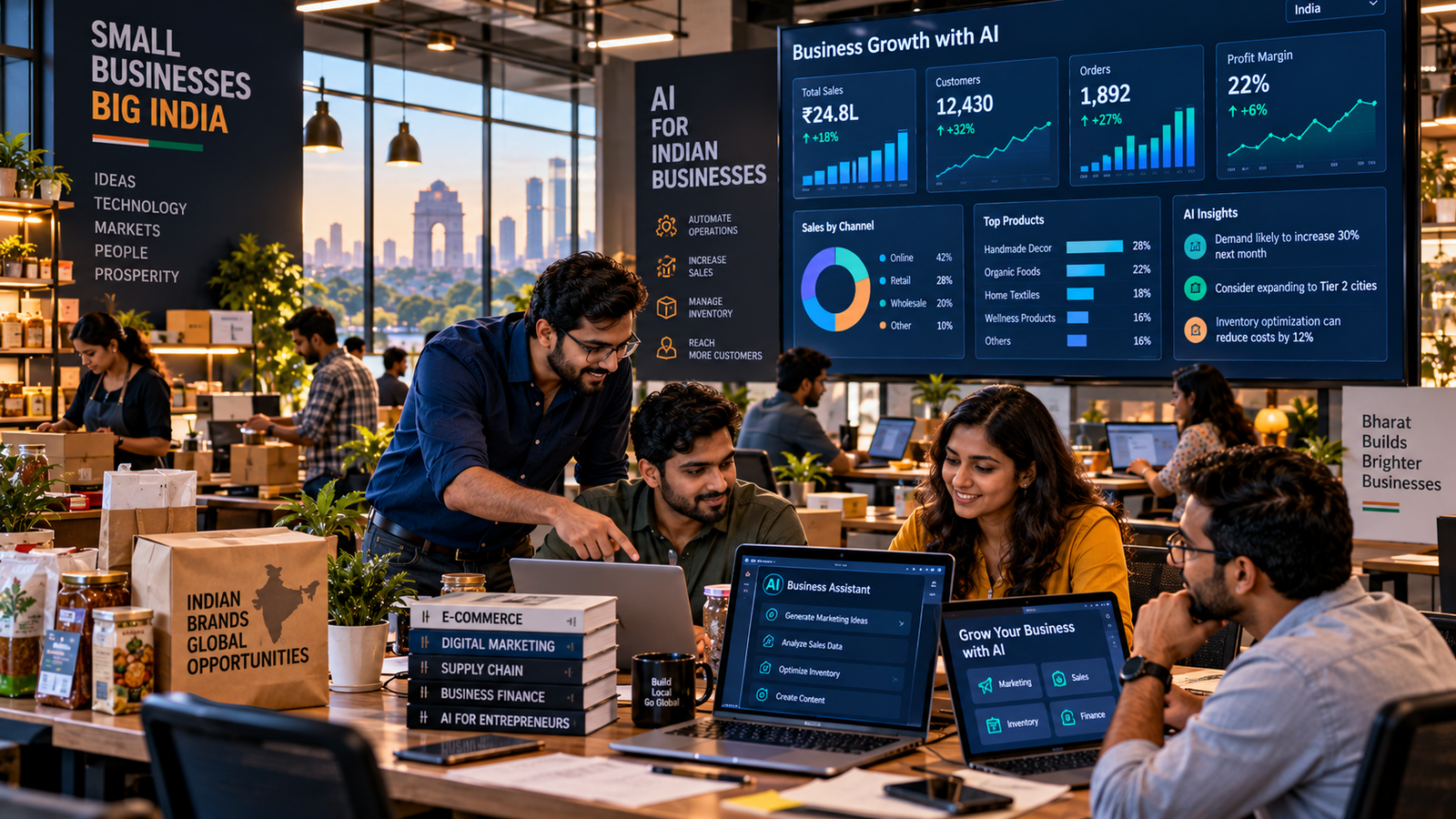
Infosys co-founder Nandan Nilekani has argued that artificial intelligence could help Indian small businesses become an important source of future job creation. Speaking at the Bloomberg New Economy Forum in Delhi, Nilekani emphasised that India’s opportunity lies not only in developing AI models but also in deploying the technology widely across its economy. The Indian Express reported his comments on October 13, 2026. (The Indian Express)
His argument shifts attention from the race to build the most powerful AI model towards the practical question of how businesses can use AI to improve productivity and expand their operations.
Nandan Nilekani AI Vision Focuses on Small Businesses
The Nandan Nilekani AI perspective centres on making artificial intelligence useful to a broad range of Indian businesses.
Small companies frequently perform several different functions with limited staff. Owners may manage sales, customer service, inventory, procurement and delivery without separate departments for every activity.
AI tools could help these businesses automate repetitive work, analyse information and communicate with customers more efficiently.
Nilekani argued that the diversity and complexity of small-business activities make many of these jobs difficult to automate completely. He suggested that wider technology adoption could allow smaller companies to expand and employ additional workers. (The Indian Express)
The argument is not that AI will automatically create jobs. Rather, productivity gains could support business expansion when companies have sufficient demand and the resources to grow.
Why AI Adoption Matters for Indian Entrepreneurs
India has a large base of small businesses operating across retail, manufacturing, logistics, professional services and local commerce.
Many of these businesses face constraints involving access to finance, technology, specialised expertise and larger customer markets.
Affordable AI tools could help address some of these limitations.
For example, a small retailer might use AI-assisted software to organise inventory and customer enquiries. A manufacturer could use data analysis to improve production planning, while a service provider could automate routine documentation.
These applications could reduce administrative workloads and allow owners to concentrate on customers, product quality and expansion.
However, the benefits will depend on affordability, reliability, data quality and the ability of business owners and employees to use the technology effectively.
AI Could Change How Jobs Are Created
Nilekani’s argument challenges the assumption that the future of work will be determined primarily by how many existing tasks AI can automate.
If technology allows small businesses to serve more customers or enter new markets, some companies may expand their workforces even as individual tasks become more efficient.
Potential areas of employment include customer relationships, business operations, implementation, compliance and the responsible management of AI systems.
The Indian Express reported Nilekani’s view that future employment opportunities could emerge from the expansion of many small companies rather than being concentrated exclusively in a limited number of large technology firms. (The Indian Express)
Nevertheless, employment outcomes will vary by sector. Some roles may be displaced, others may change, and new opportunities will depend on business demand and the pace of adoption.
Access to Markets and Capital Remains Important
AI adoption alone cannot remove the structural barriers facing small businesses.
Entrepreneurs still need access to customers, affordable financing, reliable infrastructure and skilled employees.
Digital platforms can help businesses reach wider markets, while financial technology can improve access to payments and certain financial services.
AI could complement these systems by reducing administrative friction and helping owners make better-informed decisions.
The broader opportunity lies in combining technology with the commercial foundations required for a business to survive and grow.
India’s Entrepreneurial Opportunity
The Nandan Nilekani AI discussion highlights an important strategic question for India: how can the country translate technological advances into broad-based economic growth?
A successful approach would involve making AI tools accessible to smaller companies, improving digital skills and helping businesses integrate technology into everyday operations.
It would also require realistic expectations. Productivity improvements do not automatically translate into higher wages or additional jobs; those outcomes depend on business performance, competition and the distribution of economic gains.
For entrepreneurs, the immediate priority is to identify practical problems that AI can solve rather than adopting technology simply because it is available.
For more founder perspectives, business leadership insights and entrepreneurship news, follow Flairius News Entrepreneurs coverage.
Tags: Nandan Nilekani AI, Nandan Nilekani, Indian Entrepreneurs, AI for Small Businesses, Indian Economy, Job Creation, MSMEs, Digital Economy, Infosys
Internal Link: Flairius News — Entrepreneurs
Outbound Source: The Indian Express — Nandan Nilekani’s views on AI adoption and job creation.
Source: The Indian Express — Nandan Nilekani on AI and small-business jobs