
 By Aditya Agarwal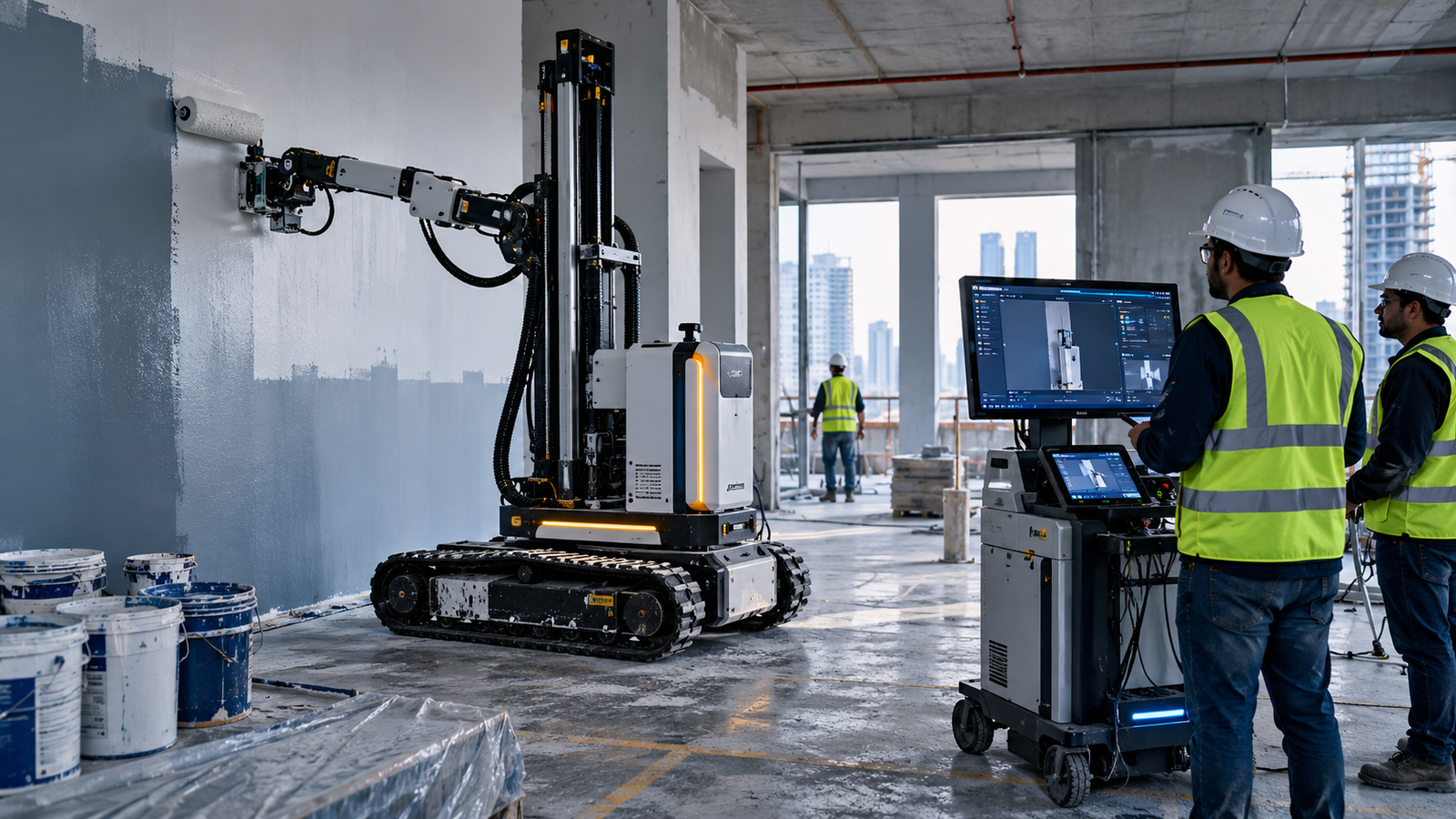
Construction robotics startup Origin has raised $20 million in funding to expand its autonomous robot fleet and accelerate customer deployments across the United States and Europe. The Origin funding round was co-led by Accel and Zacua Ventures, with participation from other venture investors, angel investors and some of the company’s customers.
The company, which operates between San Francisco and Bengaluru, is developing autonomous robots designed to perform interior construction work. The funding announcement was reported by The Economic Times and Business Standard on 15 October 2026. (The Economic Times)
The investment highlights growing interest in physical AI: technology that combines artificial intelligence with machines capable of performing tasks in the physical world.
Origin Funding Targets Construction Automation
The Origin funding round will support the production and deployment of the company’s flagship OG-1 robot, alongside customer pilots and expansion into additional construction tasks.
Origin is targeting 150 robot deployments by the end of 2027. Its longer-term ambition is to build a robotics platform capable of performing multiple interior construction activities using a common hardware and software architecture. (mint)
The strategy addresses a part of construction that has historically relied heavily on manual labour.
Although heavy machinery is widely used for excavation and other large-scale work, many interior activities still require skilled workers to operate tools, manage materials and complete detailed finishing tasks.
Origin aims to automate selected activities while maintaining the quality and consistency required on professional construction sites.
What Does the OG-1 Robot Do?
Origin’s flagship OG-1 robot currently focuses on interior wall-finishing work, including sanding, primer application and final painting.
The company is developing its platform to support additional tasks, potentially including drywall installation, drilling and other interior construction activities.
Its approach combines hardware, autonomy software and AI models designed for construction environments. These systems must navigate changing work sites, identify relevant surfaces and operate around obstacles.
Construction sites present demanding conditions for autonomous machines. Equipment must work around people, uneven surfaces, changing layouts and materials that may not be positioned consistently.
Reliable deployment therefore requires more than a robot that performs well in a controlled demonstration.
Why Investors Are Interested in Construction Robotics
Construction companies face pressure to control costs, manage project timelines and maintain consistent quality.
Robotics could help address repetitive tasks where labour availability, productivity or working conditions create operational challenges.
For contractors, the business case depends on whether a robot can complete work reliably at a competitive cost, including maintenance, supervision and deployment expenses.
Origin uses a robots-as-a-service model, allowing customers to access its technology through a service arrangement rather than purchasing every robot outright. This can reduce the need for customers to make a large initial equipment investment, although the commercial value depends on utilisation and contract terms. (mint)
Can Physical AI Transform Construction?
The Origin funding announcement reflects a broader shift towards AI systems that interact with physical environments.
Robotics companies are exploring applications across warehouses, manufacturing facilities, logistics networks and construction sites.
However, construction is a difficult industry to automate because every site presents different layouts, schedules and operational requirements.
Robots must demonstrate reliability across varied environments rather than relying exclusively on controlled factory conditions.
The next stage for Origin will be to increase production, expand customer deployments and prove that its platform can support additional construction tasks.
What Origin’s Growth Means for Indian Deeptech
Origin’s operations in Bengaluru connect the company to India’s growing engineering and AI talent ecosystem, even as its current customer expansion focuses on overseas markets.
The company’s progress could provide a useful example of how Indian technical talent contributes to global physical AI products.
Nevertheless, funding is only one part of the commercial equation. Successful expansion will require dependable hardware, effective customer support and a sustainable business model.
For more updates on startup funding, deeptech and emerging technology companies, follow Flairius News Startups coverage.
Tags: Origin Funding, Construction Robotics, Physical AI, Autonomous Robots, Accel, Zacua Ventures, Indian Deeptech, AI Startups, Startup Funding
Internal Link: Flairius News — Startups
Outbound Source: Business Standard — Origin raises $20 million for construction robotics.
Source: https://www.business-standard.com/companies/start-ups/construction-robot-startup-origin-raises-20-mn-to-automate-interior-work-126101501678_1.html