
 By Aditya Agarwal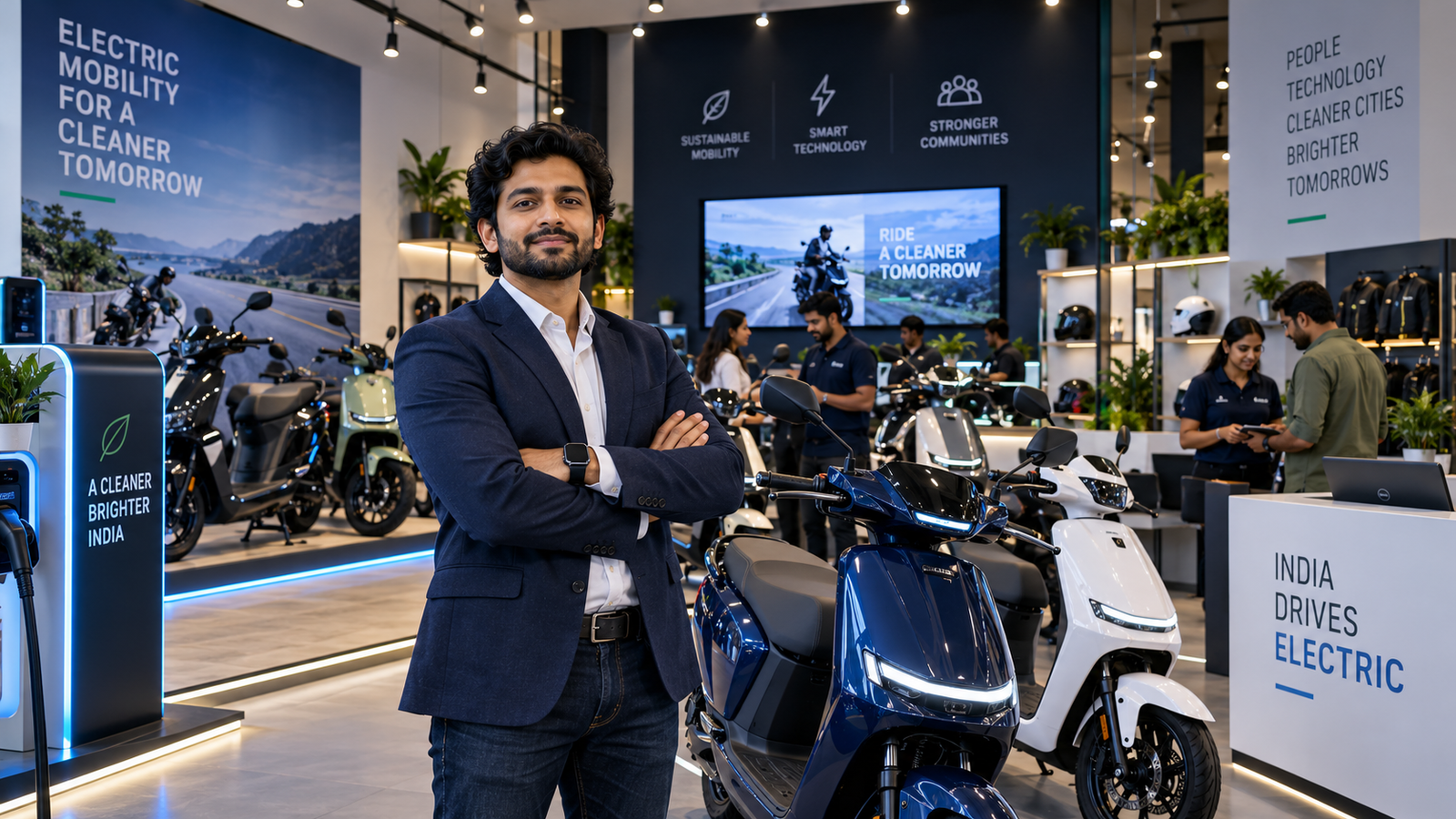
Krishna Grover, founder of Ghaziabad-based Herald E-Bike, has built an electric two-wheeler business after leaving a corporate job where he reportedly earned ₹3,500 per month. With initial financial support from his wife, Ritika, Grover entered India’s electric mobility market and developed a distribution network serving customers in smaller cities.
The Economic Times reported on 15 October 2026 that the company had expanded to 34 models and more than 550 active showrooms, with a reported monthly revenue run rate of ₹1.5 crore. (The Economic Times)
His story highlights the role of distribution, market selection and financial discipline in building a business beyond India’s major metropolitan markets.
Herald E-Bike Founder Identifies a Market Opportunity
The Herald E-Bike founder built his business around electric two-wheelers for customers in India’s smaller cities.
Electric mobility companies often compete on vehicle performance, pricing, operating costs, service availability and customer trust.
For buyers outside major metropolitan areas, the availability of nearby dealerships and service support can be especially important.
A company may offer an attractive product, but customers also need access to repairs, replacement parts and reliable after-sales assistance.
Herald E-Bike’s distribution-led approach illustrates why reaching customers can be as important as developing the product itself.
From a Corporate Job to Entrepreneurship
According to The Economic Times, Grover left a corporate career to establish his electric two-wheeler business, with initial financial support from his wife. (The Economic Times)
Starting a business often involves uncertainty around customer demand, operating expenses and access to capital.
Founders must decide how much money to commit, which products to offer and how quickly to expand.
Early financial support can help a business get started, but long-term survival depends on developing a sustainable operating model.
Entrepreneurs must also account for working capital, inventory, distribution costs and the time required to build a customer base.
A Network of More Than 550 Showrooms
Herald E-Bike has reportedly expanded its range to 34 models and established a network of more than 550 active showrooms. The company has also increased its revenue from ₹78 lakh to ₹7.8 crore, according to the report. (The Economic Times)
A larger distribution network can improve product visibility and provide access to customers across a wider geographic area.
However, expanding dealership coverage also creates operational challenges.
Businesses must manage dealer relationships, product availability, warranty obligations, servicing and quality control.
Revenue growth is important, but it should be evaluated alongside profitability, cash flow and the company’s ability to support its growing network.
Why Smaller Cities Matter for Electric Mobility
India’s electric two-wheeler market includes customers with different budgets, commuting needs and access to charging infrastructure.
Smaller cities can offer opportunities for companies that understand local purchasing power and provide suitable service coverage.
However, the economics of electric mobility depend on vehicle prices, battery performance, charging access, financing and the cost of maintenance.
Businesses must also compete with established manufacturers and other emerging electric vehicle brands.
A strong distribution network can help, but customer satisfaction and reliable products remain essential.
Expansion Plans and the Road Ahead
The Herald E-Bike founder is reportedly considering expansion into international markets, including Nepal and Sri Lanka, while the company has also discussed the possibility of an IPO in the future. (The Economic Times)
International expansion would introduce new requirements involving regulation, distribution partnerships, servicing and market-specific product demand.
An IPO, meanwhile, would require extensive financial preparation, regulatory compliance and scrutiny of the company’s business performance.
These remain future ambitions rather than completed milestones.
For entrepreneurs, the broader lesson is that sustainable growth requires a clear target market, disciplined execution and a distribution strategy that can scale.
For more founder stories, business lessons and entrepreneurial developments, follow Flairius News Entrepreneurs coverage.
Tags: Herald E-Bike Founder, Krishna Grover, Indian Entrepreneurs, Electric Vehicles India, EV Startup, Business Growth Story, Electric Two-Wheelers, Startup India
Internal Link: Flairius News — Entrepreneurs
Outbound Source: The Economic Times — Krishna Grover and Herald E-Bike.
Source: https://m.economictimes.com/news/new-updates/from-rs-3500-salary-to-rs-1-5-crore-per-month-how-this-ghaziabad-man-built-an-e-bike-company-with-his-wifes-savings/articleshow/134961332.cms