
 By Aditya Agarwal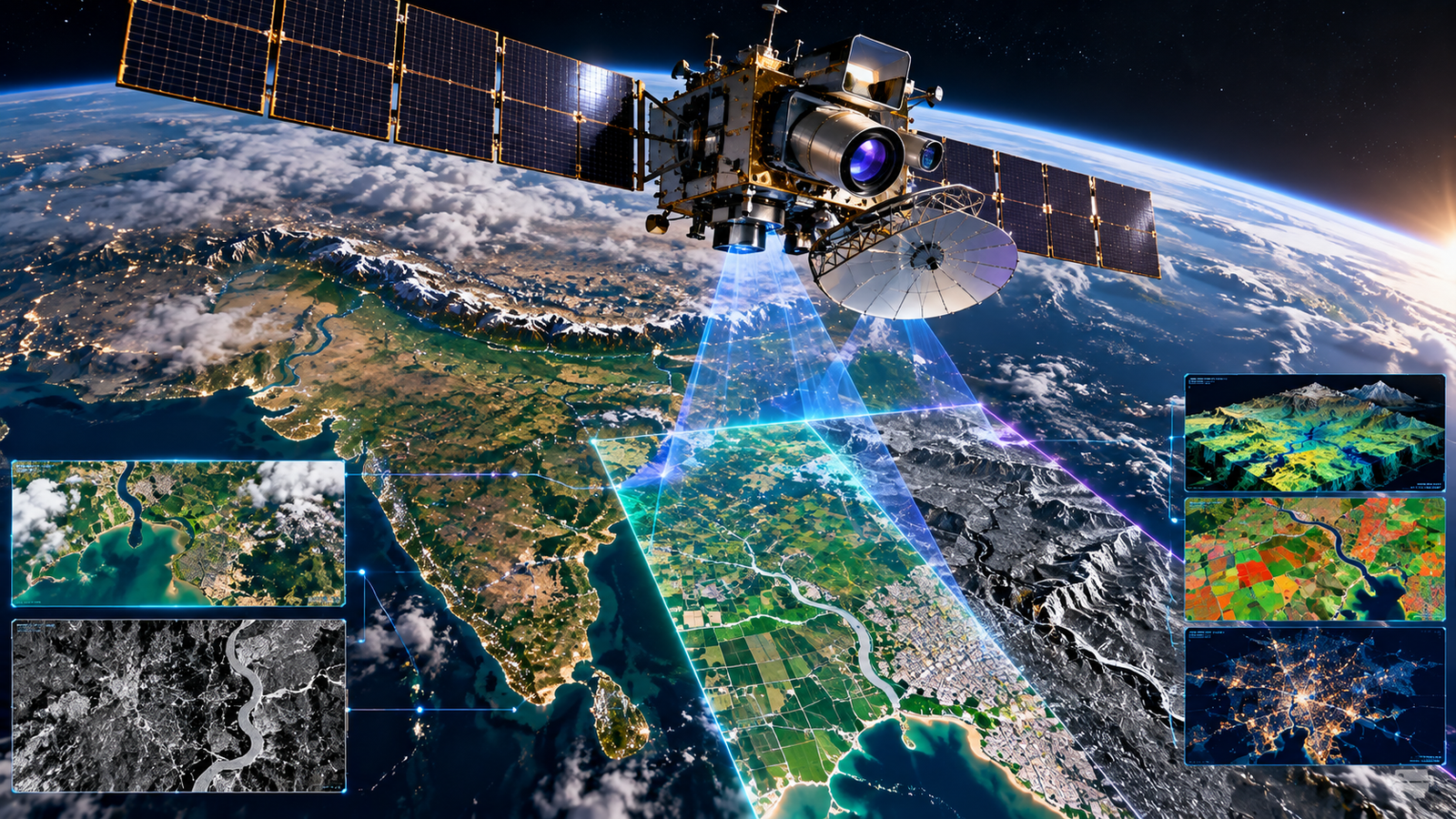
Government support moves deeper into space technology
Indian space startup GalaxEye has secured ₹63.84 crore in financial support from the Technology Development Board under the government’s Research Development and Innovation Fund.
The agreement was signed with GalaxEye Space Solutions, a Bengaluru-based space technology company.
The project aims to develop a multisensor satellite capable of combining synthetic aperture radar and optical imaging.
The approved project cost is ₹247.69 crore. The technology is intended to progress from Technology Readiness Level 6 to Level 9. (Press Information Bureau)
The development is significant because it focuses on technology rather than simply launching another satellite.
Combining radar and optical imaging
GalaxEye’s proposed system is based on an indigenous OptoSAR approach.
Optical imaging can provide highly detailed visual information under suitable conditions.
Synthetic aperture radar, meanwhile, can operate through clouds and during darkness.
Combining the two can therefore provide a more comprehensive picture of the Earth’s surface.
The government says the project targets high-resolution imaging below 0.5 metre.
That capability can have applications across areas such as infrastructure monitoring, agriculture, disaster response and strategic Earth observation.
The exact commercial applications will depend on the company’s eventual deployment and customer relationships.
However, the technology architecture reflects a larger trend in the space industry.
Satellites are increasingly becoming data platforms rather than simply remote sensing instruments.
Why the RDI support matters
The ₹63.84 crore support comes under a government programme designed to accelerate private-sector research and development in strategic and emerging technologies.
That matters because deeptech startups face a different capital cycle from software companies.
A software startup can often launch a minimum viable product with relatively limited physical infrastructure.
A satellite company cannot.
It must develop hardware, test systems, validate performance and meet demanding reliability requirements.
Consequently, the gap between prototype and commercial deployment can require significant capital.
Government-backed funding can help bridge that gap.
The GalaxEye project has a total approved cost of ₹247.69 crore, meaning the government support represents a significant but not complete portion of the project’s planned investment. (Press Information Bureau)
India’s space startup ecosystem is changing
India’s space sector has expanded rapidly since private participation was opened further.
The ecosystem now includes launch companies, satellite manufacturers, Earth-observation businesses and space-data platforms.
GalaxEye belongs to the Earth-observation side of that ecosystem.
Its technology focus also fits a broader shift.
Instead of competing only on satellite hardware, Indian startups increasingly want to build proprietary technology and data capabilities.
That can create more defensible businesses.
However, commercial success requires more than technical achievement.
A satellite must generate useful data.
Customers must be willing to pay for it.
And the company must maintain reliable operations over long periods.
From laboratory technology to commercial infrastructure
The move from TRL-6 to TRL-9 is therefore important.
TRL-6 generally represents a technology demonstrated in a relevant environment.
TRL-9 represents an actual system proven through successful operational use.
The journey between those stages involves engineering, testing, qualification and deployment.
It can also reveal problems that are difficult to identify during laboratory development.
For GalaxEye, the next phase will therefore be about execution.
The company will need to turn its multisensor architecture into an operational system that can produce commercially useful information.
What the development means for Indian deeptech
The announcement offers a broader signal for India’s startup ecosystem.
Government capital is increasingly being directed toward technologies that require long development cycles.
That includes space systems, advanced mobility, defence technology and other strategic areas.
Such support can reduce some financing pressure.
However, it does not eliminate market risk.
Deeptech companies still need customers, repeat revenue and operational scalability.
GalaxEye’s project therefore represents more than another funding announcement.
It is a test of whether Indian deeptech companies can move from technically promising prototypes toward globally competitive commercial systems.
For India’s space economy, that transition may prove more important than the headline funding figure itself.
Tags: GalaxEye, space startup, Indian startups, satellite technology, Earth observation, deeptech, RDI Fund, space economy
Flairius CTA: Follow Flairius News — sharp takes on AI, business, and India’s startup economy — flairiusnews.com