
 By Aditya Agarwal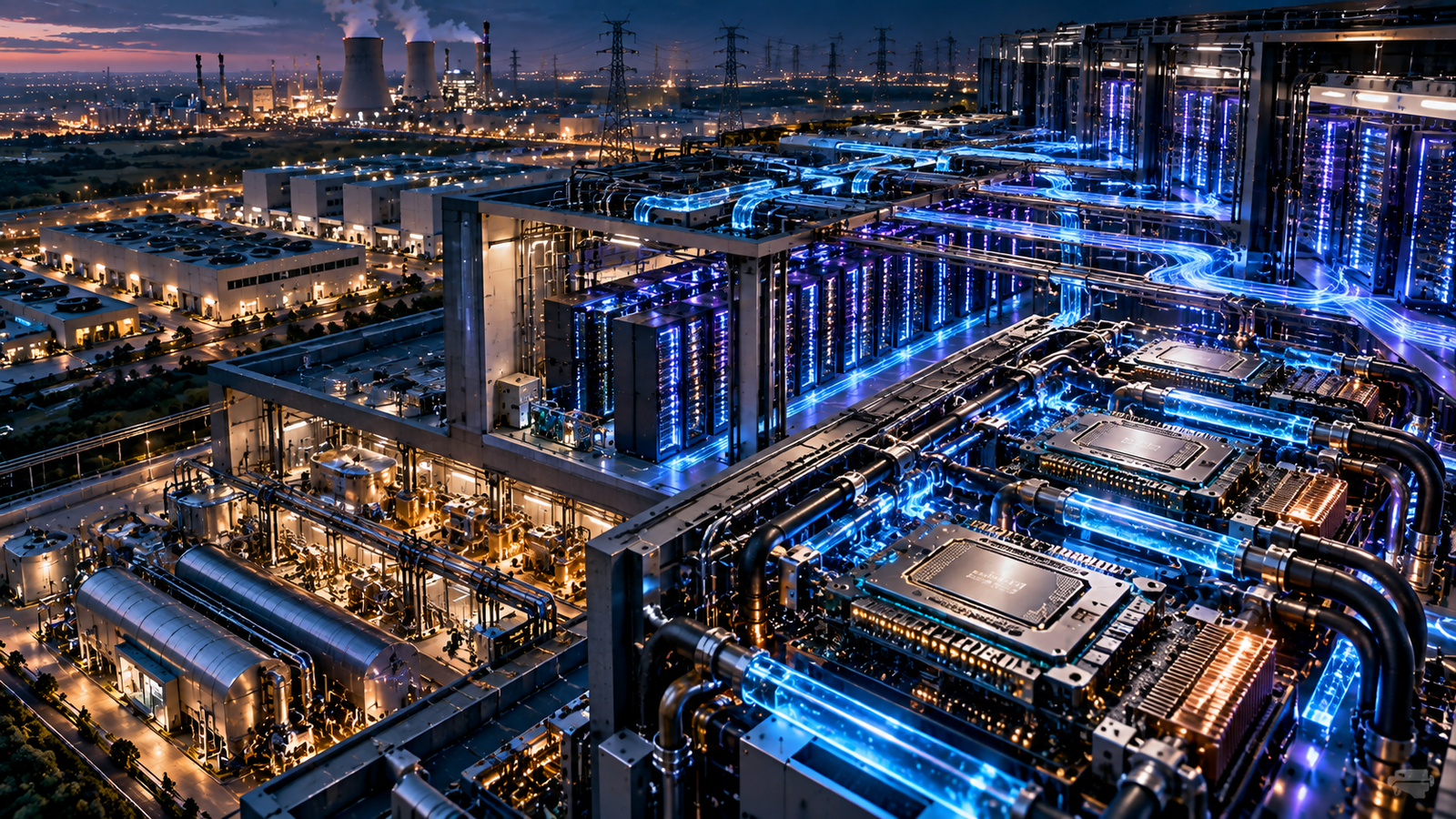
AI capital spending is entering a different scale
Investment in artificial intelligence infrastructure and model development could reach approximately $769 billion in 2026, according to an estimate based on the latest McKinsey technology trends analysis.
The estimate is based on almost $384 billion invested during the first half of the year.
If the pace continues through the second half, annual investment would exceed the $145 billion recorded in 2025 by more than five times. (The Economic Times)
The numbers highlight an important shift.
AI is no longer primarily a software investment story.
It is becoming an infrastructure story.
That means data centres, chips, power systems, cooling equipment, networking infrastructure and advanced computing are becoming central to the economics of artificial intelligence.
The AI boom needs physical infrastructure
Large AI models require enormous computing resources.
Training requires high-performance accelerators.
Inference requires large computing clusters that can serve users continuously.
Both activities consume electricity and require sophisticated cooling.
Therefore, the AI economy is increasingly connected to the physical infrastructure economy.
This is particularly relevant for countries building data-centre capacity.
India, for example, is attracting investment into data centres and AI computing infrastructure.
TCS subsidiary investments announced earlier this month include plans for a major AI-focused data-centre campus with partners, with investment of up to $7.4 billion reported by Reuters. (Reuters)
The development illustrates how AI demand can extend far beyond software companies.
Financing is becoming part of the AI story
The scale of investment also creates a financial question.
AI infrastructure requires large amounts of capital before revenue necessarily arrives.
Data centres take years to plan and construct.
Chips require enormous research, manufacturing and supply-chain investments.
Cloud providers must therefore decide how aggressively to expand capacity.
The financing environment is already showing signs of greater scrutiny.
Reuters reported this week that corporate bond investors have become more selective around AI-related debt.
Hyperscaler debt issuance is projected to rise significantly, while spreads on AI-linked bonds have widened relative to the broader corporate bond market. (Reuters)
That does not mean investors have abandoned AI.
Instead, it indicates that capital markets are beginning to examine the economics behind the spending.
The infrastructure layer may become as important as the model layer
The first phase of the AI boom focused heavily on model capability.
Companies competed around larger models, better reasoning and broader multimodal systems.
The next phase increasingly involves deployment.
That requires reliable computing infrastructure.
Consequently, companies building power systems, cooling technology, networking equipment, storage and semiconductor infrastructure can capture value even when they do not develop AI models themselves.
This is creating a much wider AI supply chain.
The shift also explains why infrastructure companies are attracting significant capital.
In September, data-centre infrastructure company Accelevation filed for a US IPO targeting a valuation of up to about $5.37 billion. Reuters reported that the company designs and manufactures power distribution, cooling and modular infrastructure for data centres. (Reuters)
India has an opportunity in the infrastructure layer
India’s AI opportunity is often discussed through software.
However, infrastructure could become equally important.
India has a large technology workforce.
It also has expanding data-centre demand, renewable-energy capacity and a growing semiconductor ecosystem.
The combination could create opportunities across several layers.
These include AI data centres, power management, cooling, chip design, networking, cloud infrastructure and specialised enterprise computing.
However, infrastructure growth also creates constraints.
Electricity availability matters.
Land matters.
Water and cooling requirements matter.
So do fibre connectivity and grid stability.
The economics therefore extend beyond computing hardware.
The next challenge is return on capital
The $769 billion estimate captures the scale of the opportunity.
It also raises the most important question for the industry.
How much economic value will all this infrastructure produce?
Capital expenditure alone does not guarantee profitable AI businesses.
Companies must turn computing capacity into revenue.
They must also manage depreciation, energy costs, chip cycles and utilisation.
That is why the next phase of AI competition may focus less on who can spend the most.
Instead, it may increasingly focus on who can convert infrastructure into sustainable economic output.
The AI investment cycle is clearly expanding.
Now the industry must prove that the returns can expand with it.
Tags: AI infrastructure, artificial intelligence, AI investment, data centres, semiconductors, AI 2026, enterprise AI, India AI
Flairius CTA: Follow Flairius News — sharp takes on AI, business, and India’s startup economy — flairiusnews.com