
 By Ahana Verma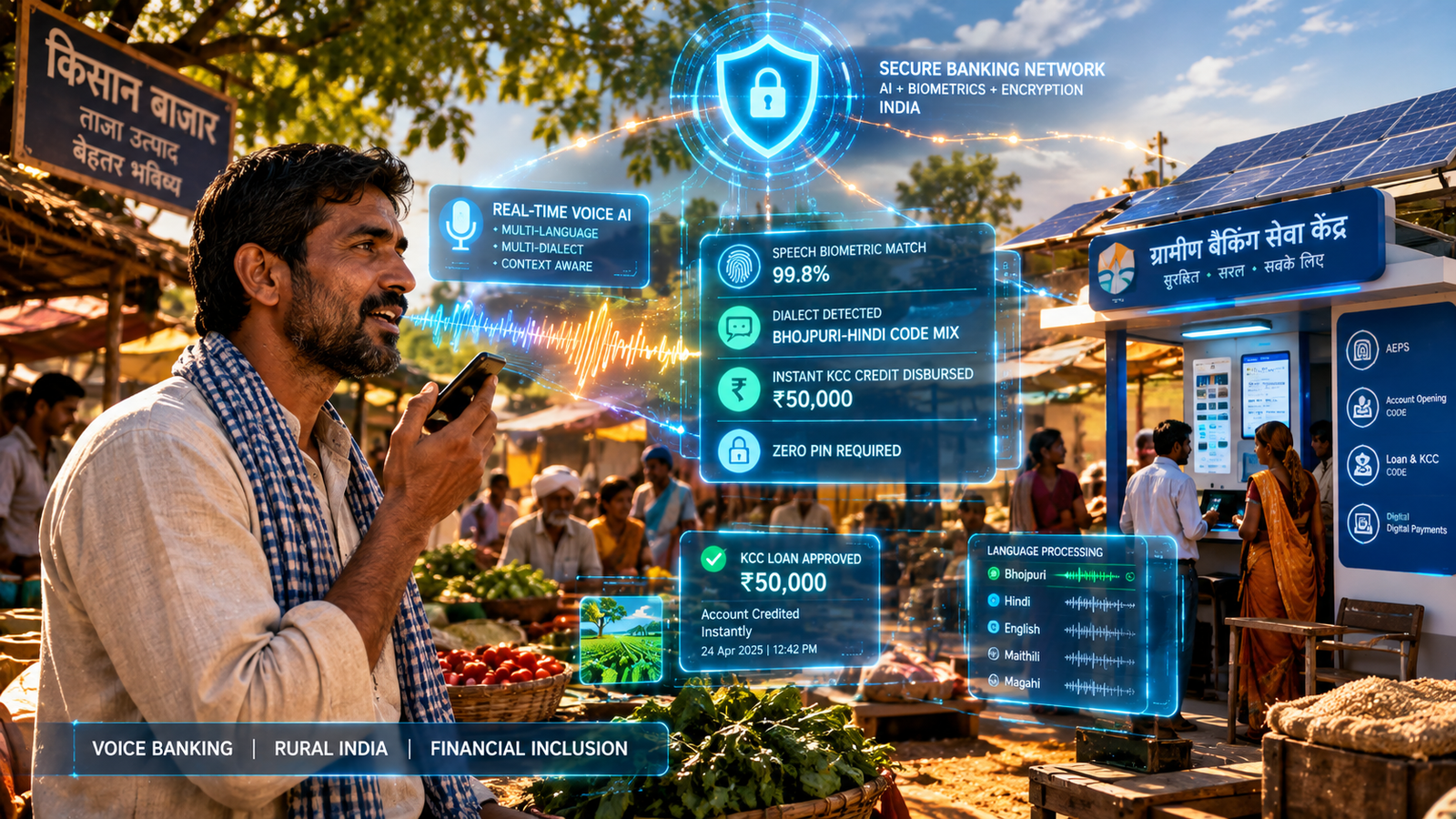
India’s digital payment ecosystem achieved extraordinary volume over the past decade. However, complex mobile app interfaces with multi-step drop-down menus still intimidate millions of rural citizens who struggle with functional literacy.
In late 2026, technology leaders bridged that final barrier through voice-first conversational banking. By pairing advanced acoustic neural models with conversational intelligence, banks now allow users to open accounts, apply for crop credit, and transfer funds using spoken regional dialects.
Consequently, financial institutions are deploying voice-driven interfaces across cooperative rural lenders and microfinance institutions. Spoken vernacular dialogue has replaced cumbersome touch interfaces, establishing genuine financial inclusion at continental scale.
The Breakdown of Visual-First Banking Applications
Visual mobile banking apps were designed primarily for urban, smartphone-literate professionals. These interfaces rely on layered iconography, dense English navigation trees, and complex multi-factor text authentications.
In rural agricultural belts, this architecture generated persistent operational friction. Rural consumers frequently relied on local business intermediaries to decipher banking prompts, creating severe identity theft risks and transaction fraud.
Therefore, financial institutions re-engineered their consumer software around auditory dialogue. Spoken interaction is the most natural human interface. By eliminating visual hurdles, voice banking restores direct personal agency to rural accountholders.
How Acoustic Neural Models Decode Regional Dialects
Translating Indian regional speech is an immense computational hurdle. A single state often encompasses dozens of distinct accents, informal colloquialisms, and code-mixed vocabulary blending vernacular roots with English loanwords.
Modern speech engines overcome this friction using localized foundational audio models. Platforms analyze acoustic phone sequences rather than relying on brittle text transcriptions. As a result, the artificial intelligence interprets conversational intent accurately even amidst background tractor noise or crowded village markets.
Furthermore, these engines integrate voice biometrics directly into the transactional audio stream. The system authenticates the user by analyzing vocal tract geometry, harmonic frequencies, and speech pacing. Consequently, rural citizens execute secure transactions without typing passwords or memorizing numeric codes.
Commercial Growth for Microfinance and Public Lenders
The deployment of voice-driven banking is generating dramatic operational savings for lenders. Regional banks previously maintained expensive brick-and-mortar field networks to verify identities and collect microfinance dues.
Today, autonomous multilingual voice agents execute conversational collection reminders and loan eligibility screenings at minimal cost. The artificial intelligence answers borrower questions patiently in Bhojpuri, Marathi, Kannada, or Bengali, resolving misunderstandings instantly.
Additionally, transaction completion rates have risen substantially. When rural customers can speak naturally to their banking interface, checkout abandoned carts and failed authentication rates decline by more than 40%.
The future of digital finance in emerging economies will not be viewed on glass screens. Spoken conversational voice AI is building the ultimate gateway to equitable financial empowerment.
Tags: Voice AI India, Speech Biometrics 2026, Vernacular Banking AI, Rural FinTech, Conversational AI Bharat, Financial Inclusion Tech, Audio Neural Models Author CTA: Follow Flairius News — sharp takes on AI, business, and India’s startup economy — flairiusnews.com
 Aditya Agarwal