
 By Aditya Agarwal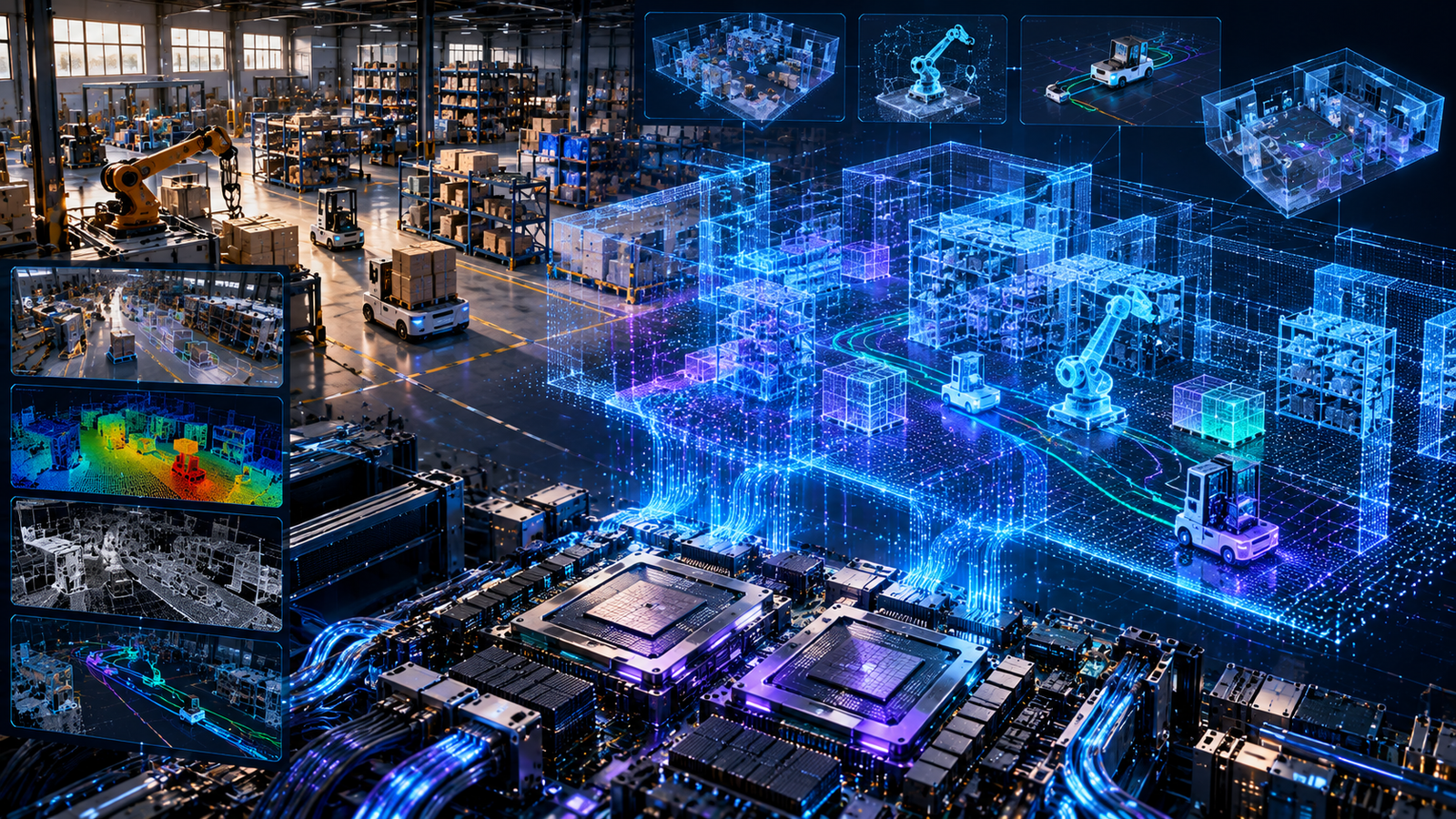
AMD is making one of its biggest strategic moves in artificial intelligence by agreeing to acquire Fei-Fei Li’s World Labs in an $8.2 billion all-stock transaction.
The AMD World Labs acquisition gives the chipmaker access to technology focused on spatial intelligence and world models.
These systems aim to help artificial intelligence understand, reconstruct and simulate physical environments.
That capability could become increasingly important as AI moves beyond chatbots and software into robotics, autonomous machines and interactive simulations.
Fei-Fei Li Will Become AMD Chief Scientist
The transaction is about talent as much as technology.
World Labs co-founder Fei-Fei Li is expected to join AMD as executive vice president and chief scientist after the acquisition closes.
She will report to AMD chief executive Lisa Su.
Li is one of the most influential researchers in modern computer vision and was instrumental in the creation of ImageNet.
Her arrival could strengthen AMD’s research capabilities as the company attempts to compete across a broader portion of the AI technology stack.
The deal is expected to close by the end of 2026, subject to required approvals.
World Models Could Become the Next AI Battleground
Generative AI’s first major commercial wave focused heavily on language.
The next wave could involve models capable of understanding space, physics and real-world environments.
World Labs is developing technology in that direction.
Its systems can create and reason about interactive three-dimensional environments using visual information.
Such environments could eventually become useful for robotics training, autonomous systems, entertainment and industrial simulation.
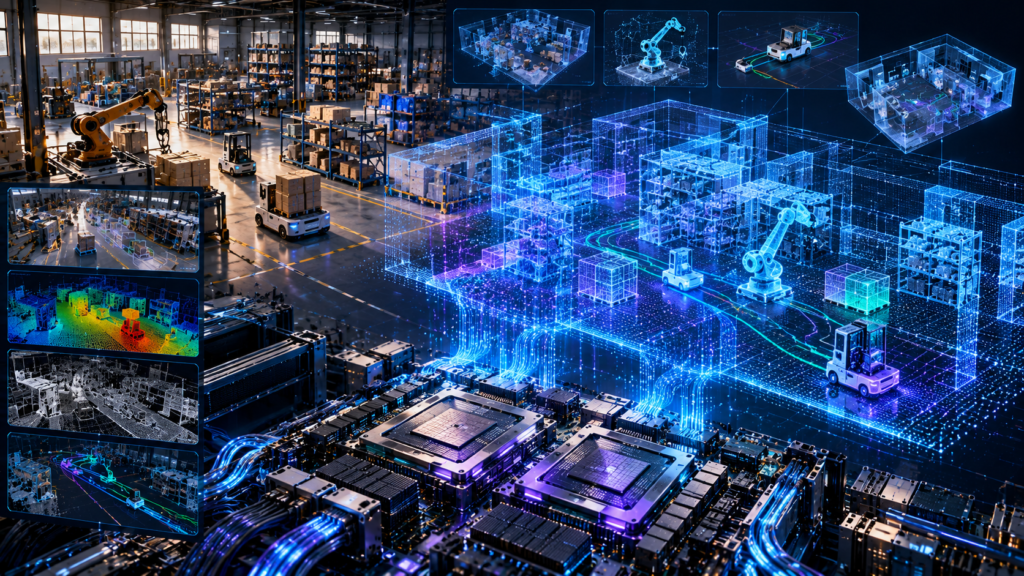
For example, a robot could train inside millions of simulated environments before operating in a physical warehouse.
That approach can reduce both cost and risk.
AMD Is Expanding Beyond AI Chips
AMD’s AI strategy has traditionally centred on processors and accelerators.
However, the World Labs acquisition could move the company further into models and software.
That matters because AI competition increasingly occurs across complete technology stacks.
Hardware companies want developers optimising models for their processors.
Meanwhile, model developers want hardware specifically designed for their workloads.
Closer integration between the two can improve performance.
AMD and World Labs had already worked together on training and inference optimisation before the acquisition.
Therefore, the transaction builds on an existing technical relationship.
Physical AI Creates a New Computing Market
Robotics could become one of the most computationally demanding AI markets.
Autonomous vehicles, industrial robots, drones and humanoid systems need to interpret continuously changing environments.
They must also understand spatial relationships.
A language model predicts tokens. A physical AI system may need to predict how an object moves, whether a surface is stable or how a machine should navigate around an obstacle.
World models attempt to provide that understanding.
As a result, spatial intelligence could create demand for enormous amounts of training and inference computing.
For chipmakers, that represents another potential growth market.
The AI Race Is Expanding Beyond Language Models
The AMD World Labs acquisition illustrates a broader shift in artificial intelligence.
The industry is beginning to move from systems that primarily generate digital information toward systems that model and interact with the physical world.
That transition will require advances across chips, simulation software, computer vision and robotics.
AMD is effectively betting that these technologies will increasingly converge.
At $8.2 billion, the acquisition places a substantial value on that possibility.
If world models become foundational technology for robotics and autonomous systems, the transaction could give AMD a stronger position in a new generation of AI computing.
Tags: AMD, World Labs, Fei-Fei Li, Physical AI, Spatial Intelligence, Robotics, AI Chips, World Models
Flairius CTA:
Follow Flairius News — sharp takes on AI, business, and India’s startup economy — flairiusnews.com