
 By Aditya Agarwal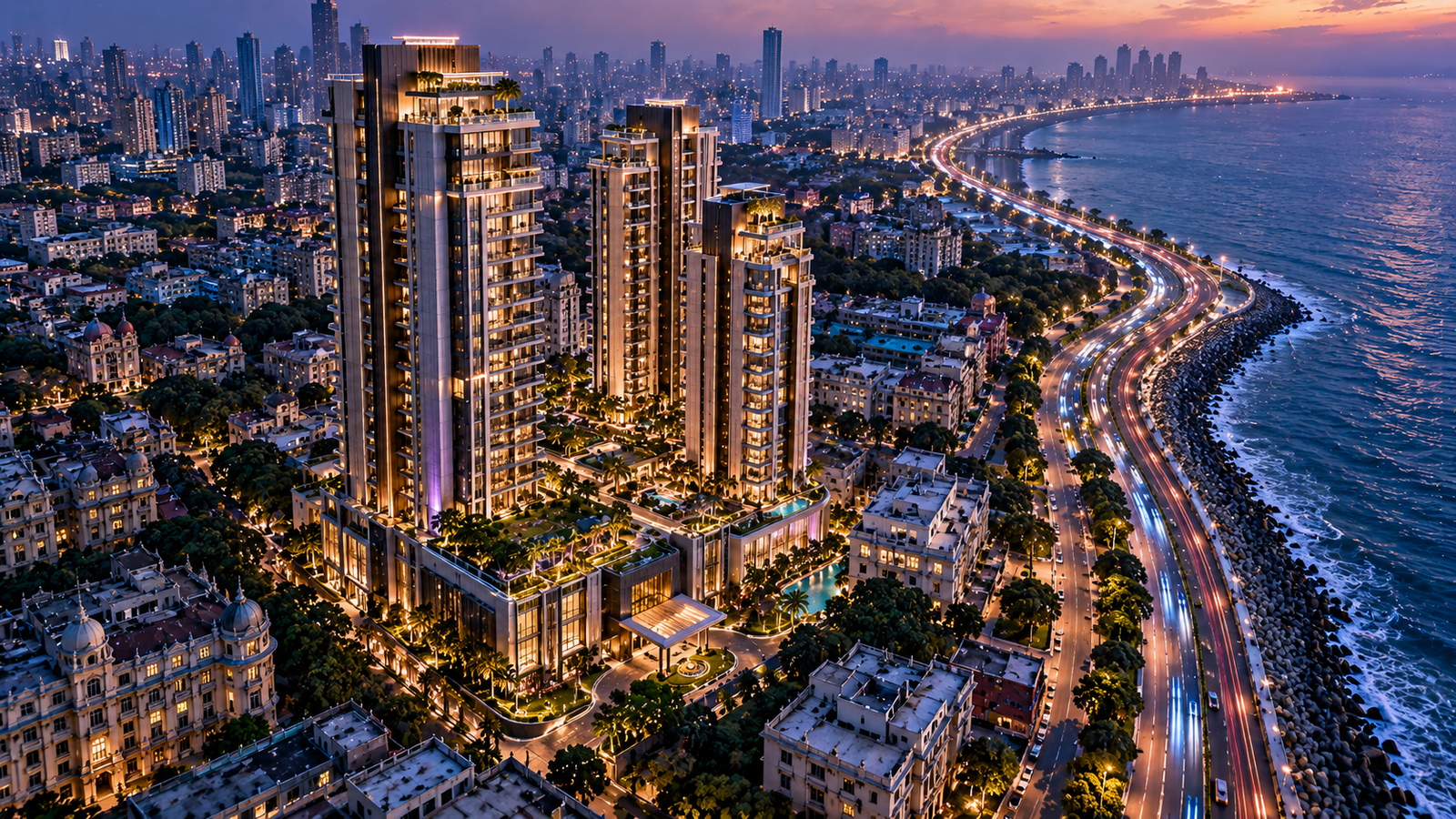
Godrej expands its South Mumbai luxury portfolio
Godrej Properties has entered into a development agreement for a 2.5-acre land parcel in Marine Lines, South Mumbai.
The company plans to develop a luxury residential project on the site.
It estimates the project could generate approximately ₹6,000 crore in revenue. (Hindustan Times)
The announcement was made through a regulatory filing on September 28.
The project adds another premium development to Godrej Properties’ South and Central Mumbai portfolio.
The location is particularly significant because developable land in established South Mumbai markets remains limited.
Marine Lines offers a rare combination
Marine Lines occupies an unusual position in Mumbai’s real estate market.
The area combines historic neighbourhoods with proximity to the city’s commercial and cultural districts.
It also sits close to Mumbai’s coastline.
The Coastal Road has further strengthened connectivity across parts of South and Central Mumbai.
Godrej Properties cited the area’s limited land availability, established neighbourhood fabric and connectivity as factors supporting its development strategy. (Hindustan Times)
For a developer, scarcity can be important.
A large suburban project can create new supply by acquiring significant land parcels.
In South Mumbai, the opportunity is different.
The supply of developable land is constrained.
Therefore, developers often work through redevelopment or development agreements.
The economics of a small land parcel can be substantial
The proposed project covers only 2.5 acres.
Yet its estimated revenue potential is around ₹6,000 crore.
That illustrates the economics of ultra-premium urban property.
Land scarcity allows developers to build high-value residential projects on relatively small sites.
However, the headline revenue figure represents estimated development potential, not realised revenue.
Actual performance will depend on approvals, construction, launch timing, pricing and sales.
The distinction matters because real estate projects often take years to convert development potential into cash flows.
Mumbai’s premium market remains active
The latest development comes against a strong backdrop for Mumbai’s prime residential segment.
Knight Frank’s Prime Global Cities Index for Q2 2026 placed Mumbai at eighth globally.
Prime residential prices in Mumbai increased 6.2% year on year during the quarter.
That was more than twice the 2.6% growth recorded across the 46-city global index. (Hindustan Times)
Prices also increased 1.7% quarter on quarter.
Those figures indicate continued demand at the upper end of Mumbai’s housing market.
However, premium housing is not representative of the entire residential market.
Affordability remains a much larger issue in Mumbai’s broader housing ecosystem.
Why developers are concentrating on luxury
Luxury housing can provide developers with larger ticket sizes.
A single premium project can therefore contribute significant gross development value.
It can also strengthen a developer’s brand.
Godrej Properties has been expanding its premium portfolio across Mumbai.
The company pointed to the response to its projects at Godrej Trilogy in Worli and Godrej Avenue Eleven in Mahalaxmi as evidence of continued demand for high-quality homes in South and Central Mumbai. (Hindustan Times)
Those references are company statements rather than independent measures of sales performance.
Nevertheless, they illustrate the developer’s strategy.
It is concentrating on locations where land scarcity and purchasing power support premium housing.
Coastal connectivity changes the location equation
Infrastructure has also become an important factor in South Mumbai’s residential market.
The Coastal Road has changed travel patterns across the western side of the city.
That can improve connectivity between premium residential neighbourhoods and employment or lifestyle destinations.
For luxury buyers, time saved during daily travel can influence purchasing decisions.
Therefore, infrastructure investment can increase the attractiveness of already established neighbourhoods.
However, infrastructure benefits also need to be considered alongside traffic, density and urban capacity.
The development agreement model
Godrej Properties is using a development agreement rather than simply announcing a conventional land purchase.
That structure is common in Mumbai.
Landowners can contribute development rights or land.
The developer brings capital, project management, branding and construction expertise.
Revenue is then shared according to contractual arrangements.
This model can allow developers to expand their pipeline without purchasing every parcel outright.
It can also reduce some upfront capital requirements.
However, execution remains complex.
Projects in established urban districts require coordination around approvals, existing infrastructure and local development constraints.
What the project signals
The Marine Lines project highlights an important feature of Mumbai’s property market.
The next phase of luxury development is not necessarily about finding larger plots.
It is about unlocking scarce plots in strategically valuable neighbourhoods.
That makes development agreements increasingly important.
For Godrej Properties, the project strengthens its South Mumbai pipeline.
For the wider market, it demonstrates how developers continue to pursue premium housing despite limited land availability.
The eventual test will be whether the estimated ₹6,000 crore development potential translates into actual sales and project execution.
Tags: Godrej Properties, Marine Lines, South Mumbai, Mumbai real estate, luxury housing, property development, real estate India
Flairius CTA: Follow Flairius News — sharp takes on AI, business, and India’s startup economy — flairiusnews.com