
 By Raghav Sharma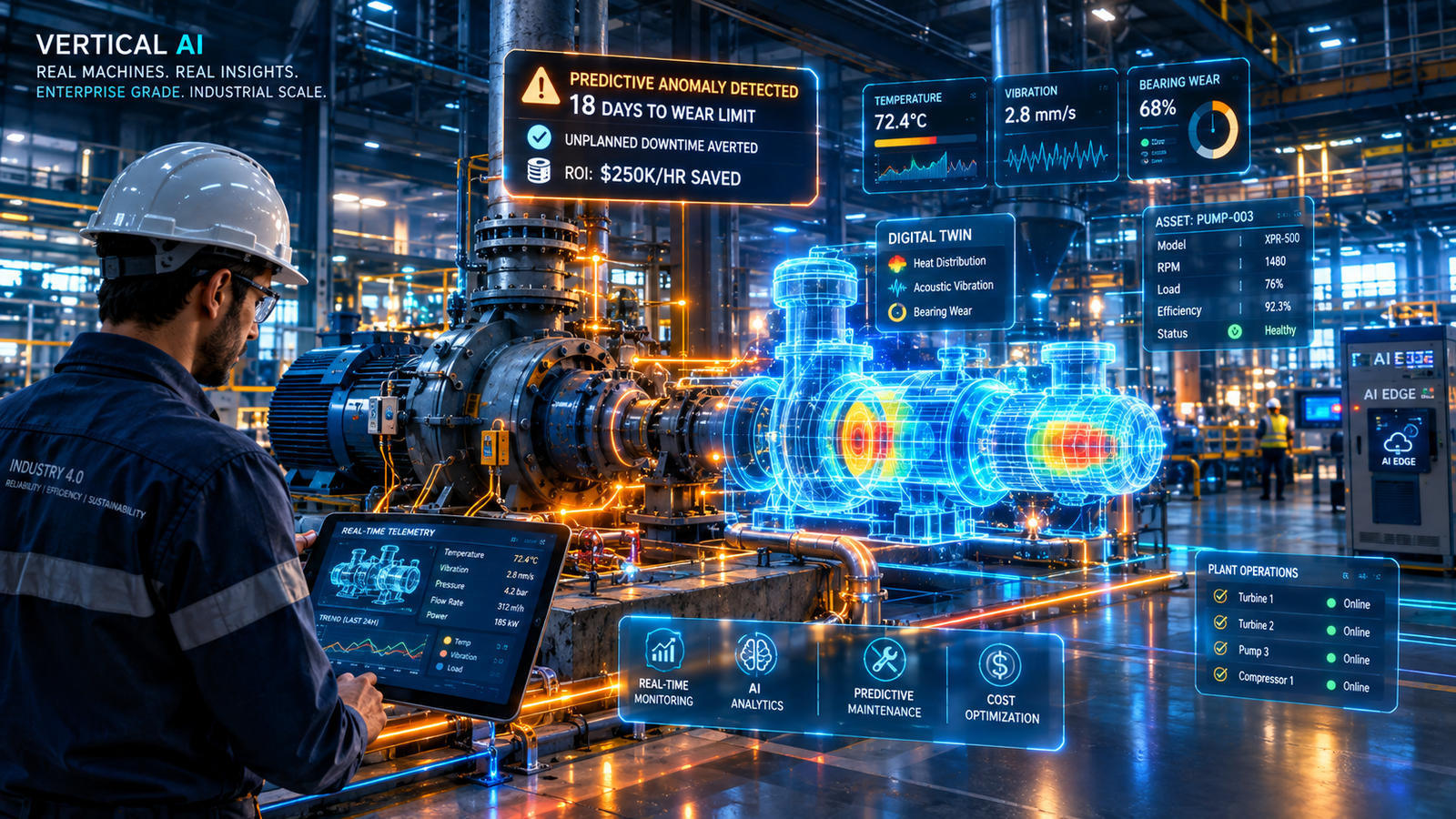
Silicon Valley historically focused its finest software talent on knowledge-work automation. However, the most resilient and profitable software wave in 2026 is emerging far away from white-collar offices.
Startups applying specialized artificial intelligence to physical, capital-intensive industries are generating outsized returns. Specifically, founders targeting warehouse bin optimization, HVAC field service dispatching, pharmaceutical machine vision, and industrial predictive maintenance are building defensive moats that horizontal AI models cannot challenge.
Furthermore, these sectors present structural barriers to entry. Because real-world industrial environments operate on offline data, messy legacy hardware, and strict safety regulations, generic technology vendors fail to gain traction. Consequently, domain-specific vertical AI companies are winning commercial dominance.
The Problem with General-Purpose Artificial Intelligence
Foundational multimodal models process internet text, academic papers, and digital photographs with exceptional fluency. Nevertheless, they fail when deployed on high-temperature manufacturing production lines or complex refrigeration supply chains.
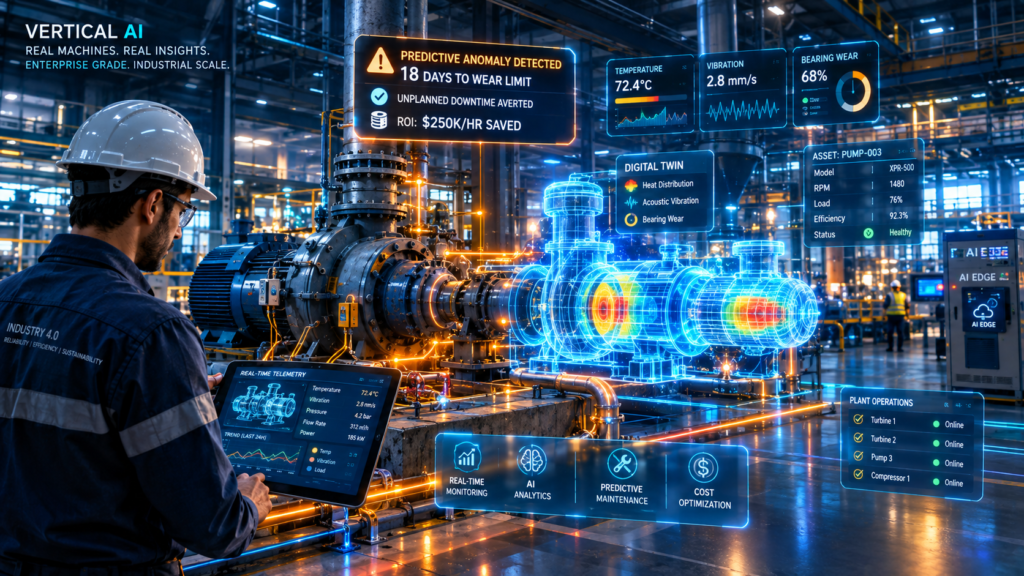
Industrial operations do not tolerate hallucinations or probabilistic guesswork. An unplanned pump failure in a processing plant costs upwards of $250,000 per hour in idle machinery and spoiled inventory. Therefore, industrial plant managers refuse to rely on broad, uncalibrated foundational models.
Vertical AI startups bridge this gap by binding proprietary sensor streams to specialized mathematical models. They gather vibration signatures, thermal readings, and proprietary equipment logs directly from the factory floor. As a result, their predictions provide verified, deterministic reliability.
Real-World Applications Leading the Surge
Several high-stakes industrial use cases are driving enterprise adoption across traditional sectors. Therefore, examining these specific deployments clarifies the broader commercial opportunity.
First, warehouse bin allocation and fulfillment routing. Modern fulfillment hubs lose up to 30% of physical picker capacity due to poorly situated inventory. By fusing computer vision with dynamic placement algorithms, warehouse logistics platforms optimize SKU placement instantly based on seasonal trends and shift schedules.
Second, industrial predictive maintenance for mechanical infrastructure. Inexpensive acoustic and vibration sensors now monitor rotating assets, water pumps, and bearings continuously. AI algorithms evaluate anomalies weeks before catastrophic physical failure occurs, allowing maintenance crews to replace components during scheduled downtimes.
Third, computer vision quality control on pharmaceutical lines. Historically, visual checks for tablet fractures and vial seal integrity relied on manual labor or brittle rule-based optics. Today, real-time edge vision models continuously audit continuous manufacturing lines, meeting stringent international regulatory requirements easily.
Why Domain-Specific Data Creates an Unbreakable Moat
The competitive advantage in industrial AI does not come from compute power or algorithmic novelty. Rather, it comes from proprietary access to hard-to-reach physical edge data.
Horizontal software companies cannot scrape mechanical vibration profiles from a cement factory off the public internet. Each vertical startup must physically partner with industrial facilities, integrate with legacy programmable logic controllers, and label hundreds of thousands of real-world operational anomalies.
Consequently, as more equipment connects to a vertical platform, the underlying model compounds its predictive accuracy. Competitors attempting to enter the space encounter a massive data deficit that capital alone cannot resolve.
Industrial software has moved from rudimentary record-keeping to proactive physical intelligence. The future of AI value creation is being manufactured on factory floors and supply chains worldwide.
Tags: Vertical AI 2026, Industrial Tech, Predictive Maintenance AI, Smart Manufacturing, Blue Collar Software, Physical Industry SaaS, Edge Computing AI Author CTA: Follow Flairius News — sharp takes on AI, business, and India’s startup economy — flairiusnews.com
 Aditya Agarwal