
 By Nayra Roy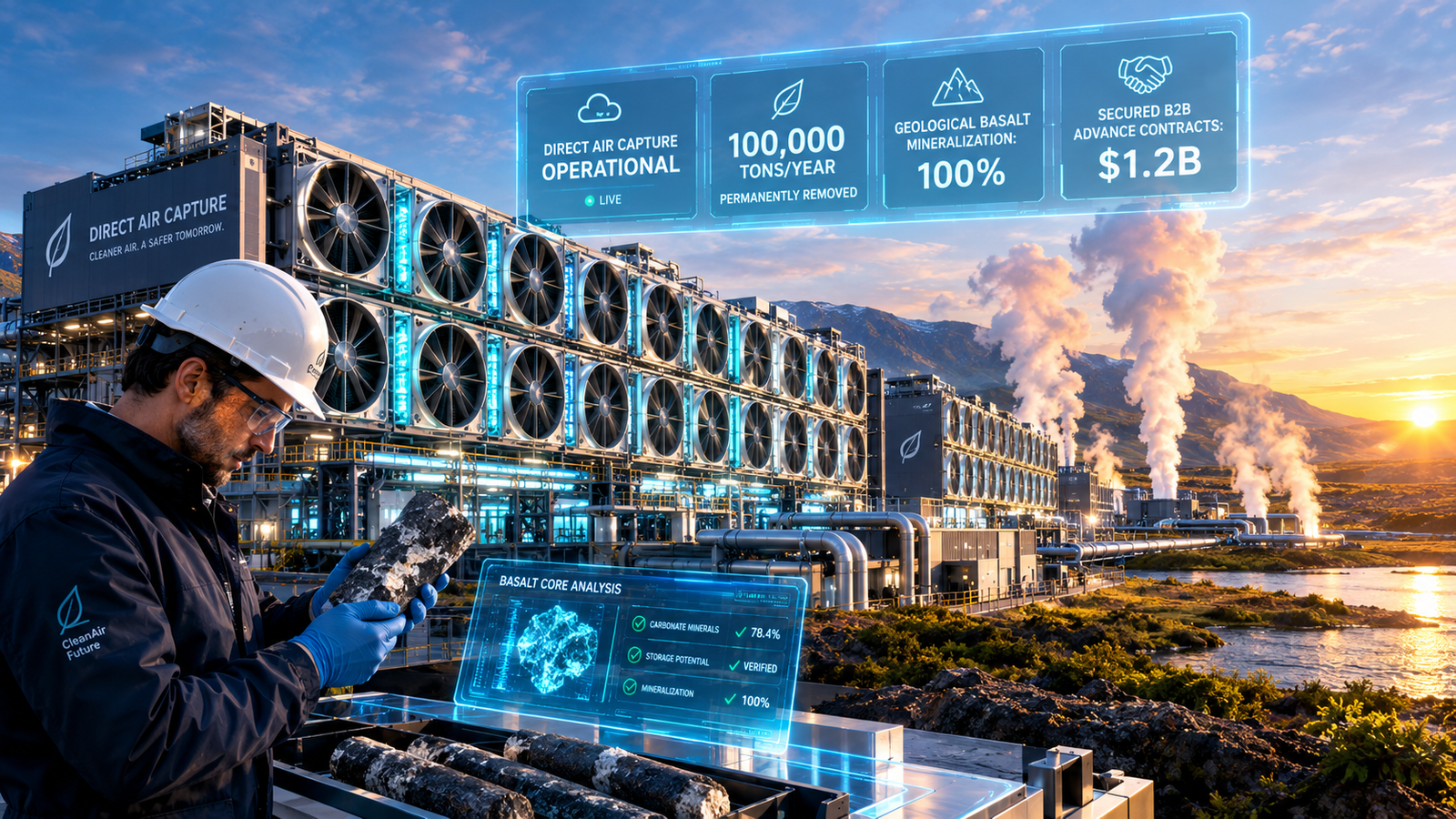
Corporate voluntary carbon markets historically suffered from widespread skepticism. Companies purchased low-cost avoidance credits tied to unverified forestry projects, claiming carbon neutrality while continuing to emit greenhouse gases without penalty.
However, in late 2026, investigative regulatory scrutiny and corporate governance reforms dismantled that low-grade offset ecosystem. Multinational enterprise buyers refuse to purchase superficial avoidance certificates that fail institutional audits.
Instead, technology conglomerates and Fortune 500 corporations are committing billions of dollars to permanent, verified Direct Air Capture contracts. Consequently, engineered carbon dioxide removal has transformed from a scientific laboratory demonstration into a thriving B2B industrial market.
Why Legacy Offset Forestry Credits Failed Corporate Audits
Between 2018 and 2023, voluntary carbon trading relied heavily on nature-based avoided deforestation tokens. Companies routinely claimed that funding a forest conservation tract offset their corporate jet travel or factory emissions.
Yet academic investigations and investigative audits revealed severe systemic flaws. Many protected forest zones were never under credible threat of clearing, while wildfires frequently incinerated protected timber reserves, returning stored carbon to the atmosphere.
Therefore, corporate audit committees faced shareholder lawsuits and accusations of greenwashing. To satisfy regulatory reporting rules under international climate standards, businesses require physical carbon removal that is permanent, quantifiable, and irreversible.
The Industrialization of Engineered Carbon Removal
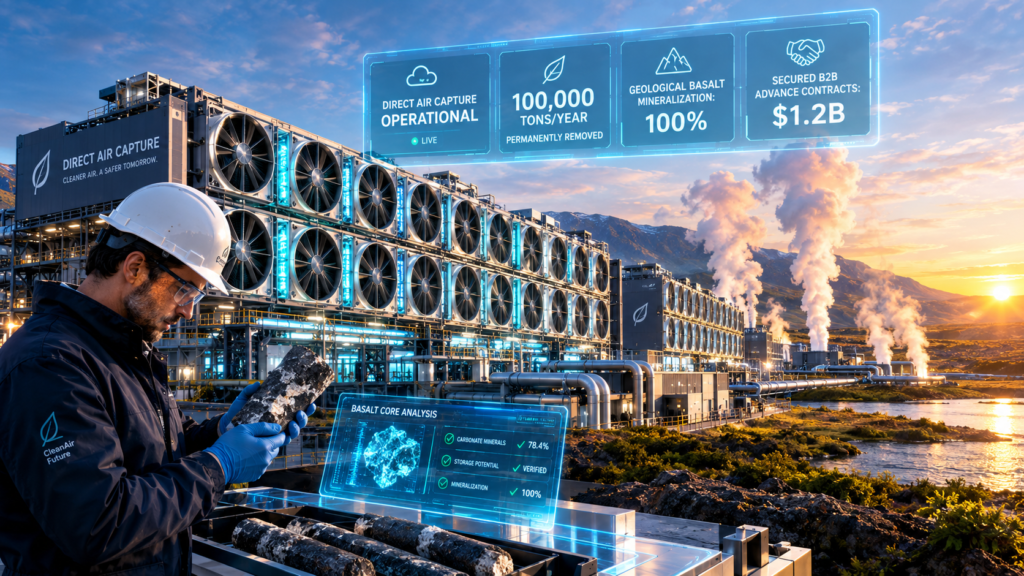
Direct Air Capture facilities solve the permanence dilemma by mechanically scrubbing carbon dioxide molecules directly from ambient outdoor air. The captured gas is dissolved in water and pumped deep underground into basalt rock formations, where it reacts chemically to turn into solid stone within two years.
Unlike temporary forestry projects that risk natural decay, geological mineralization permanently locks carbon away for thousands of years. As a result, third-party certification authorities award DAC credits the highest possible integrity rating.
Furthermore, corporate consortia like Frontier and major hyperscalers are guaranteeing multi-year advance market commitments. By guaranteeing fixed purchase prices of $400 to $600 per ton of removed carbon, corporate buyers provide the long-term revenue certainty required for DAC startups to secure project debt financing.
The Business Race for Gigawatt Clean Power Integration
The primary bottleneck facing commercial direct air capture is energy intensity. Filtering atmospheric air containing just 420 parts per million of carbon dioxide demands substantial thermal and electrical power.
Consequently, DAC infrastructure developers are co-locating commercial scrubbers directly adjacent to geothermal fields, massive solar parks, and next-generation nuclear facilities. By consuming surplus off-peak electricity, capture facilities balance electrical grid loads while purifying regional air.
Additionally, heavy industrial manufacturers are stepping into the purchase market. Aviation carriers and maritime shipping conglomerates buy engineered carbon credits to meet international transport decarbonization mandates.
The corporate sustainability market has abandoned speculative marketing claims. By funding engineered carbon removal with long-term capital contracts, international enterprise leaders are building the foundation of a trillion-dollar environmental restoration sector.
Tags: Direct Air Capture 2026, Carbon Removal B2B, Engineered DAC, Corporate Carbon Credits, Climate Tech Business, Frontier Climate, ESG Compliance Author CTA: Follow Flairius News — sharp takes on AI, business, and India’s startup economy — flairiusnews.com
 Aditya Agarwal