
 By Nayra Roy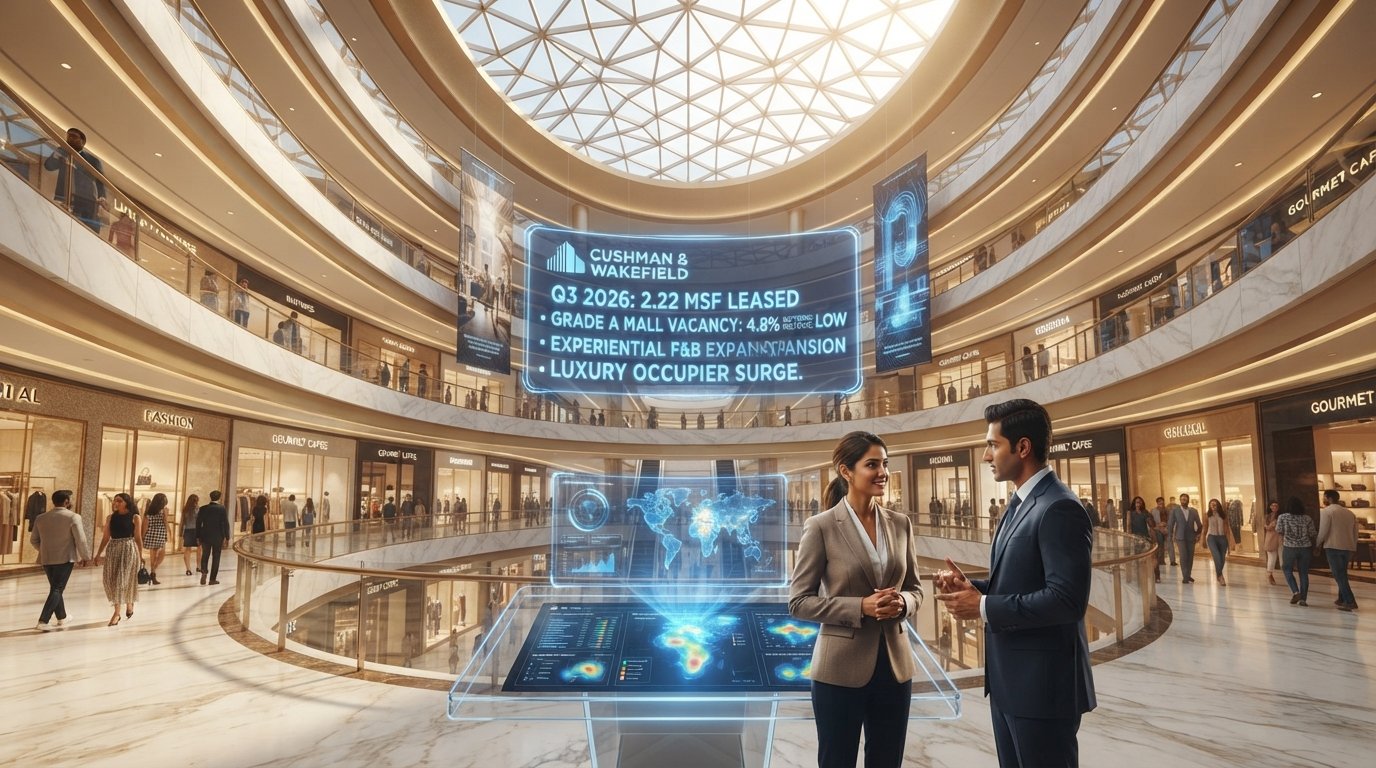
The post-pandemic narrative frequently predicted the inevitable demise of brick-and-mortar retail real estate. Pundits argued that digital e-commerce apps and rapid-delivery platforms would render physical shopping malls obsolete.
However, in late 2026, physical retail real estate in India is performing with unprecedented operational strength. According to the Q3 2026 retail market analytics published by global commercial brokerage Cushman & Wakefield, retail leasing reached 2.22 million square feet across top metropolitan cities during the third quarter alone.
Furthermore, strong leasing demand drove Grade A mall vacancy down to a historic low of just 4.8%. As international luxury labels, domestic fashion conglomerates, and entertainment chains expand their physical store footprint, institutional mall developers enjoy record pricing power.
Why Digital Commerce Fuels Physical Store Expansion
The resurgence of shopping malls stems from an essential commercial revelation: physical stores are the most cost-effective customer acquisition channel in modern retail.
As digital customer acquisition costs escalated on social media platforms, direct-to-consumer brands realized that physical flagship boutiques generate higher customer lifetime value. Shoppers who engage with a brand in an experiential store demonstrate higher brand loyalty and lower return rates.
Consequently, modern retail leasing is driven by omnichannel expansion. International fashion powerhouses and domestic beauty conglomerates lease high-visibility retail spaces to anchor their broader digital marketing funnels.
Experience-Driven Formats Replace Commodity Shopping
The structural design of modern Grade A shopping centers has shifted decisively away from conventional department stores. Leading mall operators recognize that consumers visit physical shopping complexes for entertainment, social dining, and tactile sensory experiences.
Specifically, Food & Beverage and experiential entertainment zones now occupy up to 35% of total gross leasable area, compared to just 12% a decade ago. Developers curate gourmet dining promenades, indoor adventure arenas, and micro-breweries to maximize shopper dwell times.
Moreover, the tight 4.8% vacancy rate has triggered fierce bidding competition for prime ground-floor retail frontage. International luxury maisons and premium sportswear labels routinely sign long-term leases with minimum revenue-share guarantees to secure premier placement.
Institutional REIT Capital Dominates the Asset Class
The operational success of retail malls is attracting institutional capital. While standalone, unmanaged shopping arcades continue to struggle with vacancies, institutional developers—such as Nexus Select Trust and Phoenix Mills—operate retail portfolios with scientific precision.
These institutional operators manage mall assets using advanced tenant mixing algorithms. By continually replacing underperforming retailers with high-velocity trending brands, mall managers maintain consistent visitor footfalls and expanding rental yields.
Additionally, the expansion of publicly traded retail Real Estate Investment Trusts allows domestic investors to capture steady dividends from high-performing commercial shopping centers. The combination of tight supply, low vacancy, and escalating lease rates guarantees strong cash flow visibility through 2027.
Brick-and-mortar retail has not merely survived; it has redefined its cultural and economic role. India’s Grade A shopping malls have evolved into vibrant lifestyle destinations, making retail real estate one of the most profitable investments in the country.
Tags: Retail Leasing 2026, Cushman & Wakefield Report, Grade A Malls, Commercial Real Estate India, Shopping Mall Vacancy, Luxury Retail Expansion, PropTech Retail Author CTA: Follow Flairius News — sharp takes on real estate, AI, and India’s startup economy — flairiusnews.com
 Aditya Agarwal