 By Raghav Sharma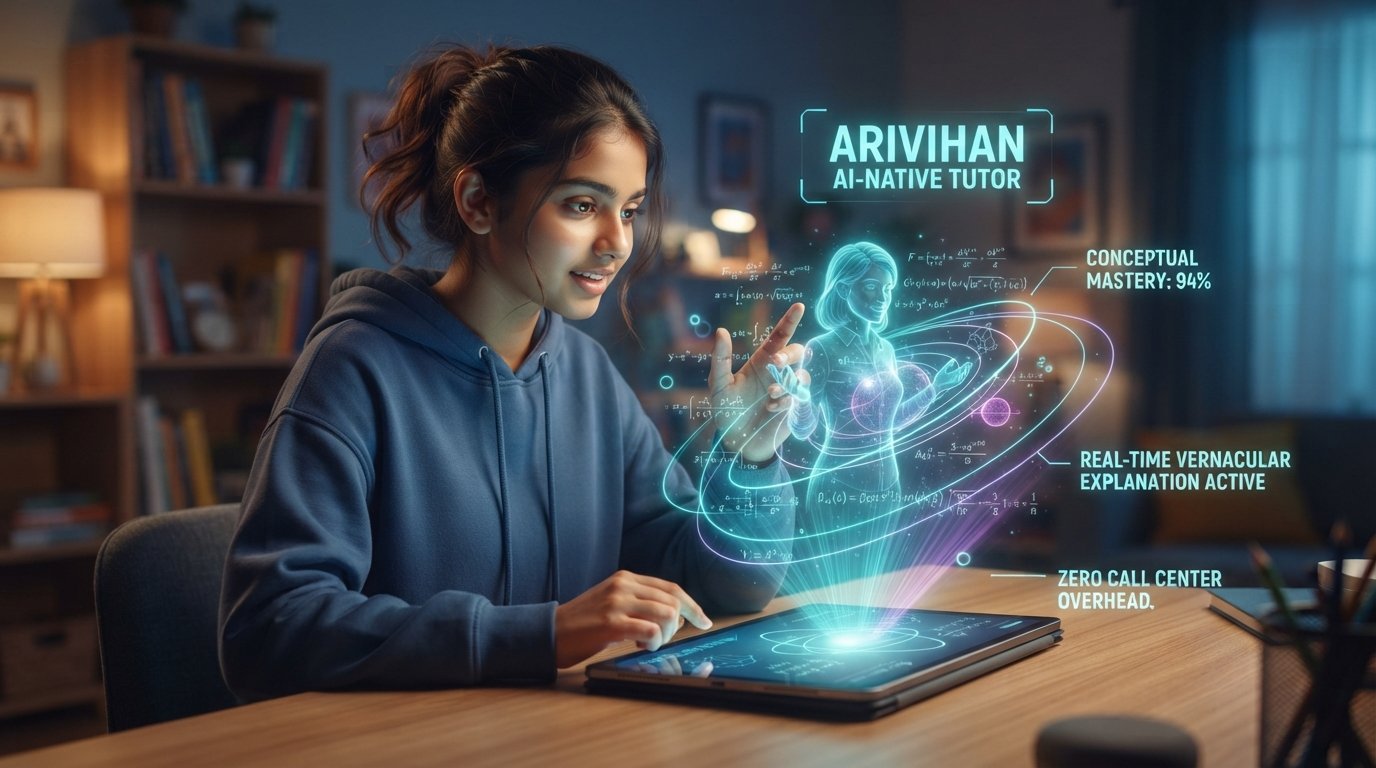
The traditional edtech sector suffered one of the most painful collapses in venture history. Between 2022 and 2024, legacy education startups burned through billions on aggressive celebrity marketing, expensive outbound sales call centers, and pre-recorded video lectures that students rarely finished.
However, in late 2026, the education sector is experiencing a disciplined technological resurgence. Startups built around native generative AI tutors are securing fresh institutional funding, led by emerging category leaders like Arivihan.
Consequently, investors are returning to educational technology with an updated investment thesis. By replacing human-heavy teaching hierarchies with real-time interactive AI instructors, modern startups are achieving 90% gross margins while delivering personalized tutoring at a fraction of legacy prices.
Why Legacy Edtech Models Imploded
The first generation of educational technology was neither scalable nor student-centric. Companies recorded static classroom lectures and sold multi-year access bundles locked behind aggressive consumer credit loans.
When schools reopened following pandemic closures, student engagement plunged. Static video libraries could not answer a student’s real-time doubts or adapt explanations when a teenager struggled to grasp a difficult calculus formula.
Furthermore, customer acquisition costs spiraled out of control. Edtech companies spent thousands of dollars convincing parents to purchase expensive hardware tablets, destroying their unit economics. When funding stopped, unviable operations collapsed rapidly.
How Arivihan Builds AI-Native Interactive Tutoring
Arivihan and the new wave of AI-native educational startups approached learning from a fundamentally different perspective. Rather than broadcasting one-way videos to millions, the platform provides every student with an autonomous, interactive conversational tutor.
Specifically, the system generates visual animations and custom explanations dynamically based on a student’s individual learning speed. If a student struggles with a physics concept, the AI tutor pauses, identifies the specific conceptual gap, and illustrates the concept using everyday vernacular metaphors.
Furthermore, students ask questions naturally using voice or text in their native regional dialects. The artificial intelligence diagnoses whether the student is confused, frustrated, or bored, modulating its tone and pacing to maintain peak academic engagement.
The Sustainable Economics of 100% Software Tutoring
The economic architecture of an AI-native education startup is extraordinarily defensible. Legacy edtech companies spent 60% of their operational budget hiring celebrity tutors and maintaining regional call centers.
In contrast, an AI tutoring platform operates as pure software. A single trained foundation model can tutor millions of students simultaneously for the cost of cloud GPU inference. Consequently, subscription prices have dropped from ₹50,000 annually down to accessible monthly subscriptions of ₹300 to ₹500.
Moreover, because the product delivers verified academic grade improvements, customer acquisition relies on organic student recommendations rather than aggressive cold-calling salespeople. This low-cost distribution generates high retention rates, proving that educational technology can be both socially transformative and highly profitable.
The edtech winter has finally ended. By harnessing conversational artificial intelligence to democratize personalized education, modern startups like Arivihan are rebuilding the sector on durable foundations.
Tags: Arivihan, Edtech Funding 2026, AI Tutors, Generative AI Education, Personalized Learning, Edtech Revival India, Startup Funding Deals Author CTA: Follow Flairius News — sharp takes on AI, business, and India’s startup economy — flairiusnews.com
 Aditya Agarwal