
 By Ahana Verma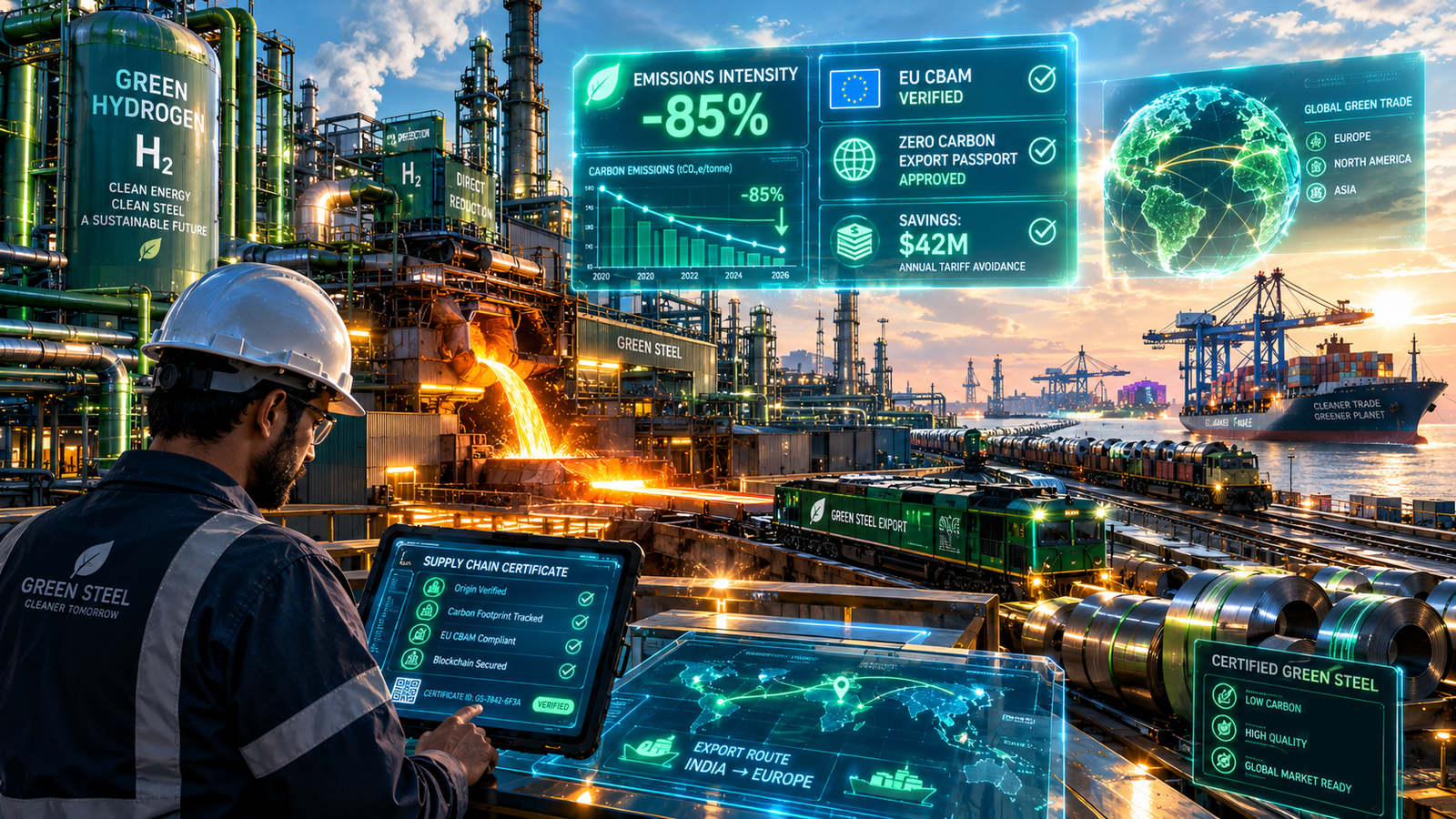
International commerce is confronting its most significant structural revision since the creation of the World Trade Organization. For decades, corporations engaged in carbon arbitrage, shifting carbon-intensive manufacturing to developing nations with lenient emissions rules to undercut domestic rivals.
In 2026, the European Union’s Carbon Border Adjustment Mechanism dismantled that cost loophole permanently. Importers must purchase emissions certificates corresponding to the embedded greenhouse gases generated during production.
Consequently, heavy industrial manufacturers in steel, cement, aluminum, and chemical sectors face mandatory carbon tariffs. What was once dismissed as a voluntary sustainability exercise has suddenly transformed into a core determinant of commercial export survival.
The Disruption of Carbon-Intensive Export Models
The economic impact of CBAM is direct and uncompromising. For industrial exporters across Asia and the Americas, unmitigated emissions now translate directly into border taxes of 20% to 35% at European customs checkpoints.
Consequently, carbon-heavy manufacturers find their product margins erased overnight. European procurement directors are aggressively pruning high-emissions suppliers from their supply chains to preserve their own corporate ESG margins.
Therefore, corporate treasurers no longer relegate carbon reduction to public relations pamphlets. Decarbonization has become an existential requirement to maintain access to the world’s most lucrative industrial consumer markets.
Green Hydrogen and Direct Reduced Iron Revolution
To defend export viability, forward-thinking industrial conglomerates are investing aggressively in clean manufacturing technology. In India, primary steel giants like Tata Steel and JSW are commissioning commercial green hydrogen pilots and electric arc furnaces.
Specifically, manufacturers are replacing conventional blast furnaces with green hydrogen direct reduced iron infrastructure. By utilizing renewable energy to generate industrial heat, producers reduce carbon intensity by up to 90% per ton of finished metal.
Moreover, companies are deploying verified Internet of Things telemetry and tamper-proof carbon accounting ledgers across production floors. Every industrial coil leaving the plant carries a cryptographically verified emissions passport, allowing seamless clearance through international customs.
The Competitive Moat of Early Decarbonization
While industrial laggards complain about regulatory overreach, pioneering manufacturers are capturing premium pricing. Green steel and low-carbon aluminum now trade at notable premiums over conventional commodities in European markets.
Automotive original equipment manufacturers and renewable energy developers actively sign multi-year procurement contracts with clean material producers. Consequently, companies that invested early in renewable captive power grids are securing market dominance while carbon-heavy rivals face exclusion.
Additionally, global banking consortiums offer preferential interest rates and green debt financing to verified low-carbon producers. This structural capital access widens the competitive gap against traditional, fossil-dependent competitors.
Global industrial trade has crossed an irreversible threshold. In late 2026, clean manufacturing is no longer a corporate cost center; it is the ultimate passport to international market dominance.
Tags: EU CBAM 2026, Carbon Border Adjustment, Green Steel, Industrial Decarbonization, Sustainable Supply Chain, Global Trade Tariffs, Carbon Accounting Author CTA: Follow Flairius News — sharp takes on AI, business, and India’s startup economy — flairiusnews.com
 Aditya Agarwal