
 By Nayra Roy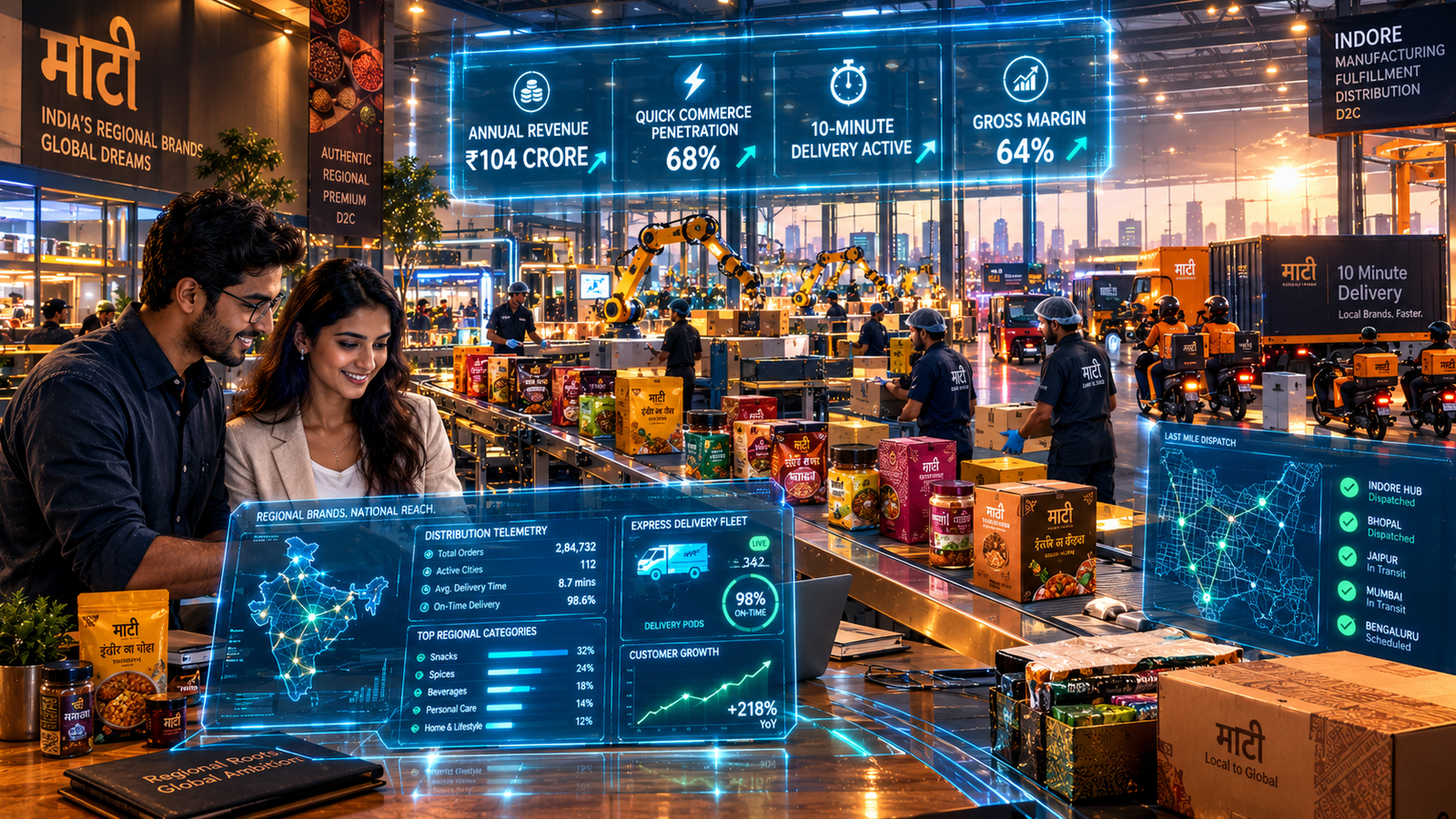
Direct-to-consumer retail in India spent years chasing urban metropolitan elites. Digital brands based in Mumbai and Bengaluru spent immense venture capital targeting the top five percent of consumers with expensive organic granolas and premium cosmetics.
However, that metropolitan segment quickly hit saturation. In late 2026, the real velocity in consumer entrepreneurship is emerging from Tier-2 and Tier-3 manufacturing hubs like Indore, Surat, Ludhiana, and Coimbatore.
Enterprising regional founders are building ₹100 crore consumer product enterprises by catering to authentic Indian domestic tastes. By distributing their products through 10-minute quick-commerce dark stores, these regional entrepreneurs bypass traditional retail gatekeepers completely.
The Exhaustion of the Metro-Centric D2C Formula
The early direct-to-consumer playbook was fatally flawed. Founders spent 40% to 50% of their revenues on social media ads to acquire urban consumers who displayed negligible brand loyalty.
Furthermore, traditional e-commerce fulfillment took three to five days to deliver parcels. This delivery friction caused high return-to-origin rates on cash-on-delivery orders, eroding unit economics.
Therefore, ambitious regional founders charted a different course. Instead of copying Western lifestyle products, they modernized regional culinary staples, authentic ayurvedic personal care, and specialized cleaning formulations that Indian families consume daily.
The Dark Store Infrastructure Leap
The meteoric rise of regional consumer brands is powered by the rapid expansion of quick-commerce networks into non-metro territories. Platforms like Blinkit, Zepto, and Instamart established dense dark store matrices across Tier-2 cities.
For a growing regional brand, listing within quick-commerce hubs resolves the entire logistics dilemma. Rather than managing warehousing across twelve states, the brand ships bulk pallets directly to metropolitan mother distribution centers.
Consequently, consumers receive fresh regional snacks, local namkeens, or indigenous personal care items within ten minutes of placing an order. This instant gratification turns first-time trial buyers into habitual weekly repeat customers, driving organic word-of-mouth adoption.
Sustainable Unit Economics Through Manufacturing Proximity
Regional founders maintain an immense structural cost advantage over metropolitan competitors. Operating out of industrial heartlands, they build facilities adjacent to raw agricultural supplies and specialized packaging clusters.
Their rental overhead and manufacturing labor costs are a fraction of metropolitan rates. Because they manufacture their own inventory rather than relying on third-party white-label contract packers, they capture healthy gross margins of 60% to 70%.
Additionally, regional brands design packaging specifically for value-conscious households. By offering high-frequency trial packs priced between ₹50 and ₹150, they eliminate price resistance.
The center of Indian consumer innovation has shifted. By marrying regional cultural authenticity with modern quick-commerce distribution, Tier-2 entrepreneurs are proving that India’s next retail empires belong to the heartland.
Tags: Tier-2 D2C India, Quick Commerce 2026, Bharat Consumer Brands, Dark Store Retail, Indian Entrepreneurship, Hyperlocal FMCG, Regional D2C Startups Author CTA: Follow Flairius News — sharp takes on AI, business, and India’s startup economy — flairiusnews.com
 Aditya Agarwal