
 By Nayra Roy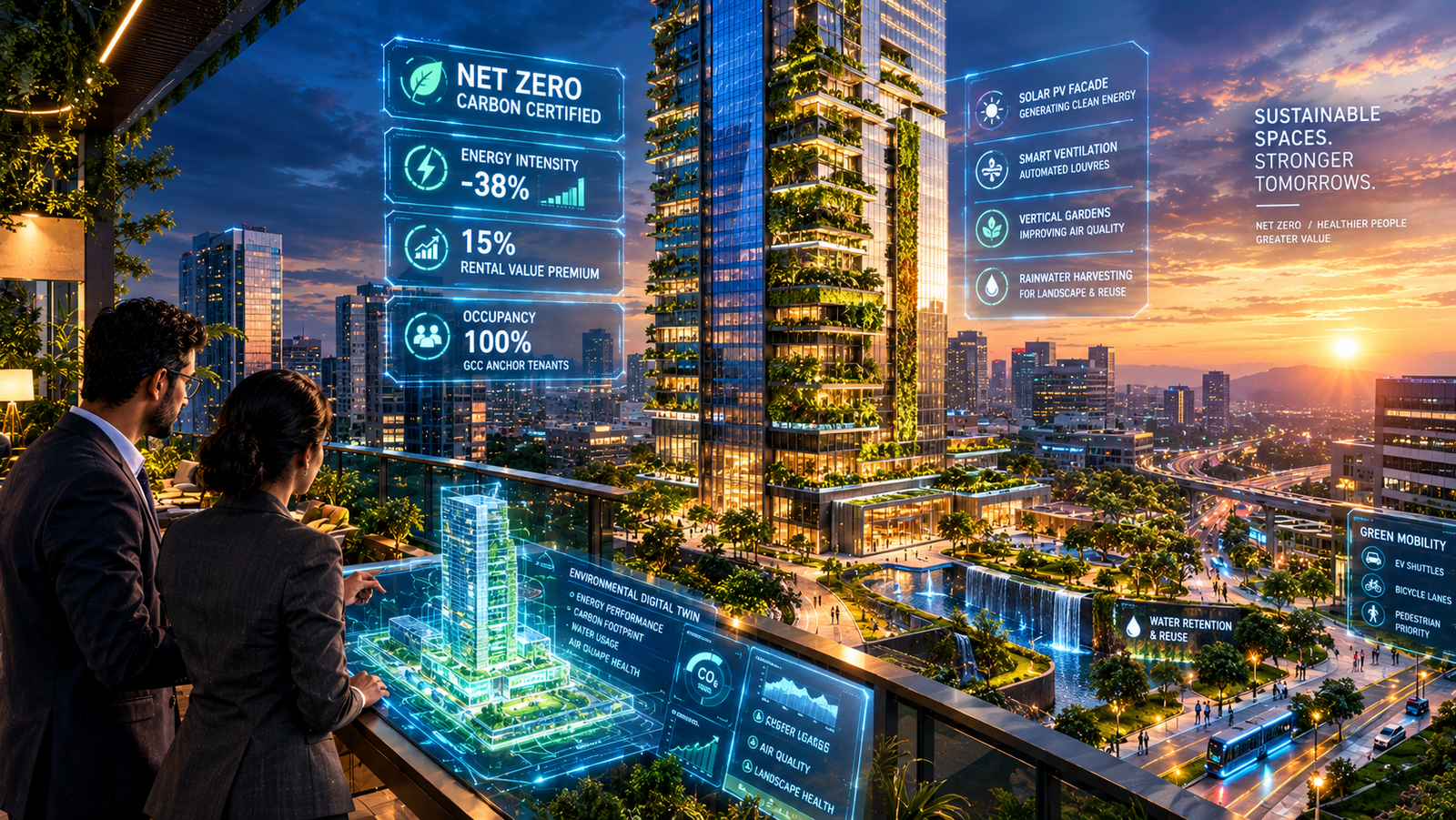
Sustainability in commercial real estate was historically treated as an optional branding embellishment. Developers planted landscaped terrace gardens and displayed environmental plaques in office lobbies, primarily to enhance corporate marketing brochures.
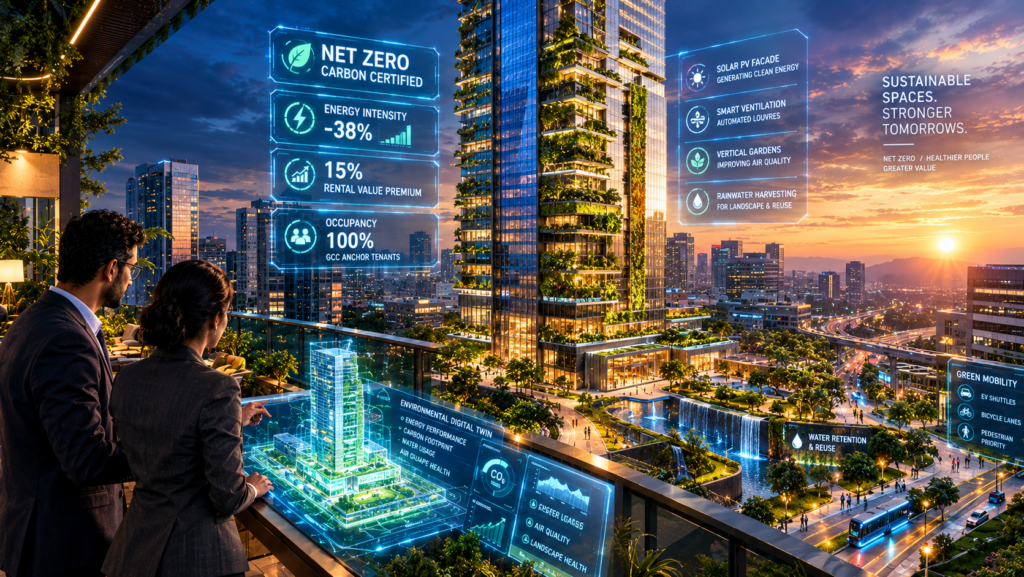
However, in late 2026, environmental design has become the primary driver of commercial rental yields. Commercial office towers that achieve verified Net-Zero Carbon ratings and LEED Platinum certifications now command rental premiums of 12% to 15% over non-certified buildings across Bengaluru, Hyderabad, and the Mumbai Metropolitan Region.
Consequently, institutional real estate developers are retrofitting aging properties and engineering new commercial towers around automated smart grids. Sustainable performance has evolved from an environmental duty into a decisive commercial asset.
The Tenant Mandate: Global Net-Zero Deadlines
The economic catalyst for green buildings stems directly from corporate tenant leasing policies. The dominant occupiers of Indian Grade A commercial real estate are Fortune 500 multinationals and Global Capability Centres.
These multinational corporations operate under strict international board mandates to eliminate corporate greenhouse gas emissions by 2030. Under mandatory Scope 1, Scope 2, and Scope 3 emissions reporting standards, leasing space in a carbon-inefficient building creates direct regulatory liabilities.
Therefore, corporate real estate directors refuse to consider office parks that lack certified green credentials. Non-compliant legacy office towers face accelerating tenant departures and prolonged vacancies, forcing developers to adapt or accept severe asset devaluation.
The Smart Building Stack: IoT and Automated Energy Optimization
Modern net-zero office towers achieve environmental performance through advanced proptech building management systems. A certified green building is not merely passive concrete; it is an intelligent, reactive physical ecosystem.
Specifically, thousands of Internet of Things sensors monitor ambient occupancy, natural daylight levels, and indoor air carbon dioxide concentrations in real time. The central building artificial intelligence dynamically modulates chilled water flows in HVAC systems, lowering baseline energy consumption by up to 35%.
Furthermore, modern towers incorporate on-site wastewater recycling and kinetic energy recovery elevators. Smart electrochromic glass facades tint automatically in response to solar radiation, eliminating heat gain while maximizing natural daylight for office workers.
The Financial Math: Capital Expenditure vs Valuation Uplift
While developing a net-zero commercial building increases upfront construction costs by 5% to 8%, the investment returns are overwhelmingly positive.
First, energy-efficient building systems lower ongoing common area maintenance utility bills, directly benefiting tenants. Consequently, occupiers willingly pay higher baseline rent because their overall occupancy expenses remain balanced.
Second, certified net-zero assets achieve faster leasing velocity and near-zero structural vacancy. Multinational enterprises sign long-term nine- to twelve-year leases with locked escalations, securing stable cash flows for property owners.
Finally, green properties command superior terminal valuation multiples when sold to global sovereign funds or packaged into publicly traded REIT portfolios. Institutional investors place a premium on green-certified real estate assets that carry zero transition risk in a carbon-regulated global economy.
The commercial real estate sector has passed its sustainability inflection point. In 2026, buildings that protect the environment are the only properties that protect investor capital.
Tags: Green Buildings India, Net Zero Commercial 2026, PropTech Sustainability, LEED Platinum Offices, Commercial Real Estate Yields, Smart Building Automation, ESG Real Estate Author CTA: Follow Flairius News — sharp takes on real estate, AI, and India’s startup economy — flairiusnews.com
 Aditya Agarwal