
 By Raghav Sharma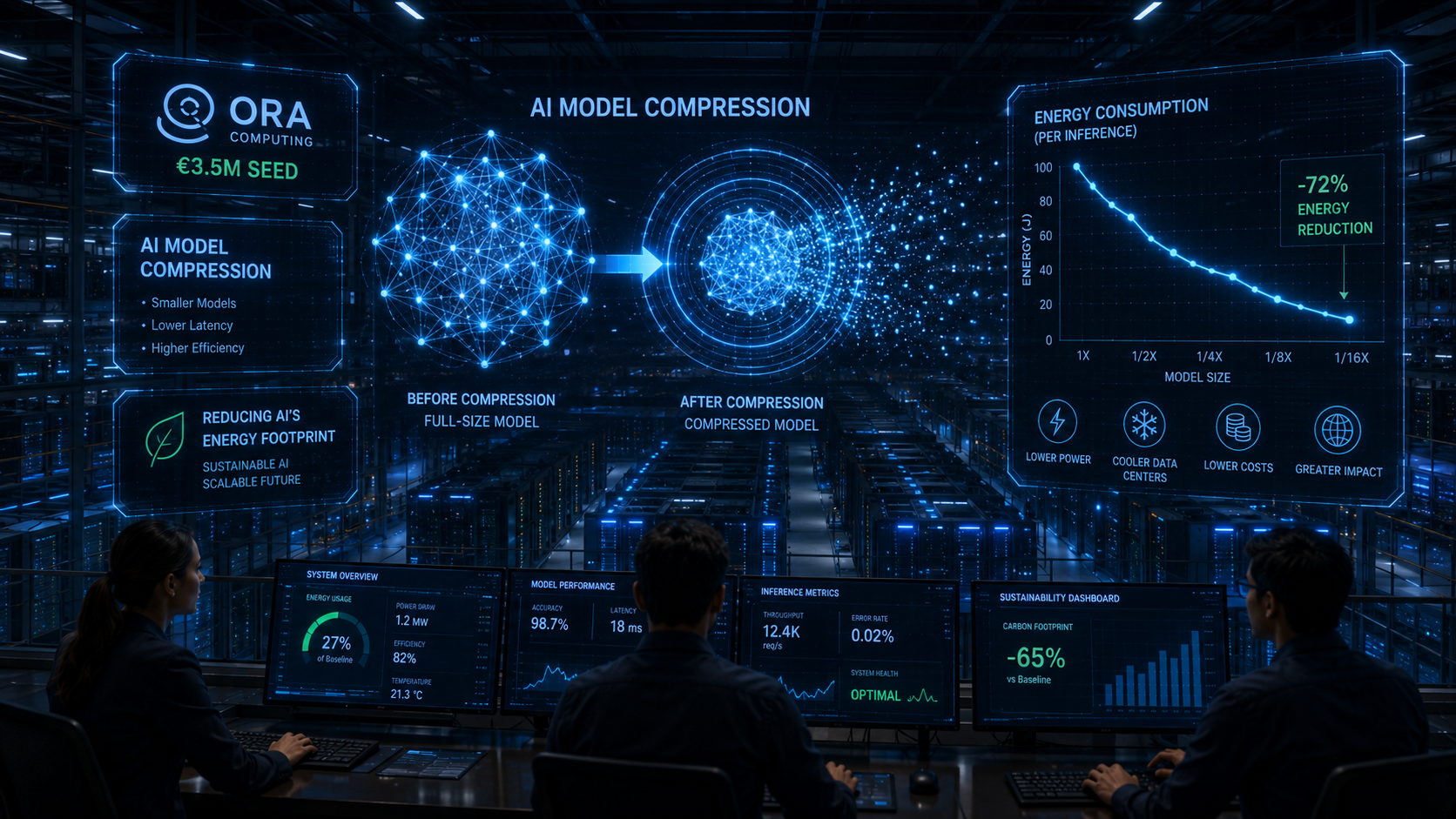
Every AI model that runs in production burns electricity, and that bill keeps climbing. Two quantum computing researchers think they have found a fix, and investors just backed it with €3.5 million.
On June 24, 2026, Ora Computing closed a seed round to scale its AI model compression technology. Moreover, the founders bring a quantum computing background rather than a traditional machine learning pedigree. Therefore, their approach to compression draws on mathematical techniques outside the usual deep learning toolkit.
Why Compression, Not Bigger Chips, Is the Smarter Bet
The AI industry has spent two years throwing more GPUs at the energy problem. However, that approach has limits, since hardware efficiency gains are slowing even as model sizes keep growing. Consequently, software-level compression making models smaller and faster without sacrificing accuracy has become the more promising lever.
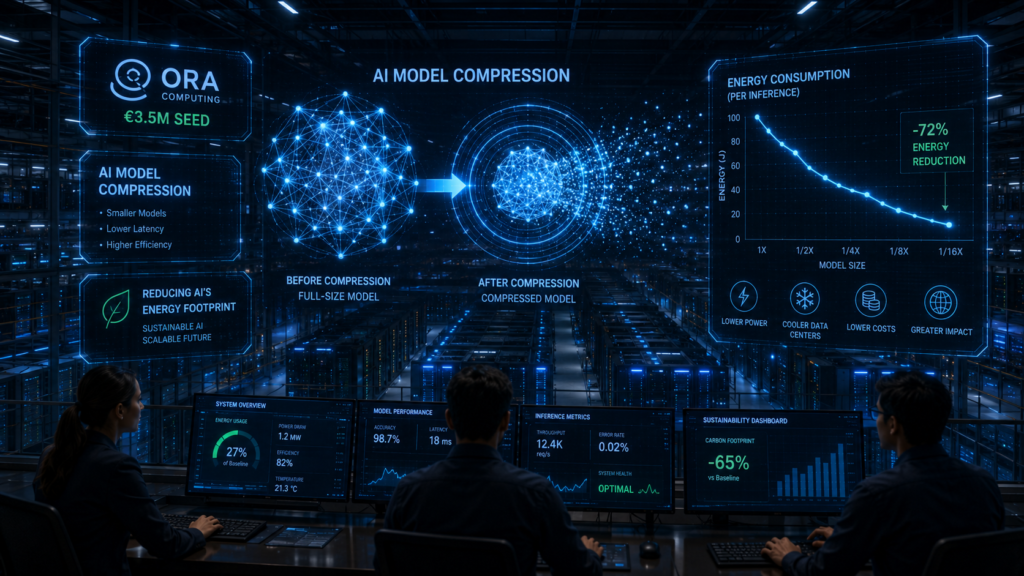
Specifically, Ora Computing’s technique reportedly shrinks model size while preserving output quality, which directly reduces both inference cost and energy draw. Furthermore, this matters enormously for companies running models at consumer scale, where even small per-query savings compound into massive aggregate cost reductions.
A Seed Round Aimed at a Trillion-Dollar Problem
Global AI infrastructure spending has exploded past hundreds of billions of dollars in 2026 alone. Moreover, a meaningful share of that spending goes directly toward power and cooling for data centres running inference workloads. Therefore, any startup that meaningfully cuts that energy bill sits on top of a genuinely massive addressable market.
This is a small round by 2026’s AI funding standards. However, size is not always the right lens. Specifically, infrastructure bets that solve foundational cost problems often start small and scale fast once enterprise buyers see verified savings.
What Comes Next for Ora Computing
The company is expected to use the capital to expand its compression research and begin enterprise pilot programs. Furthermore, as AI adoption shifts from experimentation to mandatory production infrastructure, cost efficiency becomes a board-level concern rather than a technical footnote.
Therefore, watch this category closely. Specifically, the next wave of AI infrastructure winners may not be the companies training the biggest models they may be the ones making every model already in production cheaper to run.
Tags: Ora Computing, AI Model Compression, AI Energy Efficiency 2026, Sustainable AI Infrastructure, AI Inference Cost, Quantum Computing AI Startup, AI Seed Funding 2026 Author CTA: Follow Flairius News — sharp takes on AI, business, and India’s startup economy — flairiusnews.com
 Aditya Agarwal
  Nayra Roy