 By Raghav Sharma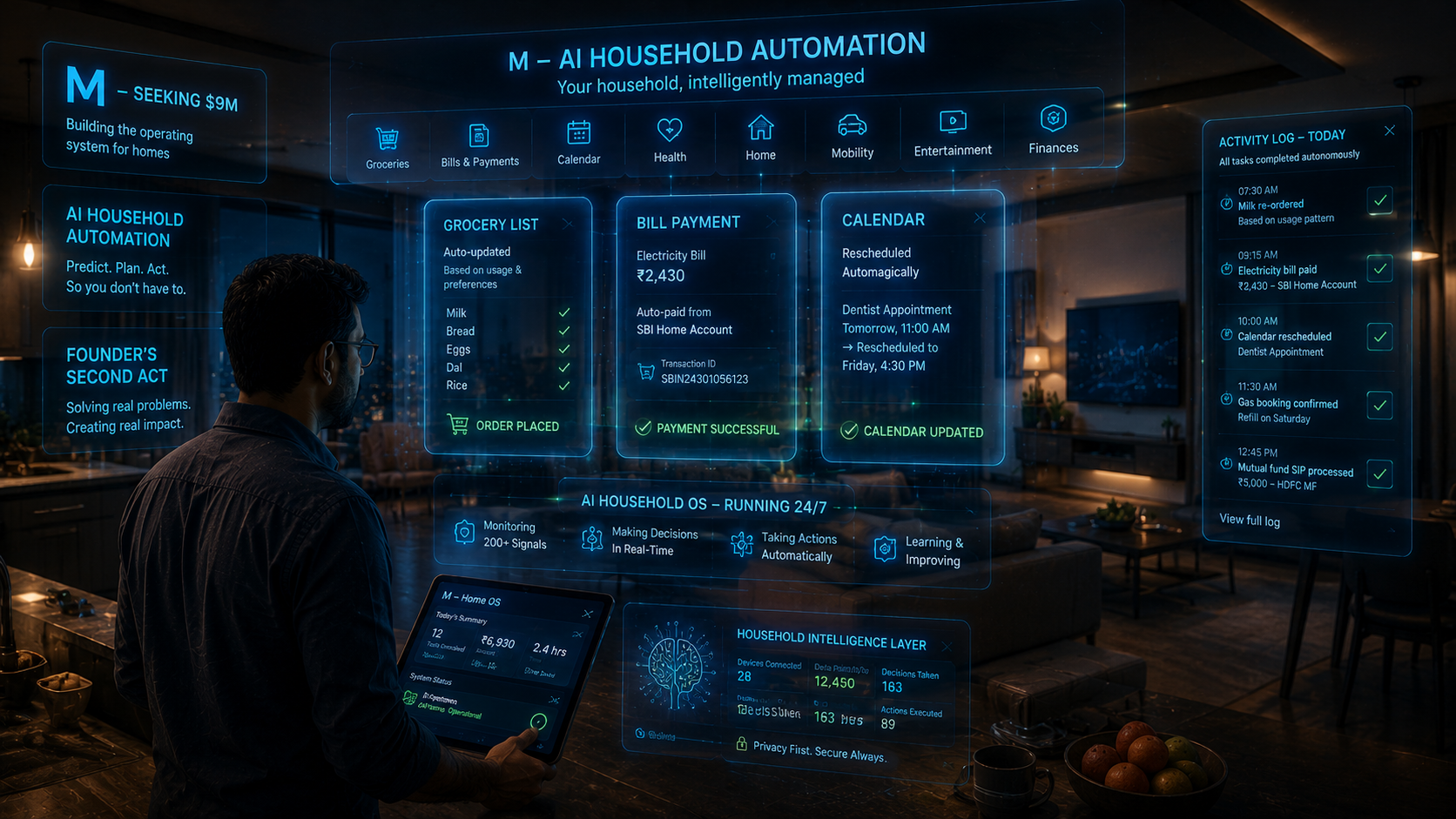
Founders who built and lost a category-defining company rarely walk away quietly. Kabeer Biswas, who built Dunzo into a household name before quick commerce competition reshaped the category, is back with a new bet and this time, it is squarely about AI.
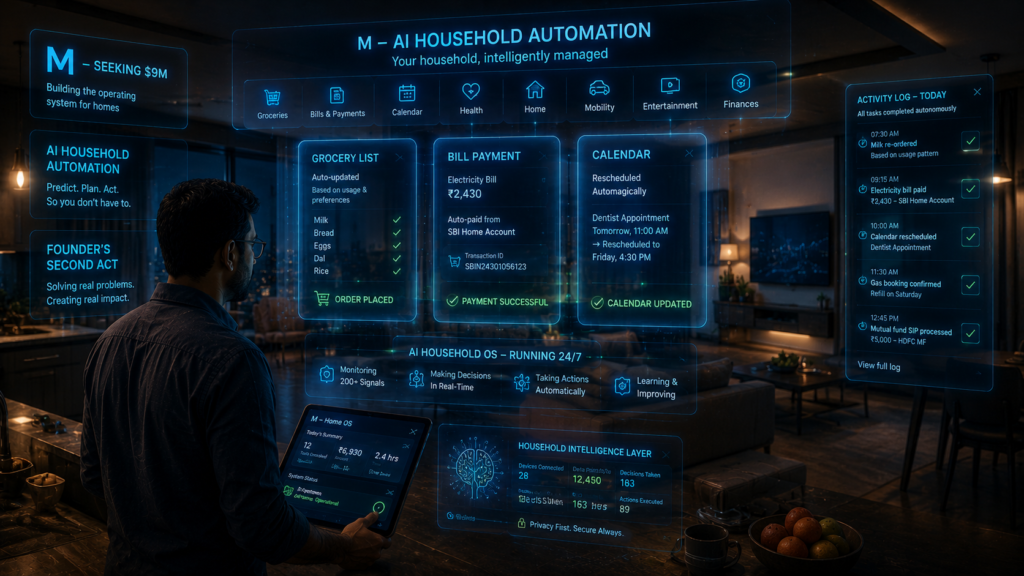
As of mid-June 2026, Biswas is seeking $9 million for his new AI startup, called M, focused on household automation. Moreover, the move signals a deliberate pivot away from logistics-heavy quick commerce toward a software-first, AI-native consumer category.
Why Household Automation, Specifically
Quick commerce taught Biswas painful lessons about capital intensity. Specifically, dark stores, delivery fleets, and inventory management all require enormous ongoing capital just to maintain operations, let alone grow. Therefore, household automation an AI-driven layer that manages tasks, routines, and decisions inside a home offers a fundamentally different economic profile: software margins instead of logistics margins.
Furthermore, Biswas’s experience building consumer trust and habit-forming products at Dunzo gives him a genuine edge in a category that depends heavily on convincing users to hand over everyday decision-making to an AI system.
What “Household Automation AI” Likely Means in Practice
While specific product details remain limited, the household automation category broadly covers AI systems that manage recurring tasks grocery restocking, bill payments, scheduling, and routine household decisions without requiring constant manual input. Specifically, this differs from simple reminder apps by actually executing decisions and actions on the user’s behalf, much like agentic AI tools are doing in enterprise settings.
Consequently, M represents an attempt to bring agentic AI principles, already gaining serious enterprise traction in 2026, into the Indian consumer household for the first time at meaningful scale.
Why Investors Might Bite Despite the Modest Round Size
A $9 million raise is small by 2026’s AI funding standards. However, size matters less here than founder pedigree. Specifically, Biswas has already proven he can build a habit-forming consumer product from zero to household-name status once. Therefore, investors backing M are partly betting on repeatable founder execution, not just the specific product thesis.
Moreover, household automation sits at an early, unproven stage in India specifically. Consequently, a smaller round makes sense as a way to test product-market fit before committing larger capital to scale.
What to Watch Next
If M gains early traction, expect significantly larger follow-on rounds, mirroring the trajectory many successful Indian consumer startups have followed. Furthermore, Biswas’s return to building, rather than retreating after Dunzo’s struggles, adds a notable second-act narrative to India’s startup ecosystem heading into the second half of 2026.
Tags: Kabeer Biswas New Startup, Dunzo Founder AI, Household Automation AI India, India Consumer AI Startup 2026, M Startup Funding, India Agentic Consumer AI, India Founder Comeback Story Author CTA: Follow Flairius News — sharp takes on AI, business, and India’s startup economy — flairiusnews.com
 Aditya Agarwal
  Nayra Roy