
 By Nayra Roy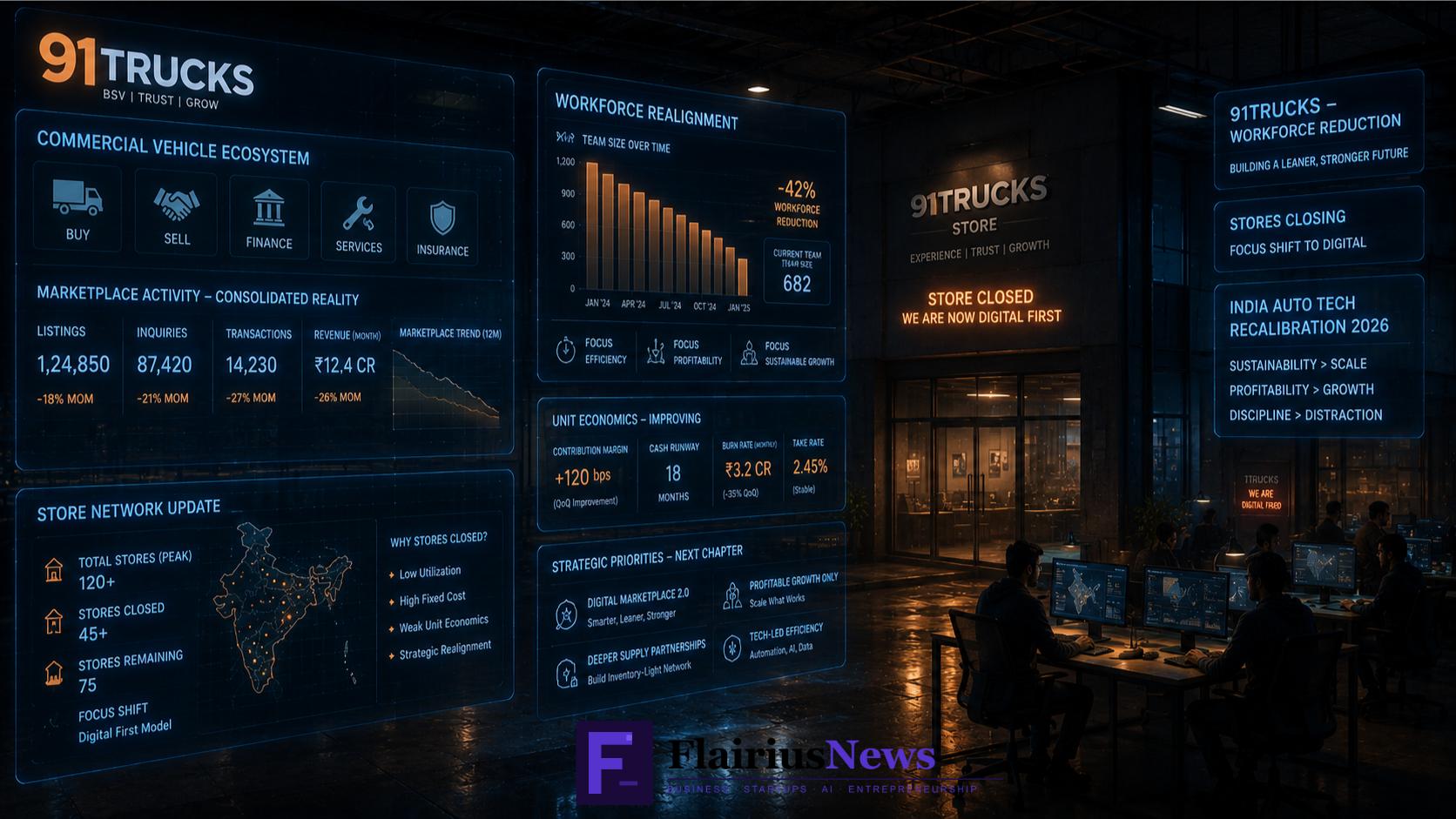
Not every startup story this week is about a funding milestone. Some are about what happens when growth stops cooperating with the business model built around it.
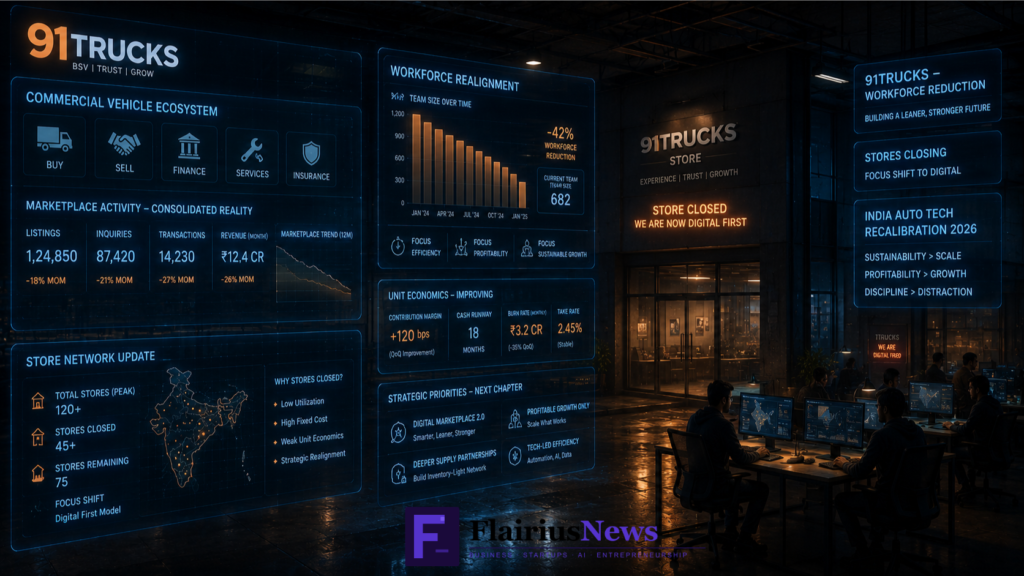
On June 22, 2026, commercial vehicle platform 91trucks confirmed it had laid off nearly 70% of its workforce and shut multiple stores, citing slowing growth. Moreover, the scale of the cuts marks one of the more severe contractions among Indian startups so far this year.
What 91trucks Actually Built
91trucks operates a platform connecting buyers and sellers of commercial vehicles, alongside related services such as financing and vehicle information. Specifically, the company built physical stores alongside its digital platform, betting that commercial vehicle buyers — who often represent significant purchase decisions — would value an in-person touchpoint alongside online discovery.
However, that physical footprint carries real estate and staffing costs that purely digital marketplaces avoid entirely. Therefore, when growth slowed, those fixed costs became a much heavier burden relative to revenue than a leaner, software-only competitor would have faced.
Why Commercial Vehicle Tech Is a Tough Category
Unlike consumer e-commerce, commercial vehicle purchases involve long sales cycles, complex financing arrangements, and buyers who often already have established relationships with traditional dealers. Consequently, digital disruption in this category moves more slowly than investors sometimes assume when comparing it to faster-moving consumer verticals.
Moreover, India’s broader commercial vehicle market has faced cyclical demand pressures tied to freight rates, fuel costs, and infrastructure spending cycles. Therefore, 91trucks’ struggles may reflect sector-wide headwinds as much as company-specific execution issues.
What This Signals for India’s Auto-Tech Sector
This is not the only friction point in India’s broader vehicle technology space recently. Specifically, fellow auto-tech players have faced their own scrutiny around growth sustainability and path-to-profitability questions as 2026’s funding environment grows more selective. Consequently, investors are increasingly distinguishing between asset-light digital marketplaces and capital-intensive hybrid models that combine physical and digital operations.
Therefore, 91trucks’ contraction may accelerate a broader rethink among auto-tech investors about which business model structures can actually sustain growth through India’s current, more disciplined funding cycle.
What to Watch Next
91trucks is expected to focus its remaining operations around its core digital platform, having shed the physical store overhead that strained its cost structure. Furthermore, how the company performs with this leaner footprint will offer a useful signal for whether commercial vehicle tech businesses are better served by asset-light models going forward.
Tags: 91trucks Layoffs, India Commercial Vehicle Startup, India Auto Tech 2026, Startup Workforce Reduction, India Startup Distress, B2B Vehicle Marketplace India, India Startup Cost Structure Author CTA: Follow Flairius News — sharp takes on AI, business, and India’s startup economy — flairiusnews.com
 Aditya Agarwal